Dani Cavalier

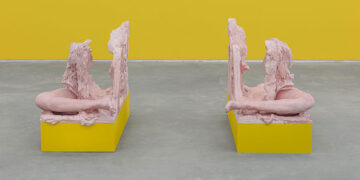
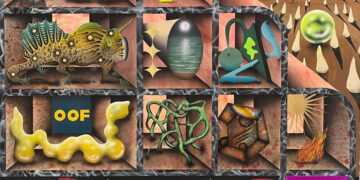
Dani Cavalier (1993, Rio de Janeiro) lives and works in Rio de Janeiro. Through drawing, painting, installation, and sculpture, the artist explores themes related to the body, spirituality, and the history of power and the marginalization of women.

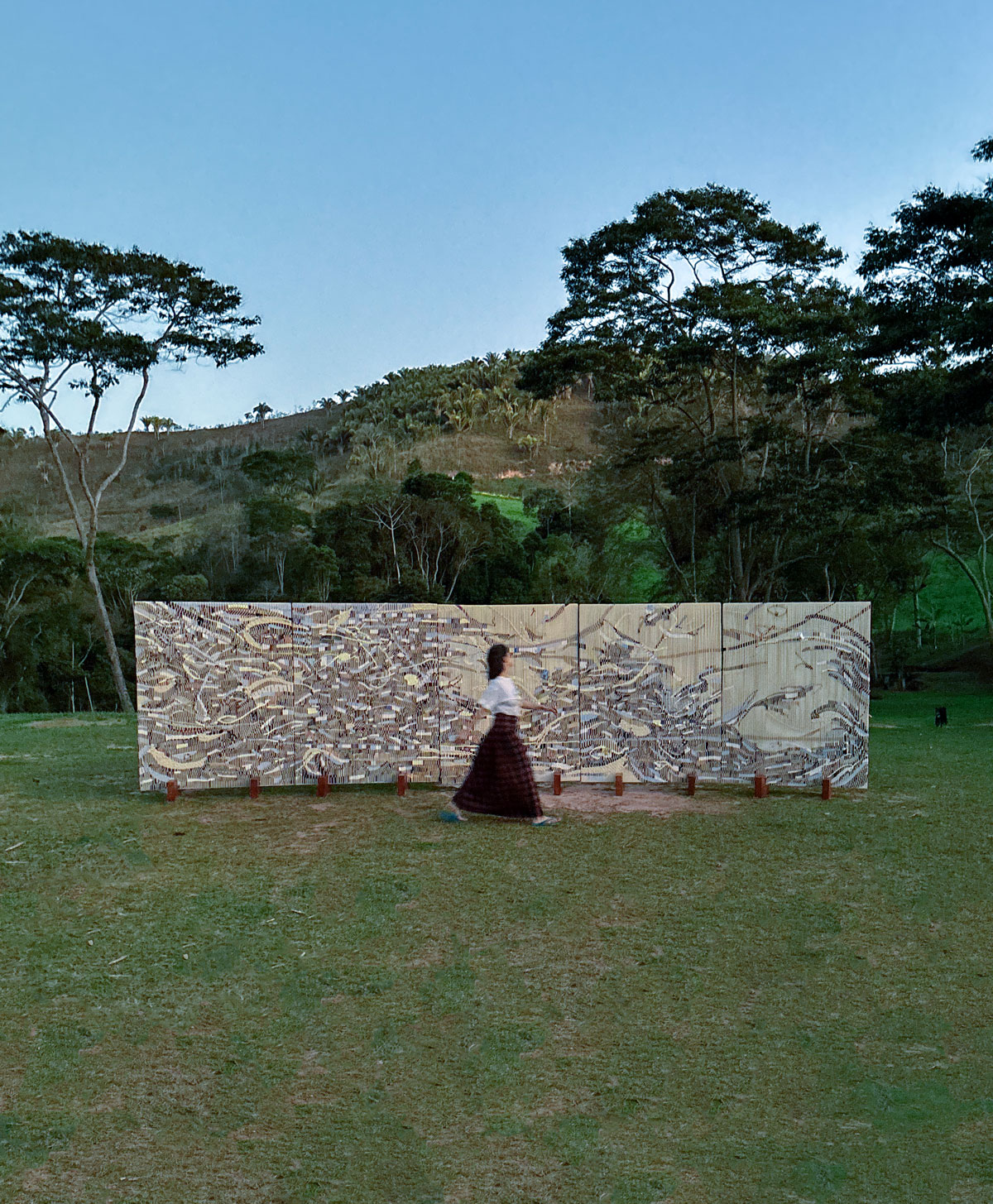
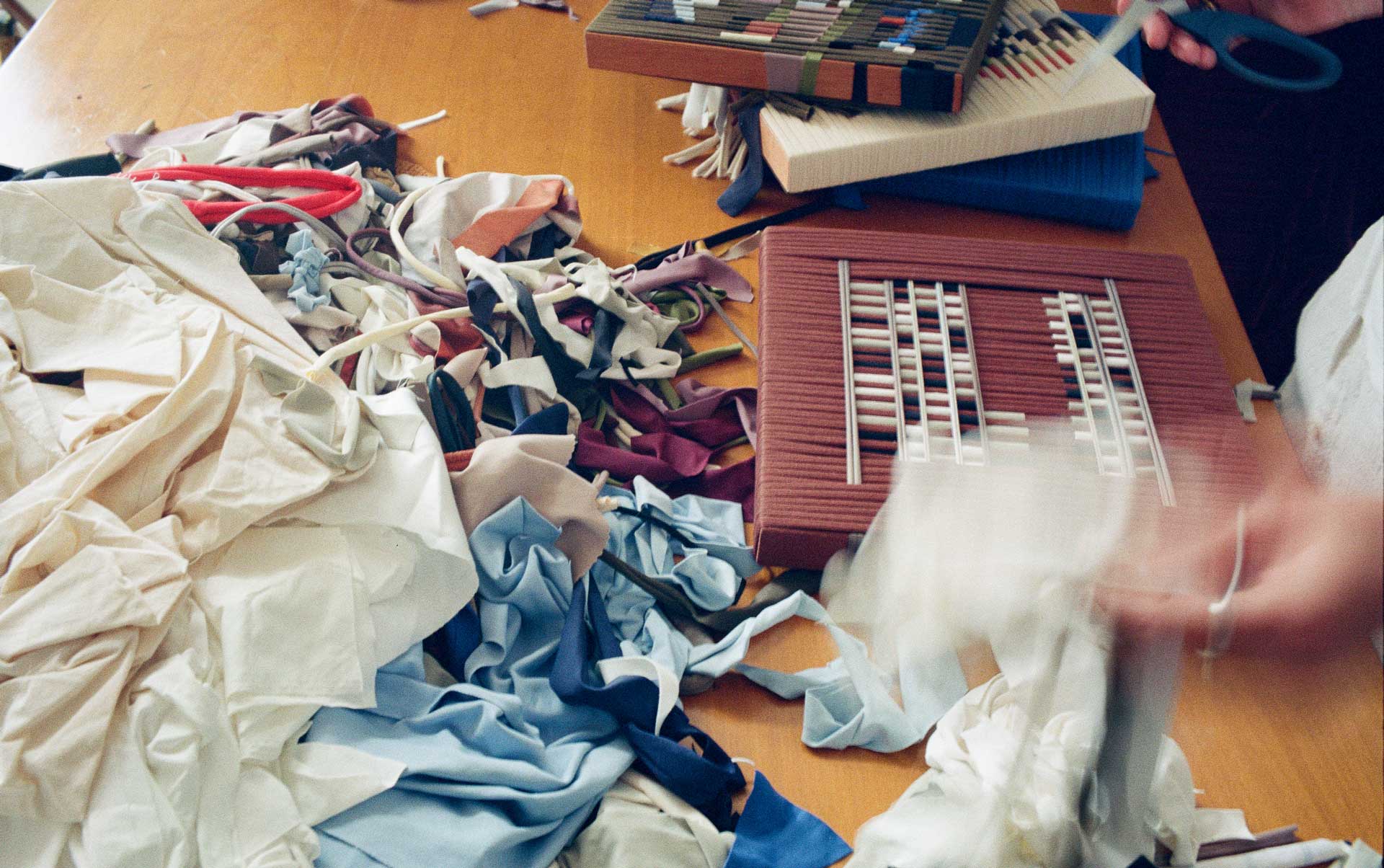
Over the past three years, Cavalier has developed her research and artistic practice around what she calls “solid paintings.” Drawing from the fundamental elements of conventional painting—such as the stretcher, woven canvas, color, and the notion of composition—she replaces paint and brush with colorful Lycra scraps sourced from swimwear factories in Rio de Janeiro. In creating these solid paintings, the artist works with juxtapositions of blocks of color and the materiality of the fabric, which replaces the traditional canvas and wraps around the stretcher. The result is an interwoven composition of colors that exists without an inside or outside, front or back, and, when presented on a large scale, establishes a participatory relationship with the viewer.
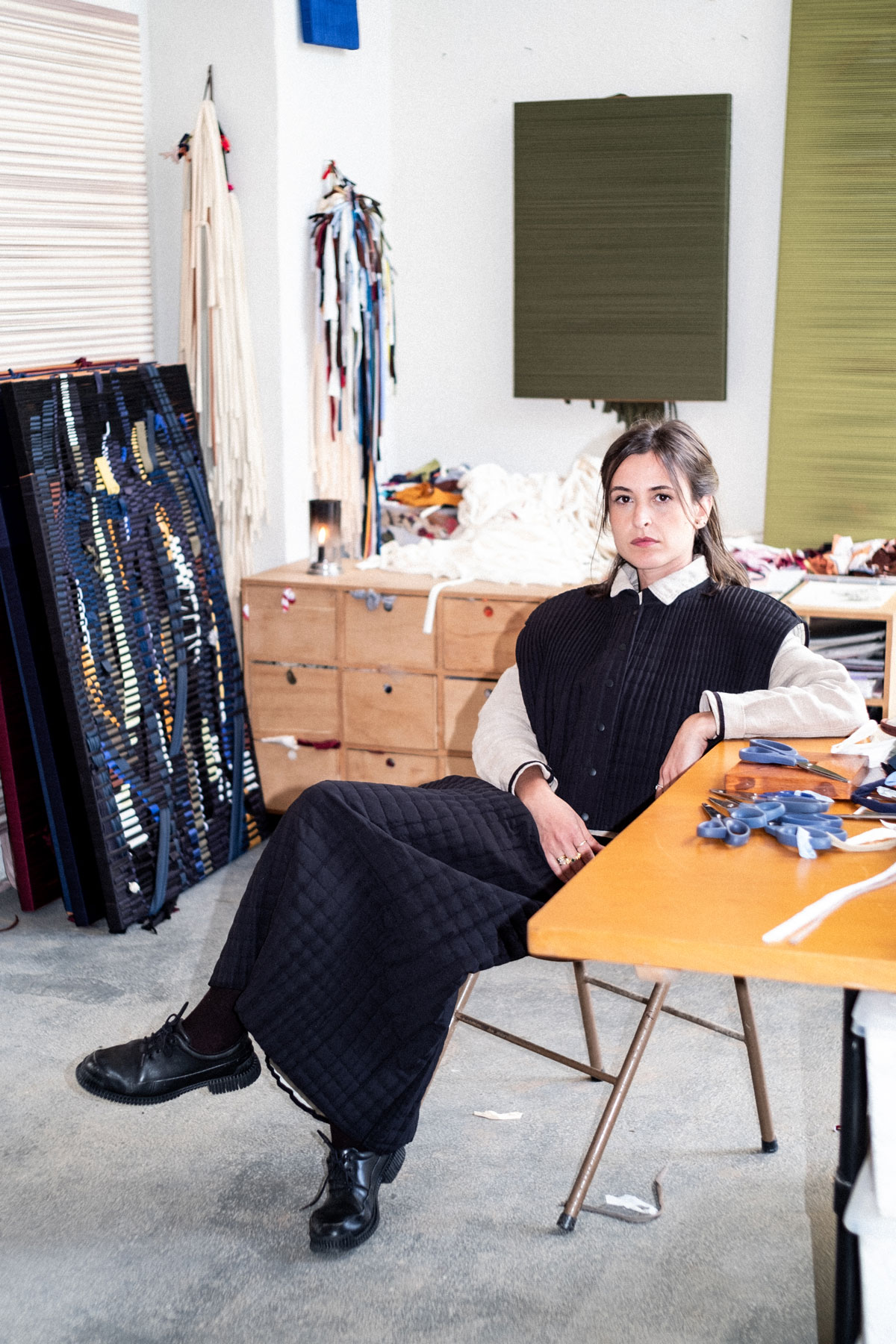
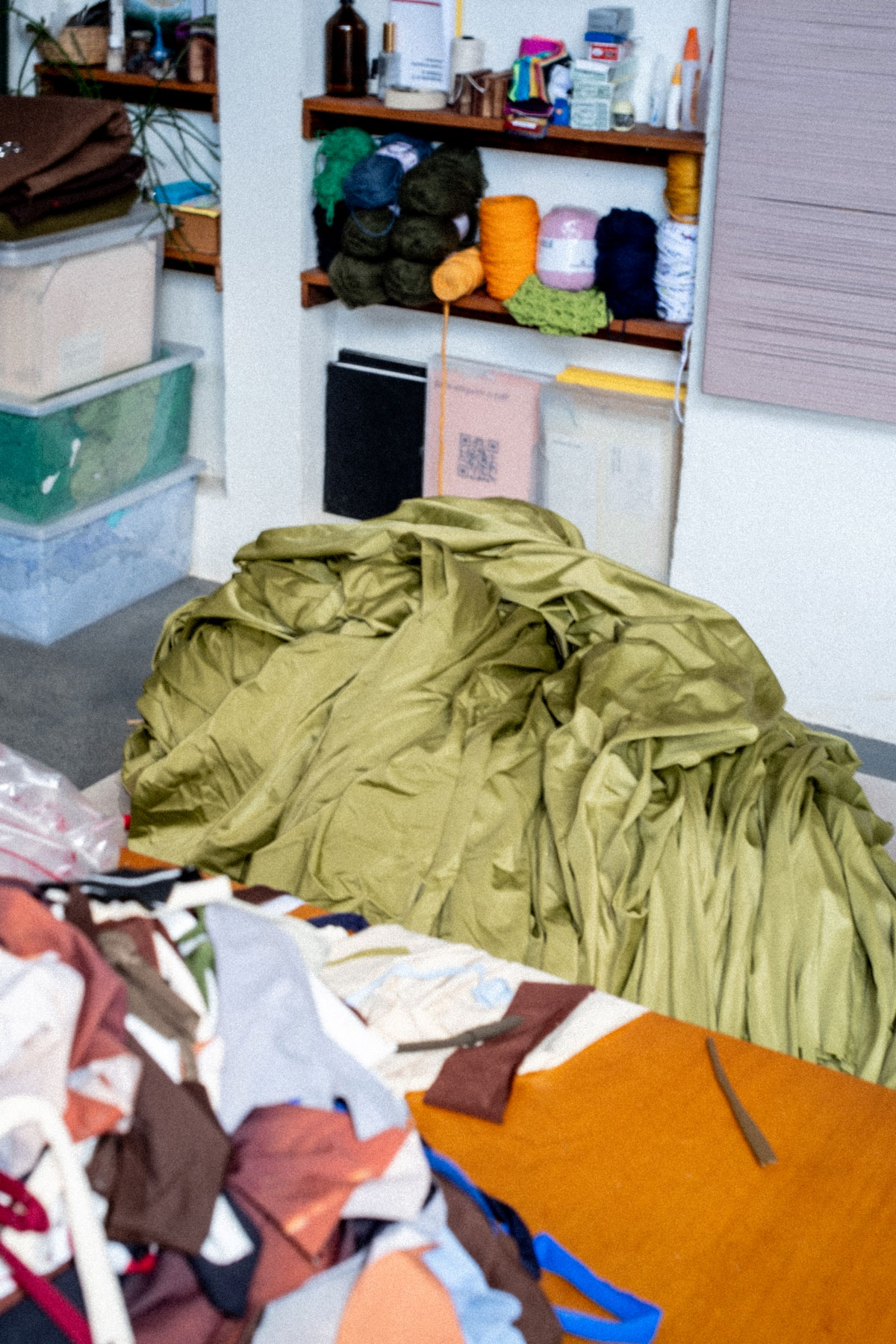
I think of the studio as a materialization of my mind, as though my thoughts themselves could take physical form. At times, it is full and chaotic, with Lycra scraps scattered across the floor and books left open or stacked in ways that allow the words on their spines to become phrases suspended in the space. At other times, it is completely empty, or filled with works in progress, each one somehow guiding the next.
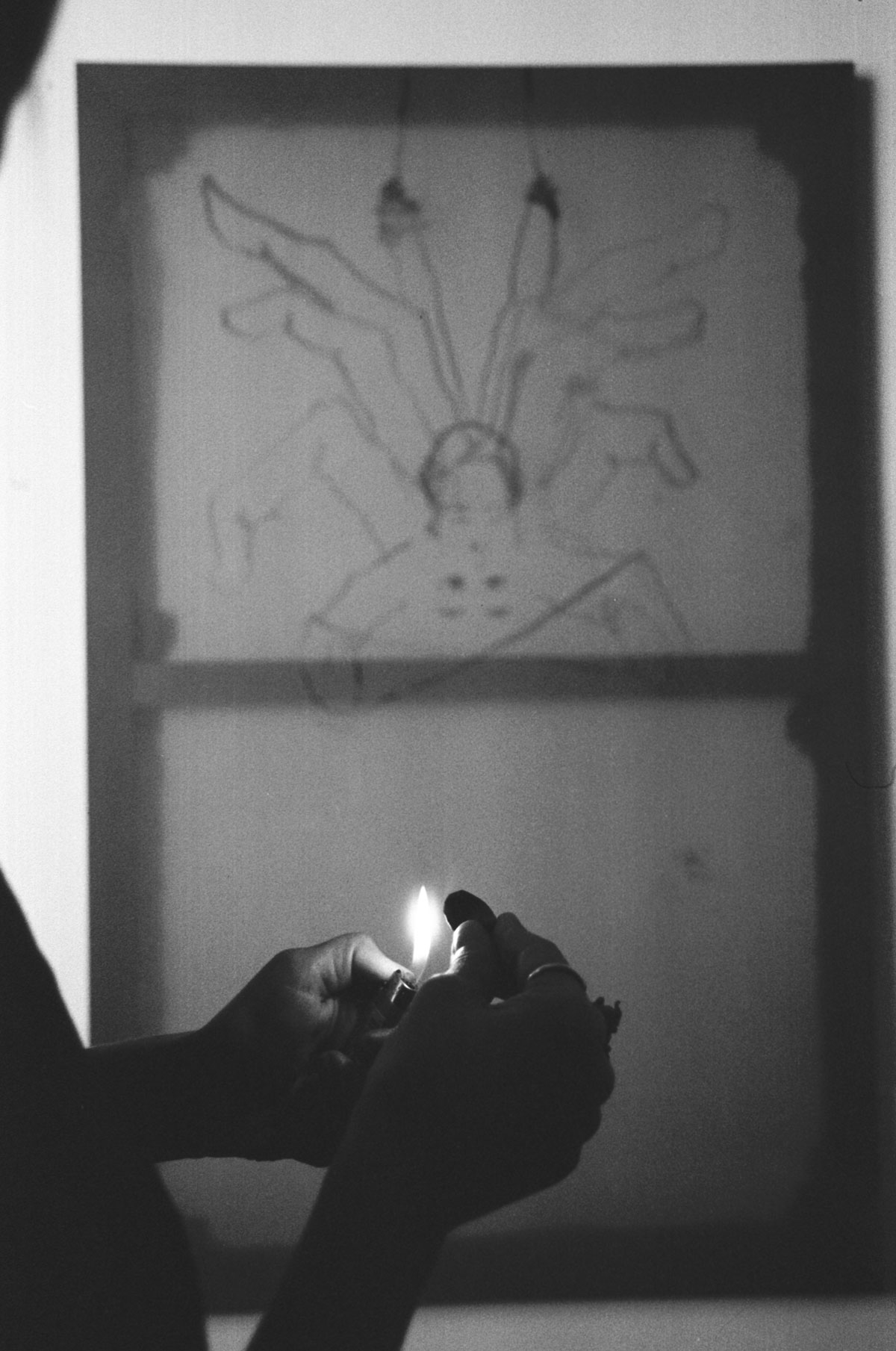
I repeatedly return to the ritual of cleaning everything. I clear the shelves and objects, wipe down the surfaces, and light incense. I do this whenever a work leaves the studio, whenever I feel the need for a shift, or sometimes in the middle of working. I often stop what I am doing simply to clean—a way of resetting the space and, in turn, resetting my mind.

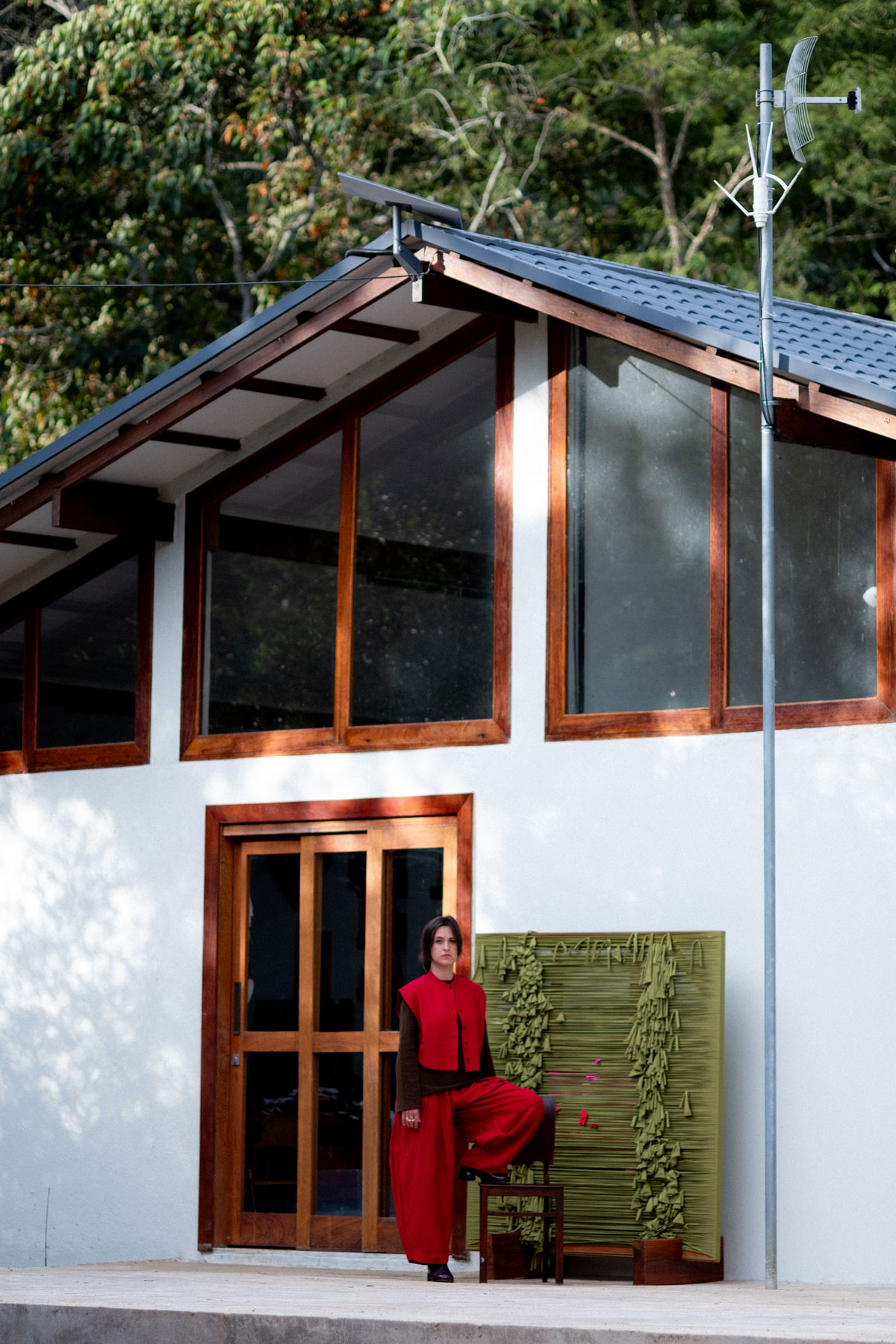
My studio is in the mountainous region of Rio de Janeiro, in the rural area of Teresópolis. My home sits at the bottom of a valley, where I live with my soon-to-be wife, our Rottweilers, our German Shepherd, and our little mutt, roughly two kilometers from the nearest neighbor.

The studio is under the same roof as the house, but I designed it with a separate entrance specifically to preserve the ritual of leaving home to go to work. To get there, I have to step outside and walk around the house—a small but important transition between domestic life and the studio.

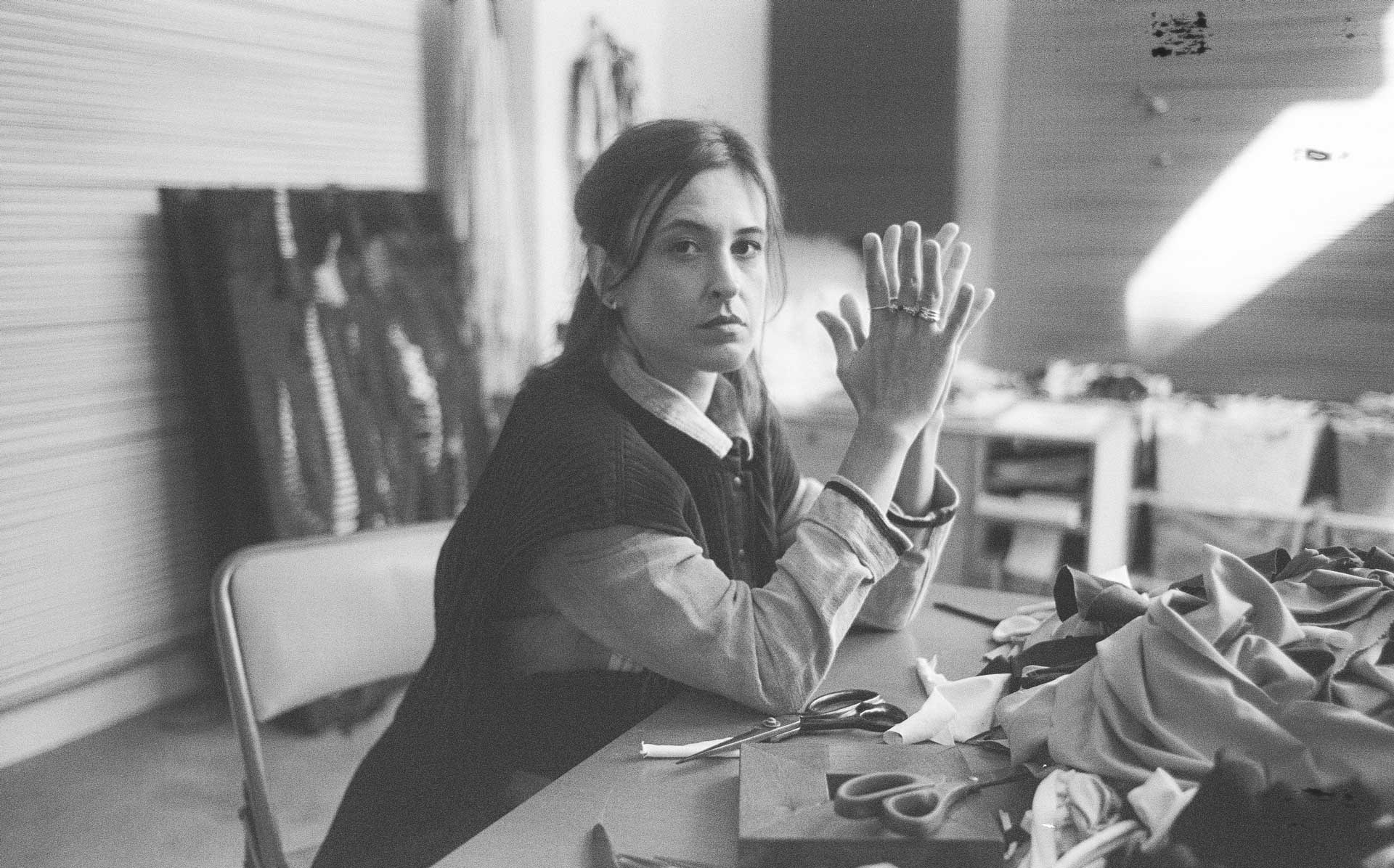
The space has double-height ceilings, with the late-afternoon sun entering low through the windows and grazing the room. The walls opposite the windows are white, allowing the light to diffuse throughout the space. There is a large table where I draw, cut fabric, and pack works that are about to leave the studio. There are two chairs. One always remains in its usual place beside the table. The other wanders around the studio with me. I move it depending on the works I’m making, positioning it in different parts of the room so I can sit, observe them from a distance, and see them from different angles.

I organize my Lycra scraps in around fifty transparent boxes, simply because that’s all the studio can hold. Otherwise, I would probably have many more. Each box is filled with fabrics that I have selected individually, one by one.
 

When the scraps arrive, they go through a process of cataloguing that also serves as a kind of neutralization of the material coming in from the outside world. It is during this process that I ritualize the arrival of these masses of color, allowing them to shed their previous associations and enter the studio with a kind of energetic neutrality, ready to take on a new energy and meaning through the work. At the moment, I organize them by color and type of fabric, although that system may change.

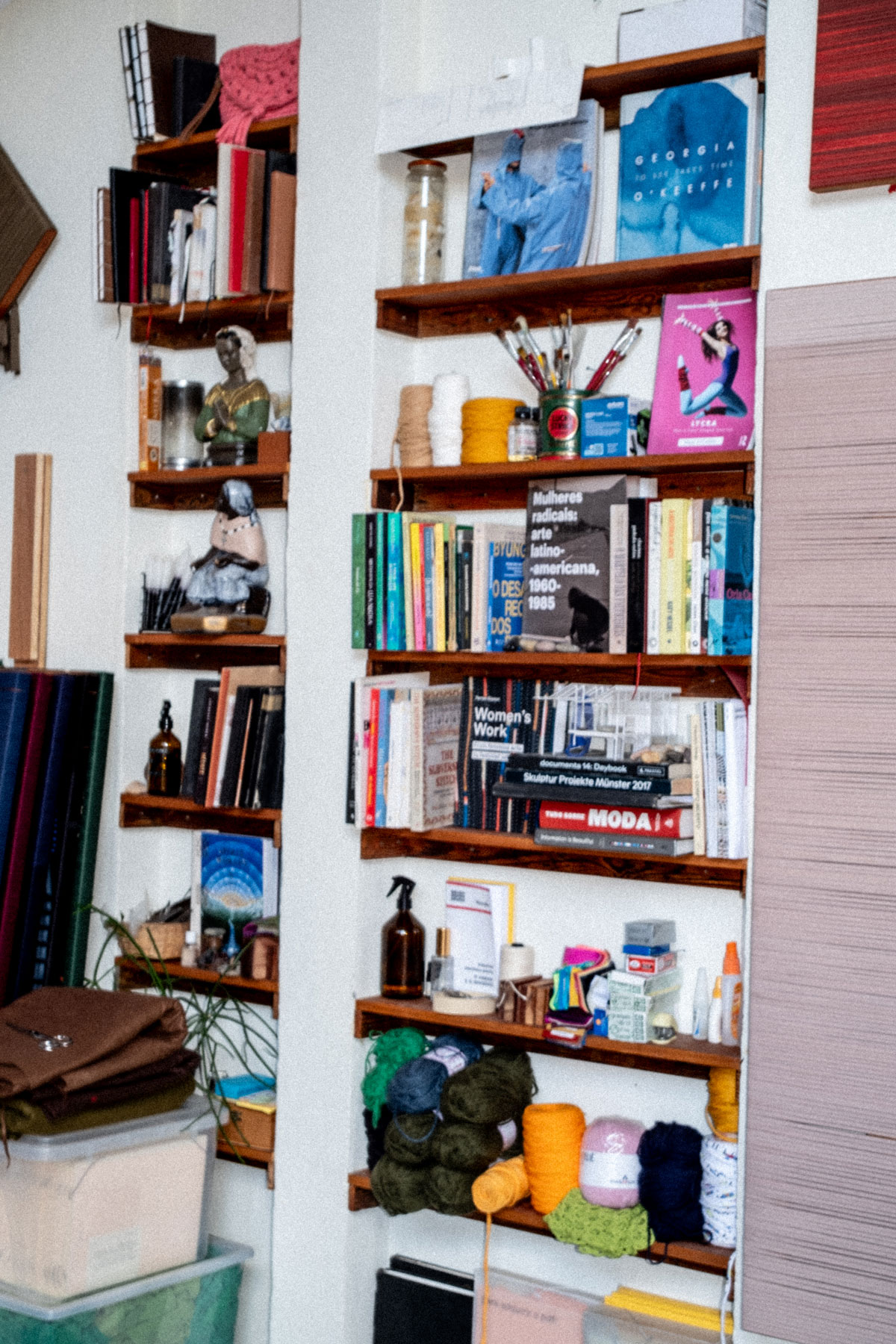
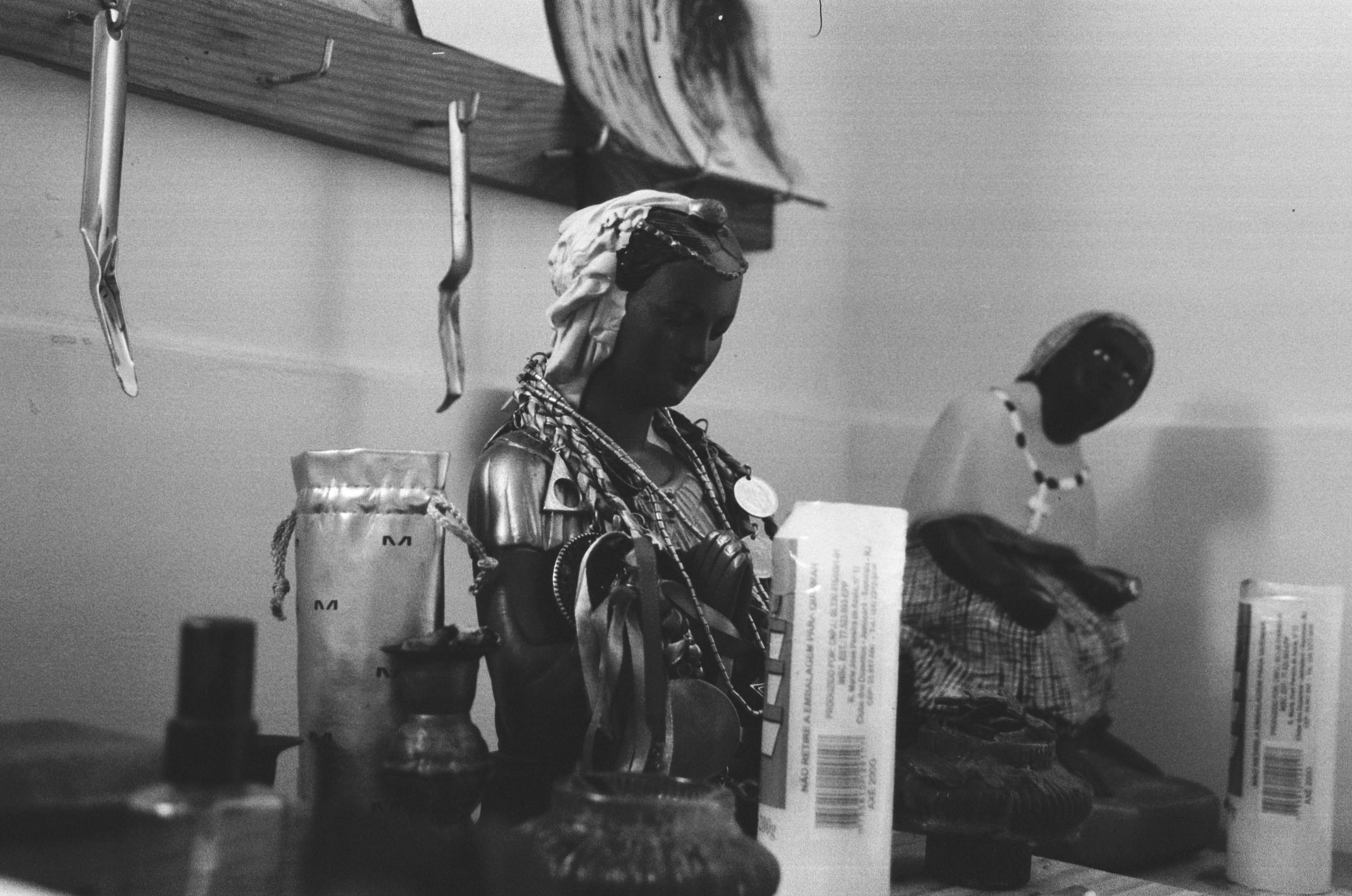
I have a wall-shelf of past notebooks, important books, basic studio tools, and my altars. One altar for Cigana Sara, another for Maria Conga d’Angola. They are two entities who guide my life and my work.

On my table, always within reach, I keep Agnes Martin’s book of writings, which I consult like an oracle and which, whenever I open it, guides me precisely.

Over time, I’ve created rituals for entering, staying in, and leaving the studio, like working through the time it takes for a candle to burn (sometimes a whole candle, sometimes two), working for the length of albums or entire films, and moving everything around if a piece asks for it.

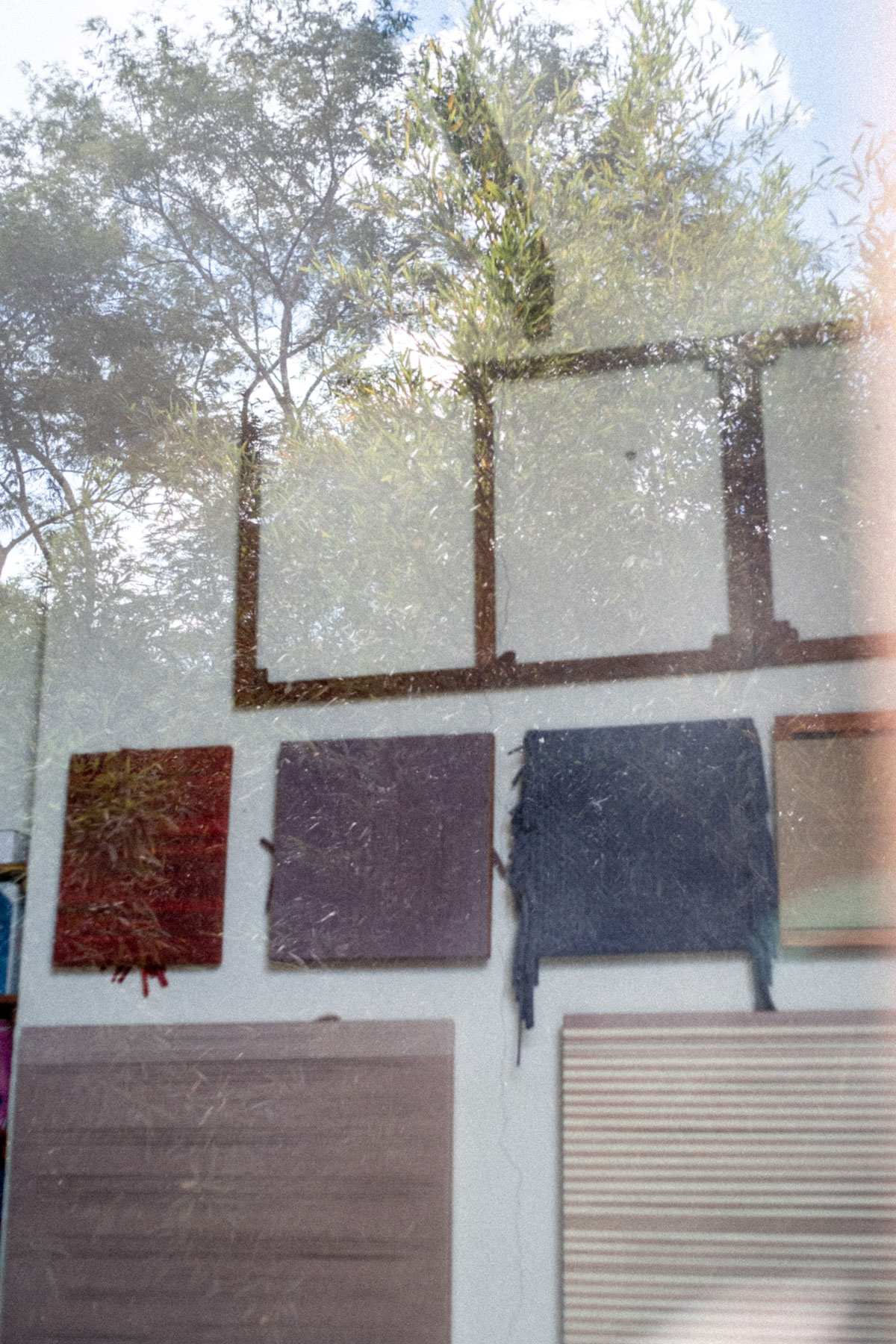
Thinking about it, the one thing that never changes here is the sound of falling water. I designed a window that opens toward the river running behind the forest. I can’t see the river from the studio, but its sound is always present, constantly filling the space. Some things need to remain constant. After all, we all need something to hold on to

My studio is my mind.

You can find out more about Dani Cavalier at @cavalierdani //  galatea.art/artists/

Photos: Demian Jacob , Cassio & Courtesy of Galatea Gallery.

Related Posts