Igor Simões: When I received the invitation to have this conversation, I started thinking about artists I work with a lot… I arrived at your name because of the way you think about contemporary sculpture, which strikes me as somewhat rare and has to do with an invention of language, of terms that exist between languages and artistic languages, extending into written language and its relationship to the oral. You have an ability to theorize while making and to make while theorizing, it isn’t something separate. I’m trying to find a word for that.
Rebeca Carapiá: I think that has to do with the fact that I’m an artist-researcher. So this sense of theory comes from the fact that I’m researching all the time; what am I saying, who am I speaking to, what is this materiality that is saying something. I believe it’s a response to living with these thoughts, with these questions, to how this material responds to those questions, and to how I bring all of that together within contemporaneity in order to think politically, affectively, and so on. Maybe the word theory appears as a place, of distance, of utopia, and of what we construct as theory. But for me, it’s a practical exercise. Almost methodological. So it’s no coincidence that this work becomes a master’s thesis. Because we talk about theory, but in the sense of how to bring all of this into place.
IS: Yes, you’re an artist-researcher, and I completely agree with everything you’ve said. But I think what I mean is something else. I don’t think the word is theory; I think it’s thought. It has to do with the way you construct a way of thinking about sculpture and how that thinking is permeated by a perspective on contemporaneity, on what it means to be alive here, on what matters, on what needs to be sustained as an artistic commitment. I see you as someone committed to preserving the space that artists need to occupy, and you construct this thinking through sculpture itself. This construction of thought through the work has a historical tradition, but keeping it firmly rooted in the present is a major challenge. I don’t know what you think about that. Maybe I’ve just created a huge mess.
RC: It’s interesting to hear you say that because I don’t read my own practice that way, nor do I think about how I construct it. I simply keep making and, through gesture, begin to understand how all of these things come together and then construct what I call a cosmology, this convergence of so many beliefs. I like the word thought, but sometimes it feels a little removed from what sculpture demands, the manual and bodily work. The work places something on the same level as thought, you know? This physical work alongside materiality, the sounds inside the workshop, the machines screaming, the soot hitting the wall, the way the material responds to thought, all of this is a very important part of the process of creating sculpture, of arriving at a form or a result. Thought does not sit above what will be constructed through the material.
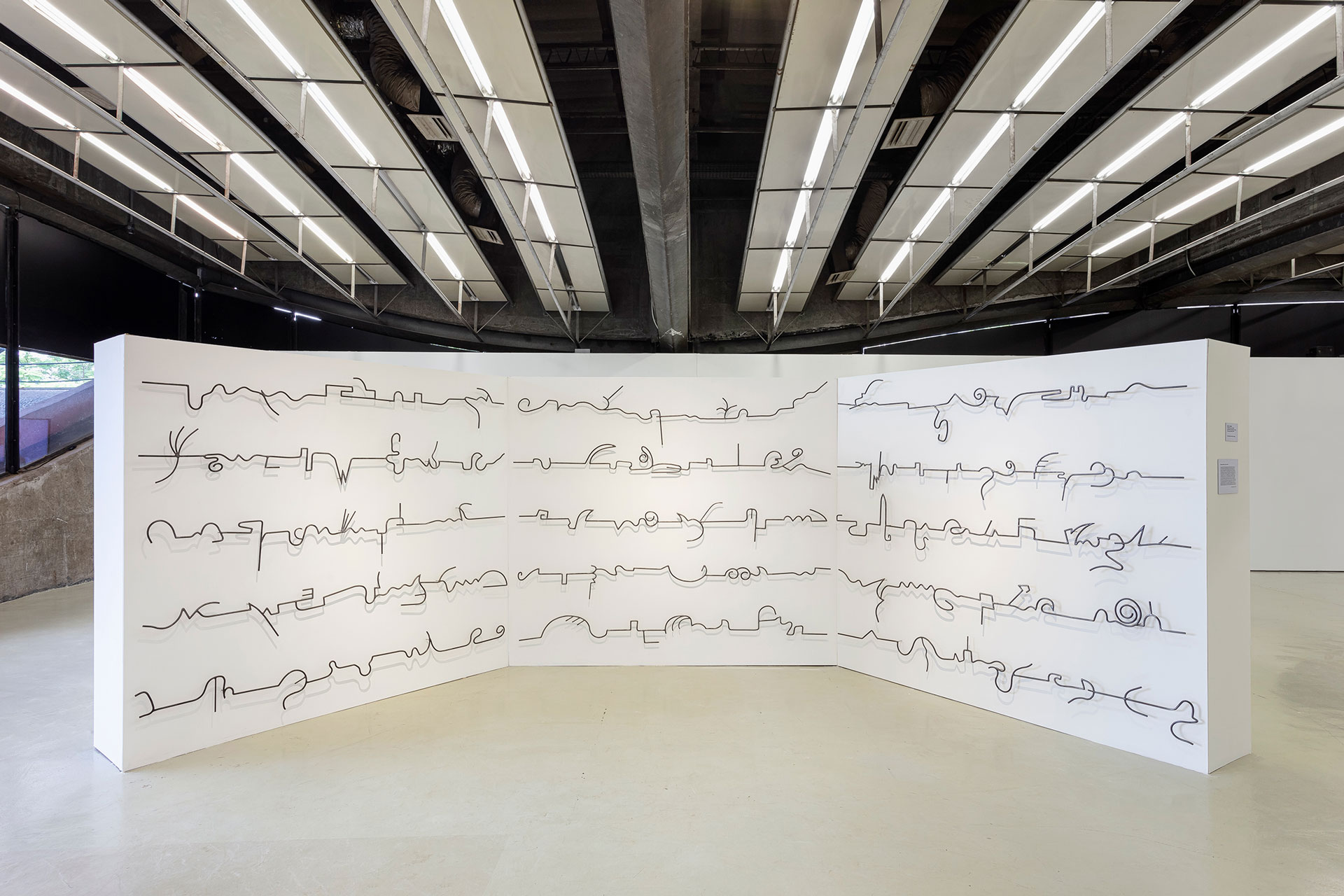
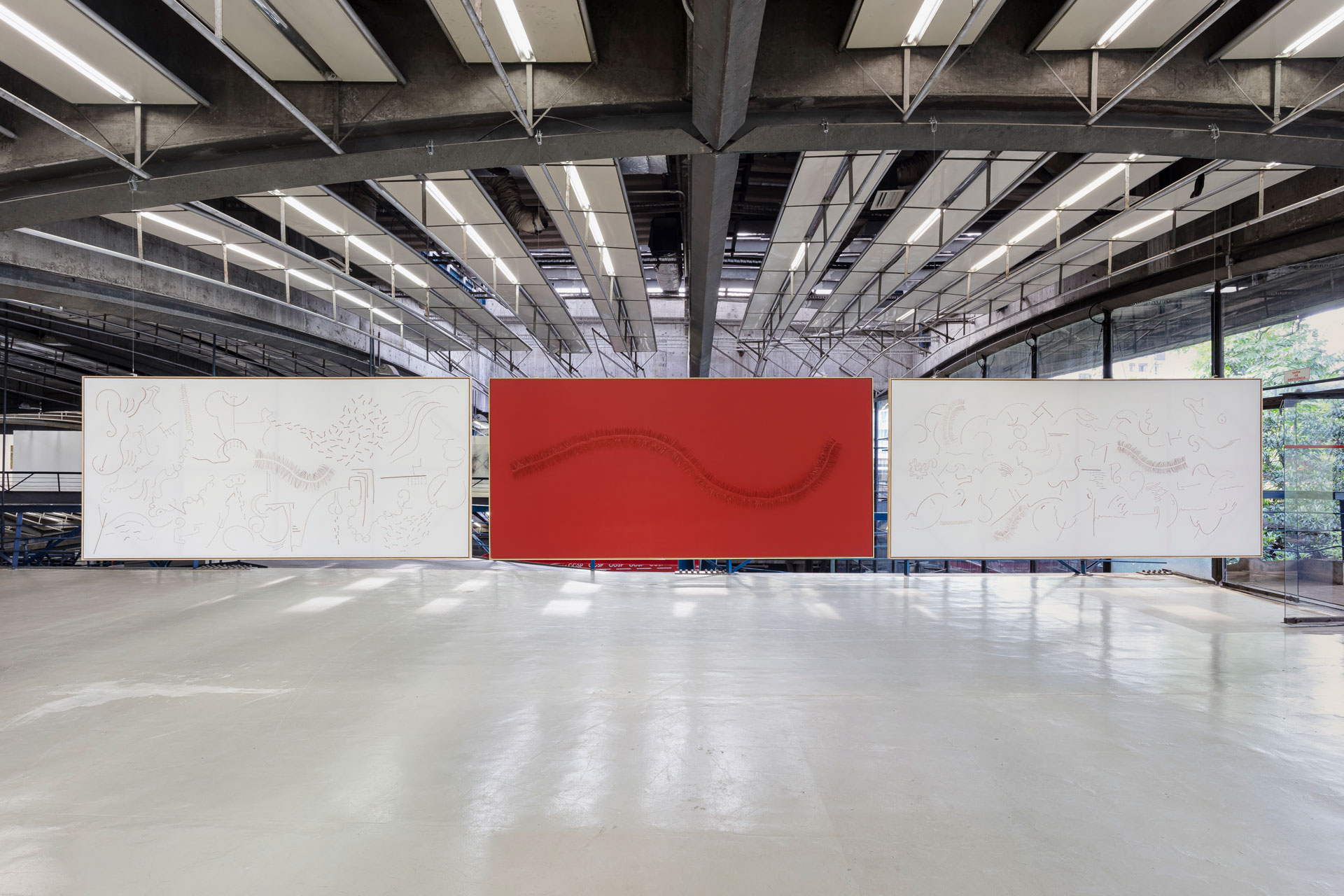
Rebeca Carapiá, Um barco feito para afundar, 31st Exhibition Program Solo exhibition. Centro Cultural São Paulo, Brazil, 2021.
Photo: Filipe Berndt. Courtesy of the artist.
IS: That’s one of the challenges of our generation when it comes to making sculpture. If you think in terms of the history of the West—which is always so problematic [laughs], sculpture is the language that underpins this very idea of the West. What should the body look like? What should its color be? These questions span centuries, and only now are we beginning to discuss what sculpture itself actually is. There is a very localized protocol for thinking about sculpture because of this idea of the West and everything it represents.
It’s a language that, for a long time, was strongly associated with a masculine role, although, of course, there are major exceptions. The earliest accounts of sculpture carry this idea of stone, weight, the block, and therefore of who is able to make sculpture. But you work with a heavy, hard material: iron. It’s very common for people, especially curators and critics, to emphasize the fact that you are a woman manipulating this hard material and occupying the space of the workshop. How did you find Rebeca within all of that?
RC: Thank you for your comments and for that question. I think it’s been a while since I’ve thought about this idea of normative femininity, but it’s impossible not to be seen through that lens. We have this need to justify things, right? The existence of a practice, where it comes from, and who it belongs to. I come from a family of self-employed tradespeople who provide services, glasswork, for example, and from an area that, like most peripheral neighborhoods, has a main street lined with businesses like that: glass shops, metalworking shops, mechanics, and so on. I myself worked providing services, fixing things here and there. I’ve always had a relationship with materiality, so for me it was a very simple and practical transition, working with materials I already knew and handled.
When you say, for example, “I’m going to make sculpture,” it sounds as though there’s something there that needs to be discovered, something that doesn’t yet exist, which feels different from saying, “I’m going to work.” Within our context of contemporary art, I see a hierarchy between the artist’s practice and labor and the worker’s labor, right? And that’s where my question lies: for me, there is no difference between working and making sculpture. That distinction doesn’t exist.
So I didn’t need to find Rebeca within this practice. I keep thinking that if we were able to relate our intellectual practices more closely to labor, there would be a more fluid connection between thought, political construction, theoretical construction, academia, art, music, and everything else. None of this is reserved for particular people, for genius, or for some exclusive notion of intellect.
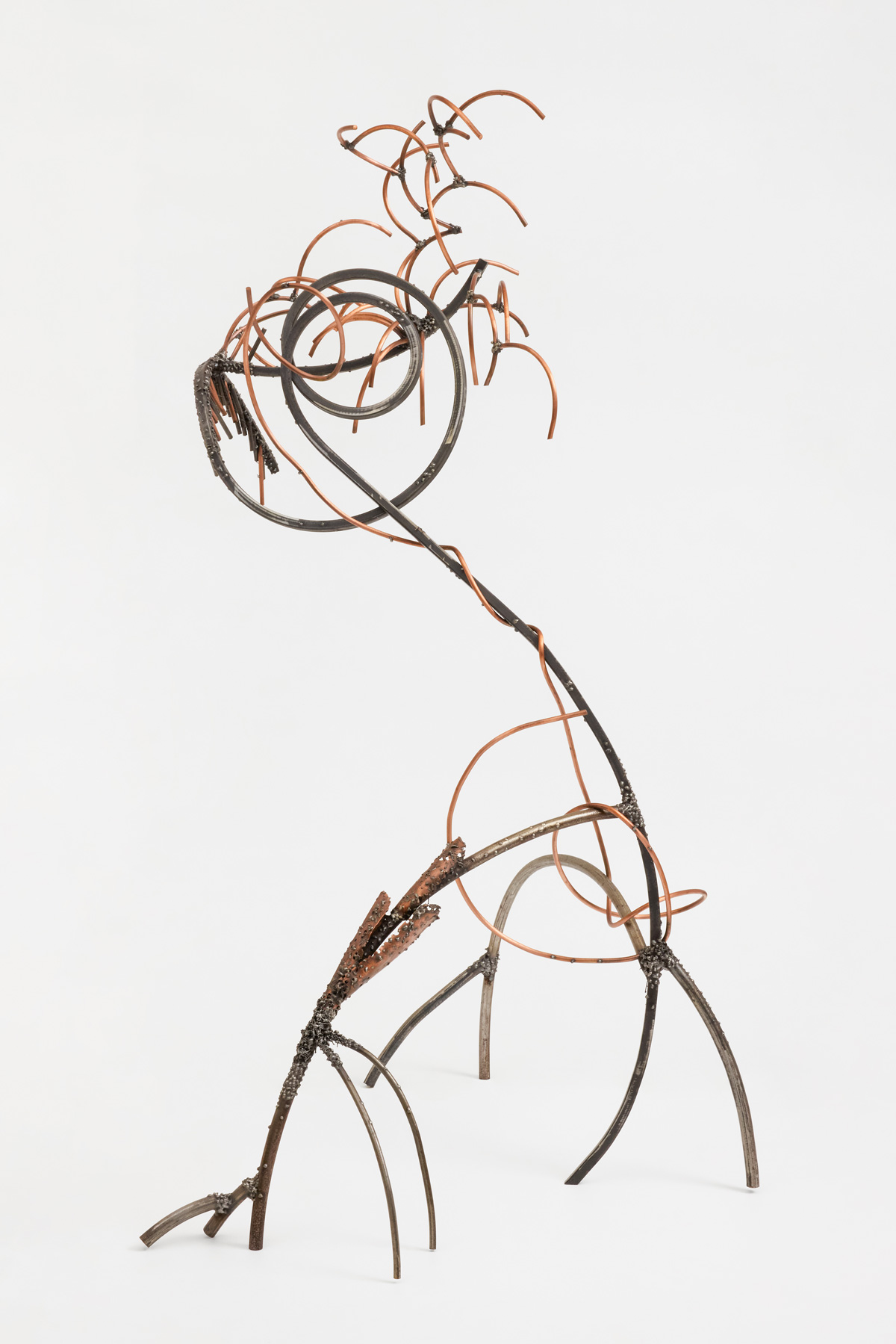
Rebeca Carapiá, Número 14 , from the series Como criar raízes aéreas, 2026. Copper and iron. Courtesy of the artist.
IS: And what about the question of femininity, which is something of a label that gets placed on you?
RC: I find it so complicated to enter into this idea of the feminine. Is there a femininity that we can categorize? Whose construction is that? Who decided that the feminine lacks strength? Is this supposed to be a discourse about strength, body, sex? I think this reflects a patriarchal society that constantly needs to name women’s practices—what they are doing, where, and why they are doing it. And then to construct this specificity around me, for example, because I am a larger woman, a dyke, who is capable of making work that conveys strength, is a way of reinforcing that idea. I have no relationship to that, and I don’t respond to it. I do what I like to do and what is important for me to do as an artist.
The workshop is a challenging space, but I don’t think it’s any more challenging than motherhood or being a woman in the corporate world, for example. Being a woman in this patriarchal and violent society is challenging.
IS: That makes me think of one of the editions of the São Paulo Biennial that I loved most, curated by Charles Esche [2014], the theme was precisely this: “How to talk about things that don’t exist.” I think that question becomes enormous when you think about the process of artistic creation. These are things that aren’t in the world, but the artist is in the world.
RC: Look, I get a little apprehensive talking to you because I feel very exposed, you know? But it’s okay. We’re very close. We know each other very deeply and have shared so much with one another!
IS: Me too. For the record, my eyes have already filled with tears several times during this interview. I keep biting my lip. Precisely because, for us, it’s a convergence of work, belief in the world, and love, very much in the sense of love as a creative force.
RC: Yeah… I have the feeling that talking about things that don’t exist somehow has to do with translation, you know? I’m not sure those things don’t exist. Sometimes I have the impression that things explode, in a gesture, in a text, in an image, in a sculpture, a building, or food. I’m going to say something really silly. You know when you affectionately bite someone? It’s a feeling that needs to come out. You don’t really know what you’re doing, but you know you need that closeness. There’s something you want to say that exists somewhere inside that gesture. I have the feeling that working as an artist is sometimes like that. It’s having this urgency to speak about something for which you can’t find the word. That’s where we arrive at language. Language is in everything, in the medium, in materiality, in orality, in writing, in the landscape. I think that’s why I love working with language so much. Because language is something that can move across so many situations. So I’ll turn the question back to you: does it really not exist? Or does art allow us to see what already exists? And within that lies the entire history of art, aesthetics, and creation. I think artists have this capacity, sometimes, to reveal something that seems not to exist but is actually simply invisible. It’s very moving when a work of art makes sense to us as viewers, as though you begin to inhabit the same place as the work, even without knowing how to explain why.
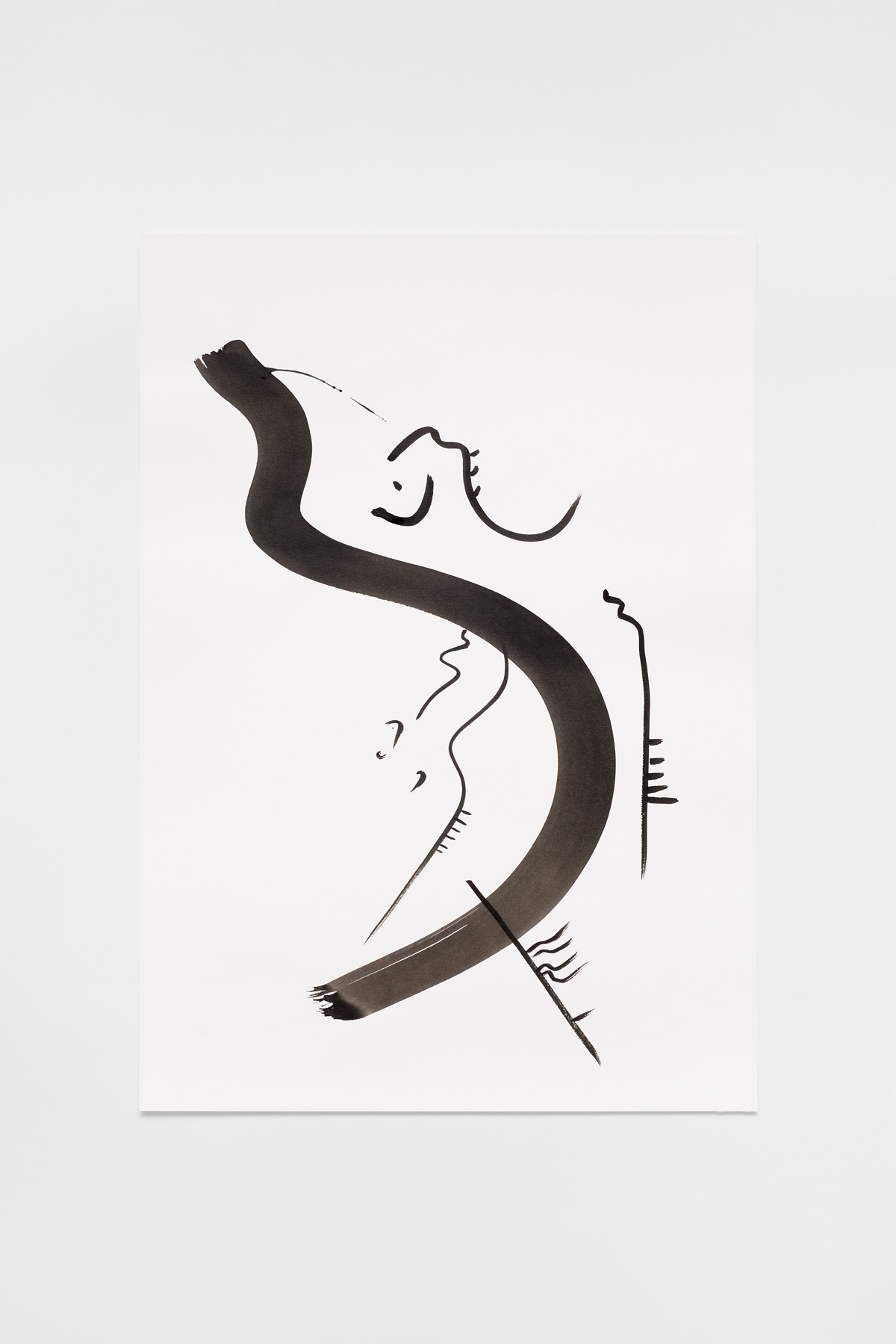
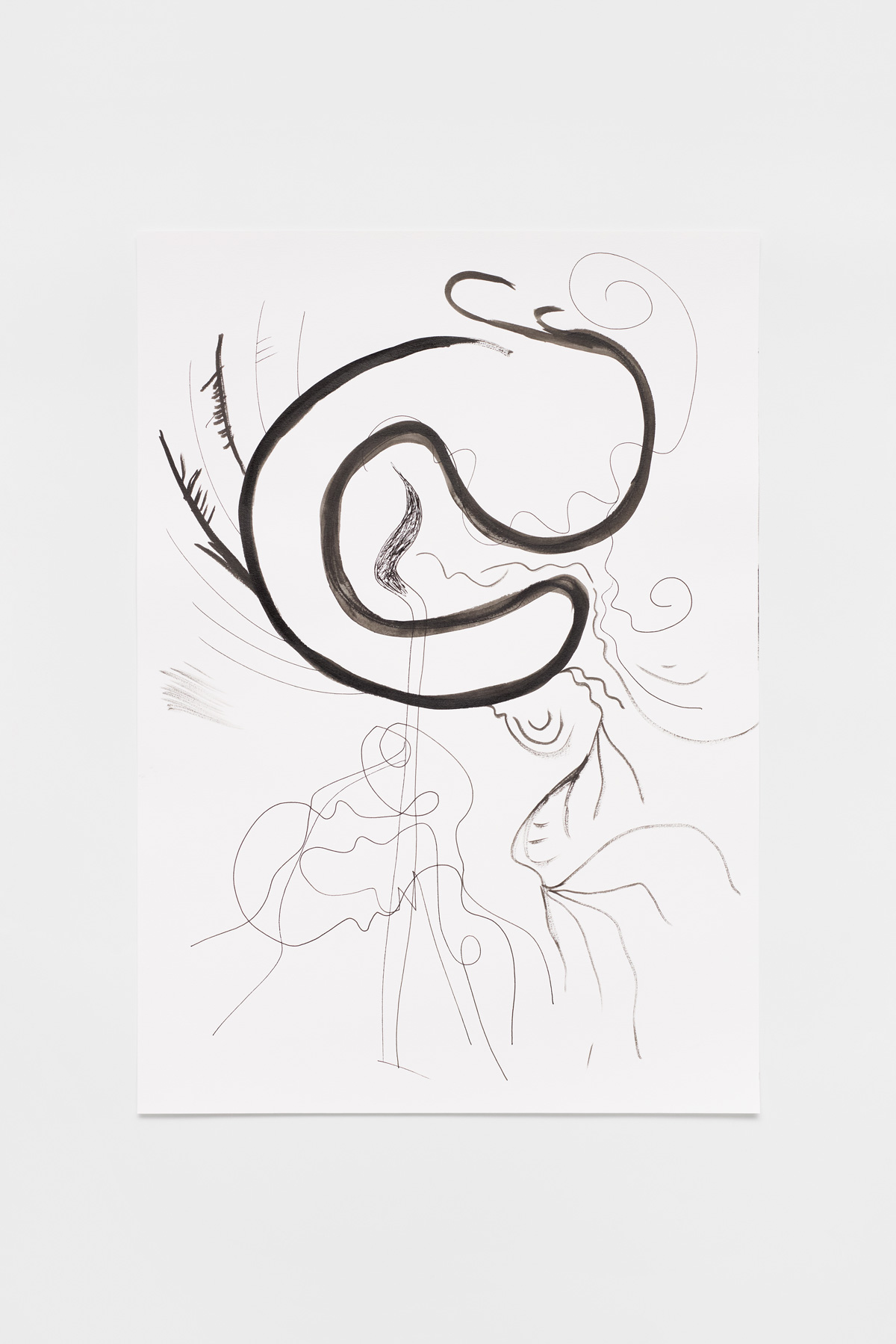
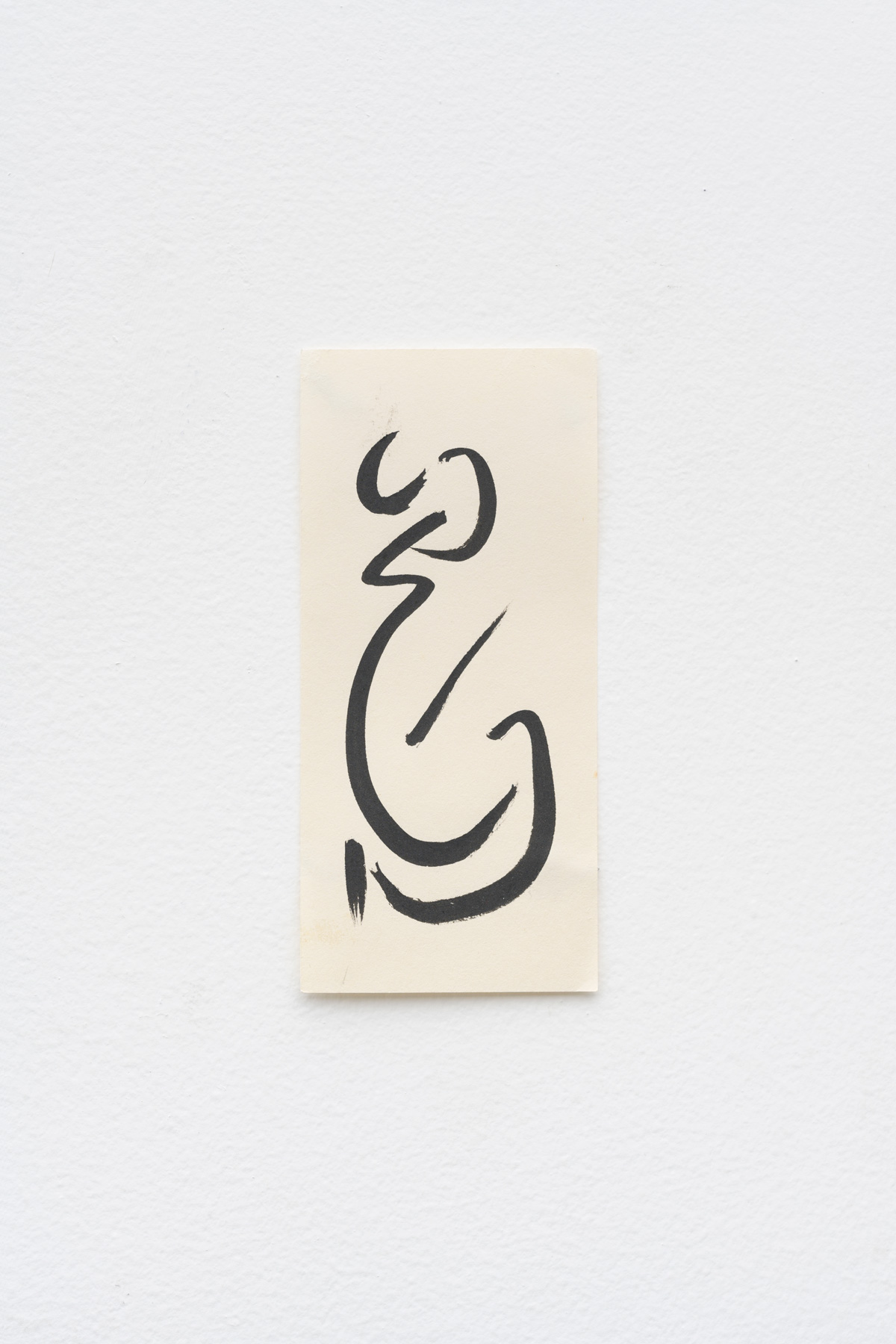
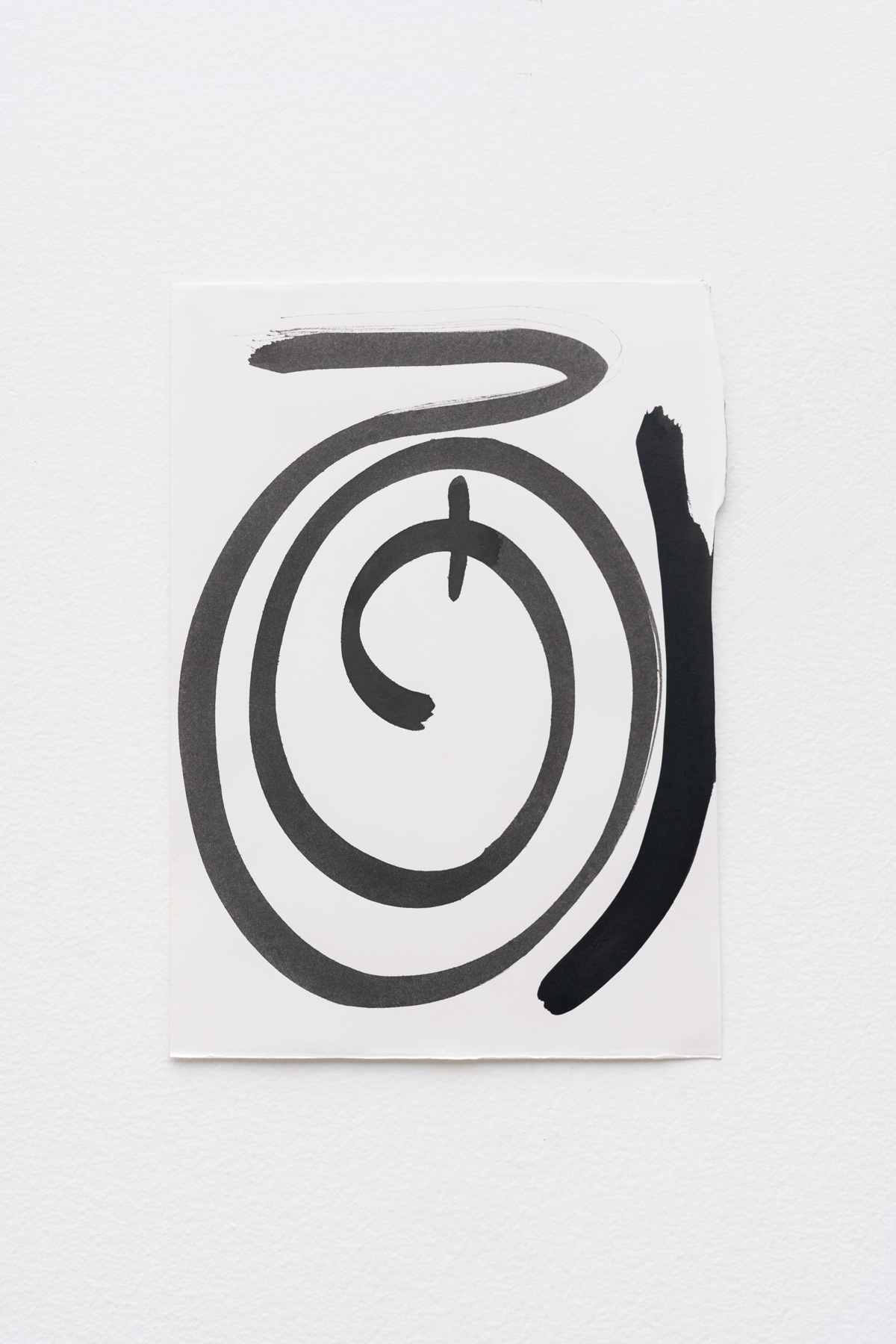
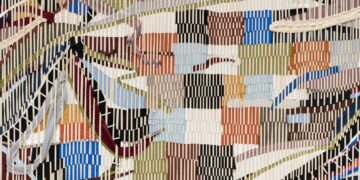
All images: Rebeca Carapiá, Untitled, 2026. Ink on paper. Photo: Estúdio em Obra. Courtesy of the artist.
It took me a long time to start going to museums because they seemed like spaces so far removed from anything I could connect with. But one day I looked at a work and thought, “This is it. I like this. This touches me, it moves me.” It was a sculpture, a very simple work made only of lines, on view at MAM Bahia. Something began to make sense to me, and that feeling stayed with me. When I make my work, I don’t have expectations, but I do hope that this abstraction and this tangled feeling, all these relationships I’m constructing from what I want to say, from the research, from what the material itself does, will make sense through someone else’s gaze. When it hits, it hits. What exactly hit, I don’t know. That’s where it is, my friend.
IS: Wow, that’s exactly it. I also remember a turning point in my relationship with contemporary art. I grew up in Pelotas, which, as surprising as it may sound, has a very rich artistic production and cultural life because of the university, the art program, and the museum. But I remember going to the Mercosul Biennial and seeing Ayrson Heráclito’s work—a piece I later had the opportunity to present at Inhotim [Museum featuring an internationally relevant art collection, located within 346 acres of forests and botanical gardens, in Minas Gerais, Brazil]. It was this enormous tank with a liquid that wouldn’t mix. I stood looking at it for a long time without knowing what I would later discover about the water and dendê oil. When I talk about this memory, I still freeze. There are no words to describe what happens in our relationship with a work of art… that je ne sais quoi, as the French say. I don’t know, it’s like a hook that catches you. You’re hooked, and you just stay there.
RC: Something clicks.
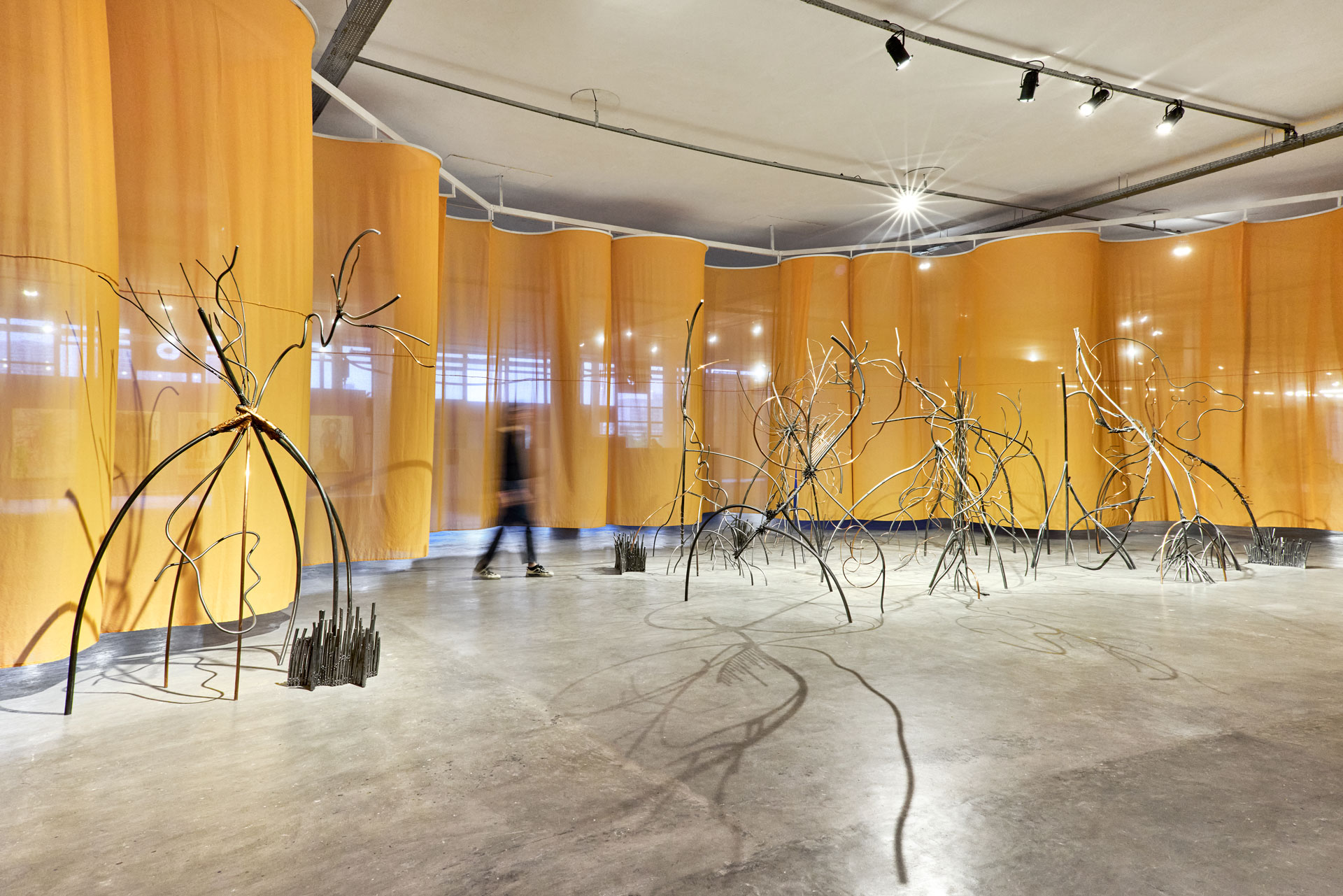
Photo: Estúdio em Obra. Courtesy of the artist.
IS: Yes. And although I love figurative painting and all that, nonrepresentational and nonfigurative work feels to me like this enormous avenue where I can run, because it isn’t predetermined. Why does a cluster of lines stay with us for so long? When we study art in colonized countries, we see so much that was produced elsewhere, things that aren’t in our museums. And it’s crazy! When I see a work that has stayed with me for a long time but that I had never encountered in person, I always feel something in the tips of my toes [laughs]. My toes curl inside my shoes, as if contracting.
I’m very moved by our conversation, as always happens when I talk to you. Talking with you always reminds me why I do what I do. Why was it that we did this?
RC: I’m moved too. It’s so good to talk to you, my friend Igor, because right now I’m deeply immersed in my practice and dealing with a whole series of demands and deadlines. And that always worries me, you know? Because deadlines can sometimes be very unforgiving for an artist. You discover paths in the middle of the process and then have the feeling that you can’t fully complete that process because there’s a deadline. I’m already digressing a little, but I think it comes from this emotional place, from trying to understand what this journey has been. And then I come back to the two of us. We are both products of deeply peripheral contexts, from very different cities, and somehow we found one another and affect one another. I can never think about that without getting emotional.
IS: Me too [laughs].
RC: Because what we’re touching on here in this conversation are things that we have very much constructed ourselves, right? Sometimes I think sensitivity is a difficult place to reach in the face of all the harshness that life imposes on some people. When you come from a place of great hardship, of relentless work, of profound necessity, of an extremely accelerated pace of life, and you can still feel your toes curl when you encounter a work of art, that is an extraordinary escape from an existence that was taught not to feel. It’s an enormous challenge in the face of the structures and traps we live within, where all these emotions were meant simply to pass unnoticed. And that’s where I think, sometimes, speaking broadly and looking at these colonial societies, people consider art to be a field reserved for the elite because they believe that access to sensitivity isn’t for everyone. Because there is privilege involved in that access.
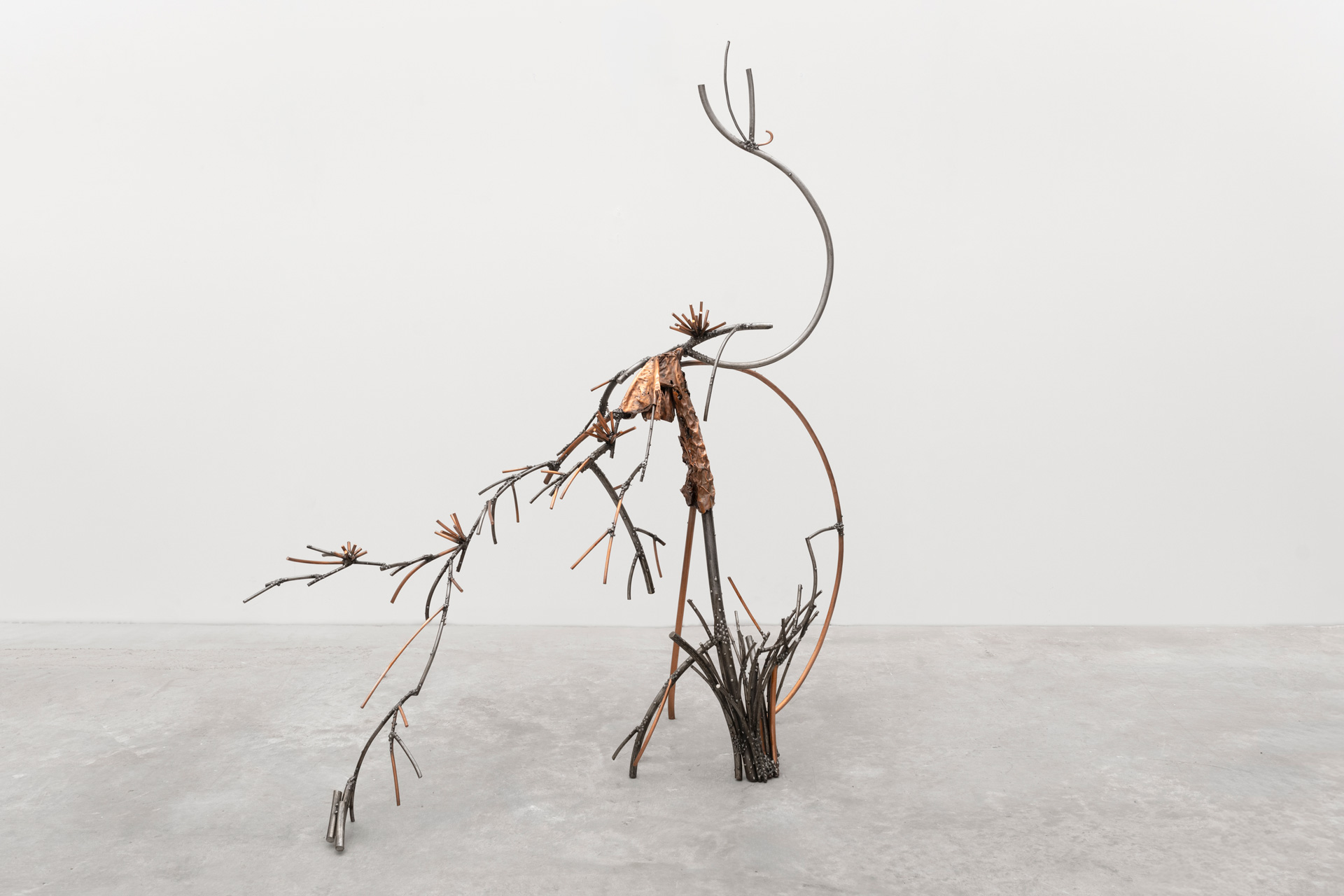
Rebeca Carapiá, Número 12, from the series Como criar raízes aéreas, 2026. Copper and iron. Photo: Julia Thompson. Courtesy of the artist.
IS: I’m listening to you, and there are a few things I think are important to say before we finish. The first is something I think we’ve been discussing since Dos Brasis, and that I find important: the extent to which the idea of exhibition space, which is obviously a criterion underlying all curatorial thinking, takes on a very particular, almost millimetric conception of space when we’re talking about sculpture. And how that space becomes a site of tension between the curatorial demand and the proposition of a sculptor, of an artist like you, especially given the specificity of your work. I’ve been thinking about this a lot. There are certain forms of knowledge from an older generation, with all of that generation’s problems, that a contemporary generation has gradually set aside. As if to say, “Oh, that isn’t important. What matters is…” But there is a knowledge of material, of what it implies, of what each thing means within the work, that is incredibly sophisticated and not that common. And I really do think this is a contribution. I think it’s a contribution to the field. I’ve been pushing you about this for a long time: “Write this down. Look at what you just said. Record this…” Because I think your thinking is extremely sophisticated, Rebeca. The elements you evoke when you speak, the connections you’re able to make.
RC: Oh, my friend, I’m so flattered by your work, by your questions, by the way you see me and my work.
IS: The pleasure is all mine, being able to follow your trajectory and your growth. My friend, I think we have it, don’t we?
RC: I think so.
IS: At the same time, there’s still so much we didn’t get to… but the conversation is endless, right? And now it’s recorded, documented, transcribed.

Rebeca Carapiá, Para o medo que você tem de se machucar, 2023. Twisted iron. Dos Brasis, Sesc Belenzinho, São Paulo, Brasil, 2023. Installation view, Salvador, Brasil. Photo: Foto Marcio Lima. Courtesy of the artist.
To learn more about Igor Simões: @igormsimoes
To know more about Rebeca Carapiá’s work: @rebecacarapia
Hero image: Rebeca Carapiá, Apenas depois da chuva, 2024. Commissioned installation Instituto Inhotim, Brumadinho, Brasil.
Photo: Ícaro Moreno. Courtesy of the artist.