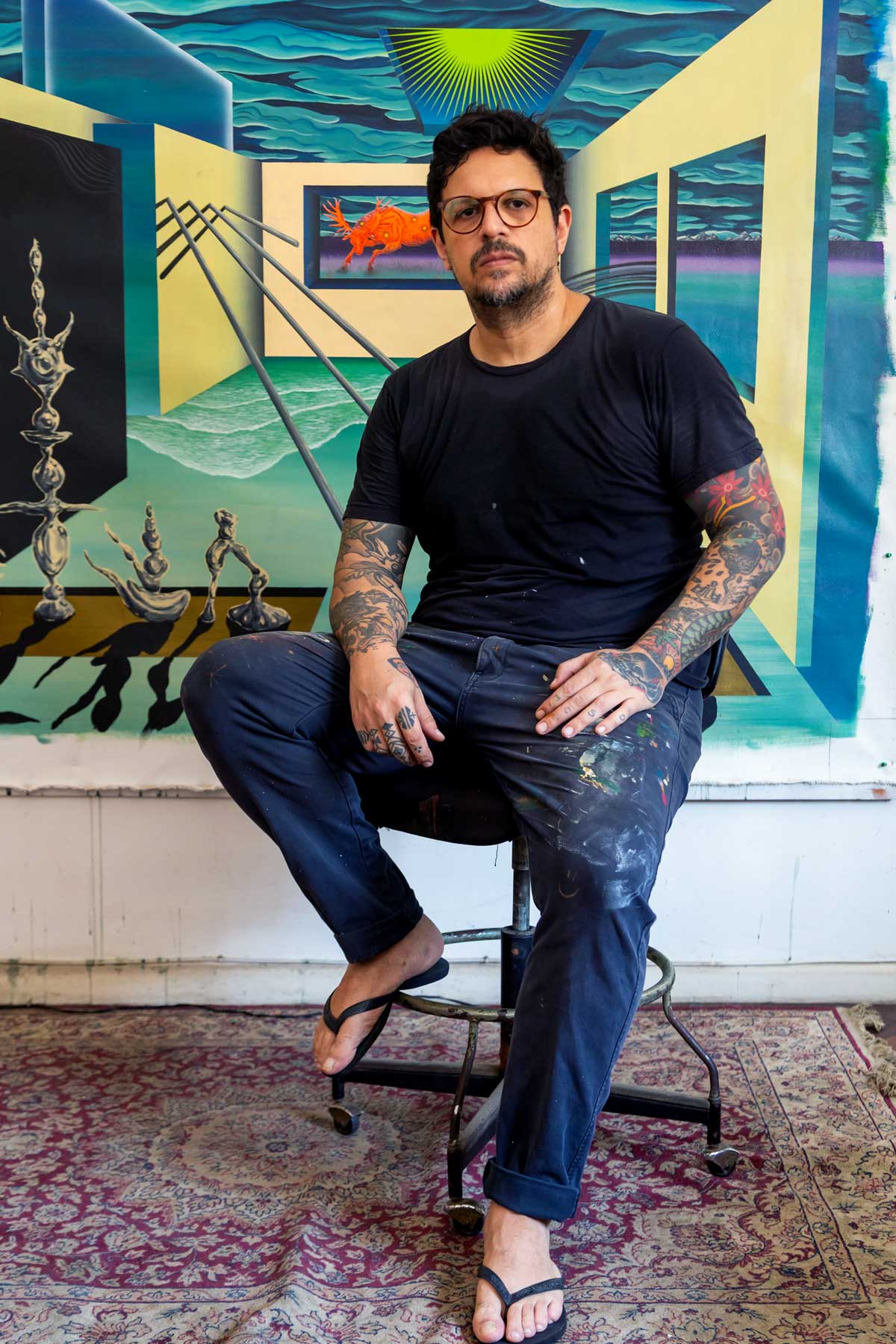
Photo: Marden Matos. Courtesy of the artist.
I’ve been drawing for as long as I can remember. Equally enduring is the story that my mother, Alzira, left the School of Fine Arts at the Federal University of Rio de Janeiro (UFRJ) when she became pregnant with me. She may have left the institution, but she never stopped drawing. One memory, in particular, has stayed with me: watching her sketch while sitting on her bed. She was drawing the colonial houses that line the cobblestone streets of Paraty [a coastal town in Rio de Janeiro], carefully rendering the ornamental details on the corner of a building and their reflections in the rain-soaked street below. Every mark was built through meticulous stippling with an India ink pen. Although the scene itself didn’t mean much to me at the time, the act of drawing did. The concentration, patience, and quiet dedication she brought to the work left an impression that has stayed with me ever since.
I enrolled in architecture school thinking I would spend my days designing skateparks, only to find myself sitting through calculus classes at 7:30 in the morning. It didn’t take long to realize I had chosen the wrong program and that the one I truly wanted was housed in the very same building. Instead of transferring to the School of Fine Arts, I dropped out of architecture—the same school my mother had left twenty-two years earlier—and, following a friend’s suggestion, became an apprentice at a tattoo studio.
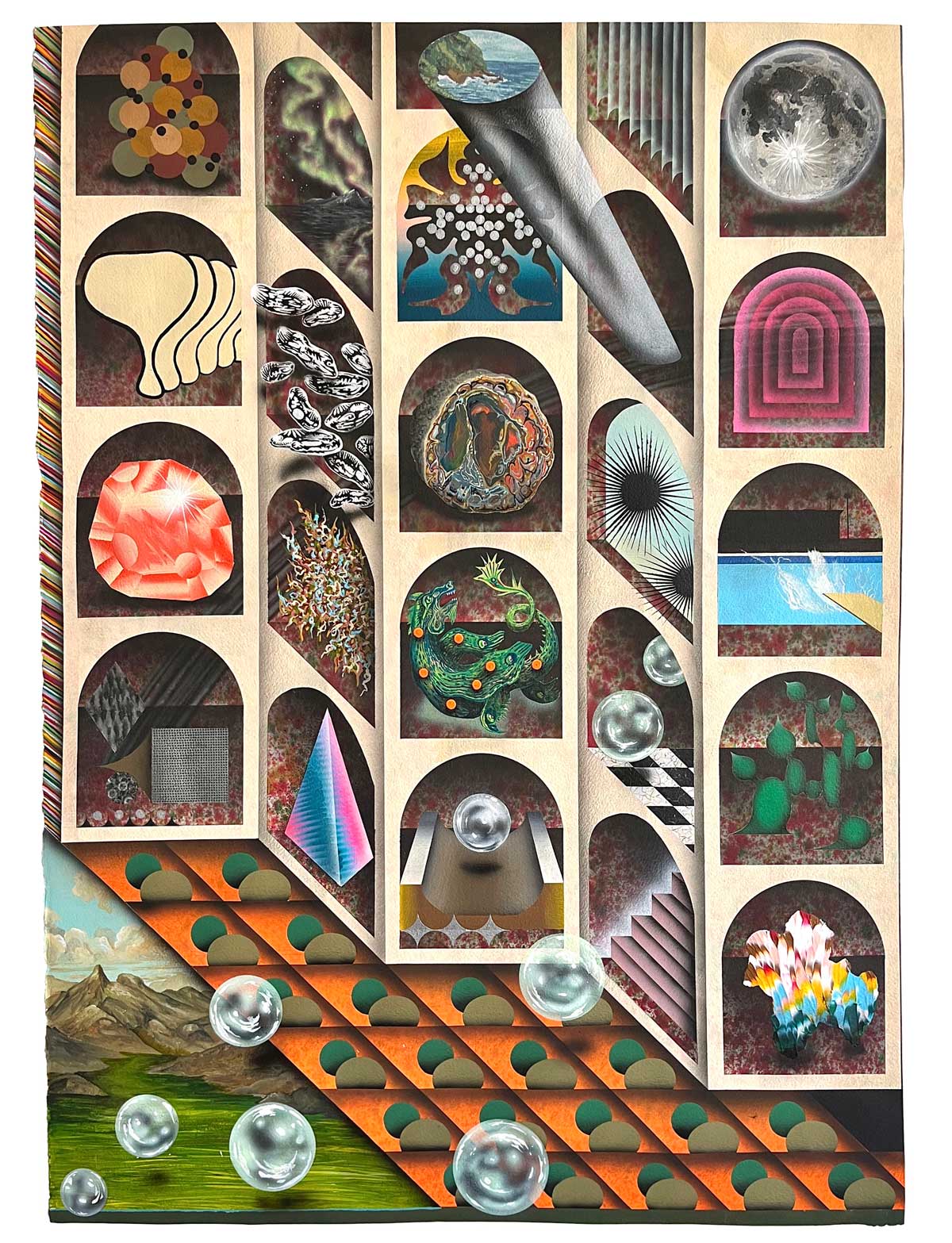
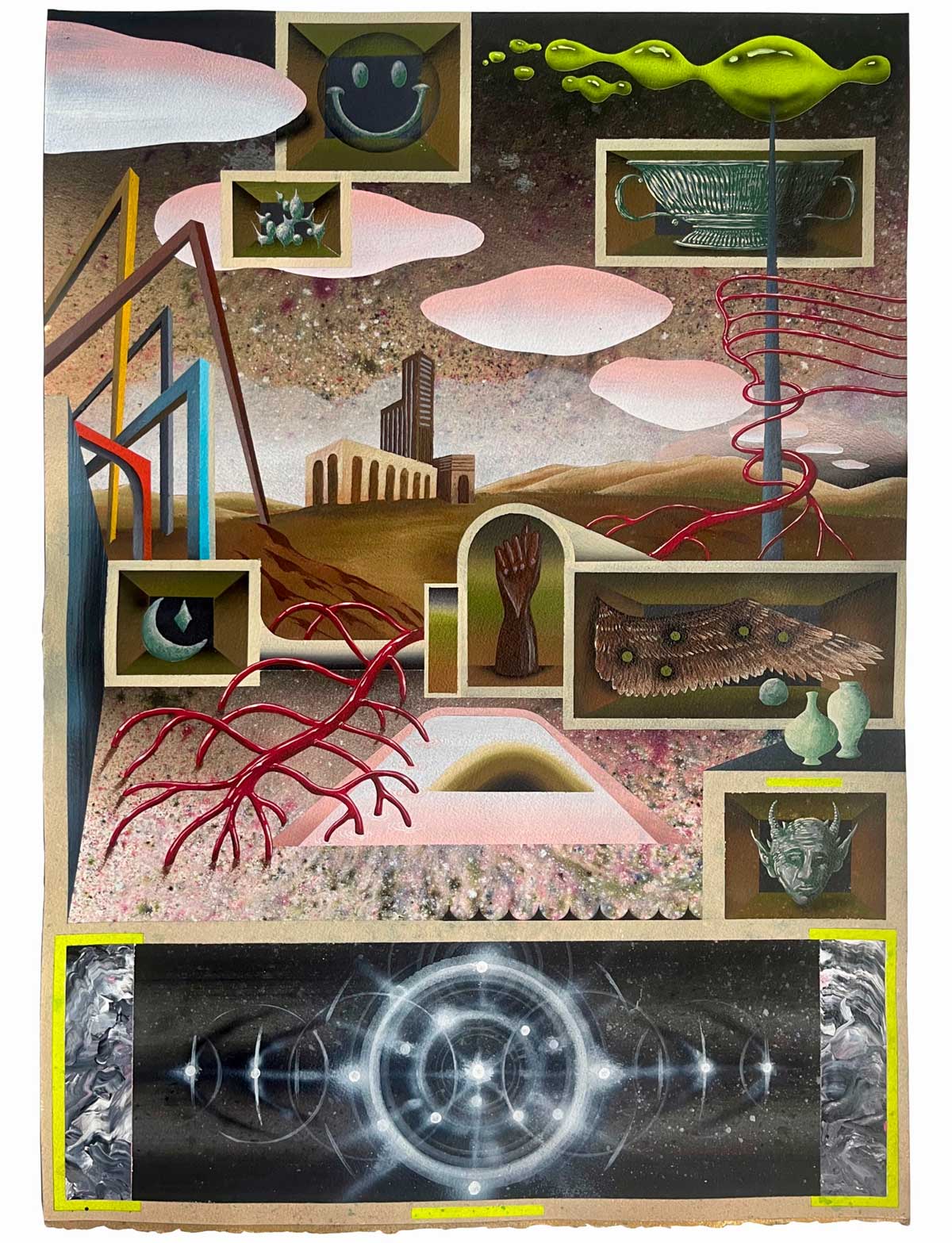
Tattooing allowed me to develop my drawing skills, broaden my visual references, and find a profession that took me around the world. With every exhibition I visited, my desire to expand my artistic practice grew stronger. Over time, I began to feel constrained by the language of tattooing and started painting in my spare time, searching for a broader means of expression.
When the COVID pandemic arrived, I was forced to close my tattoo studio. At home, I rediscovered stacks of fine paper and paints that I had been collecting during my travels over the years. I had never found either the time or the courage to use them—they were beautiful, expensive materials I had been saving for the moment when “great inspiration” would finally strike. During the isolation, a period that proved paralyzing for many, I finally had the time to paint.
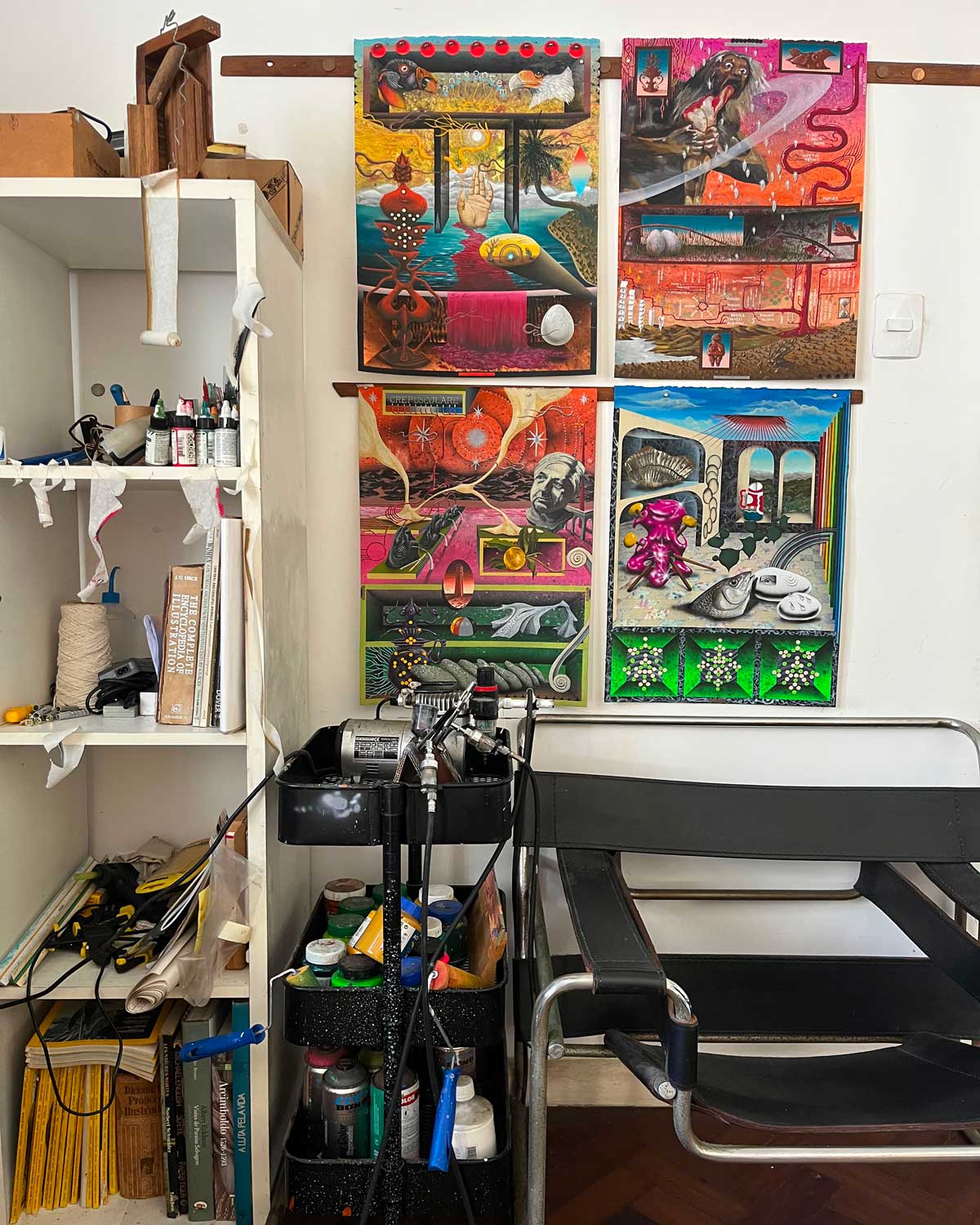
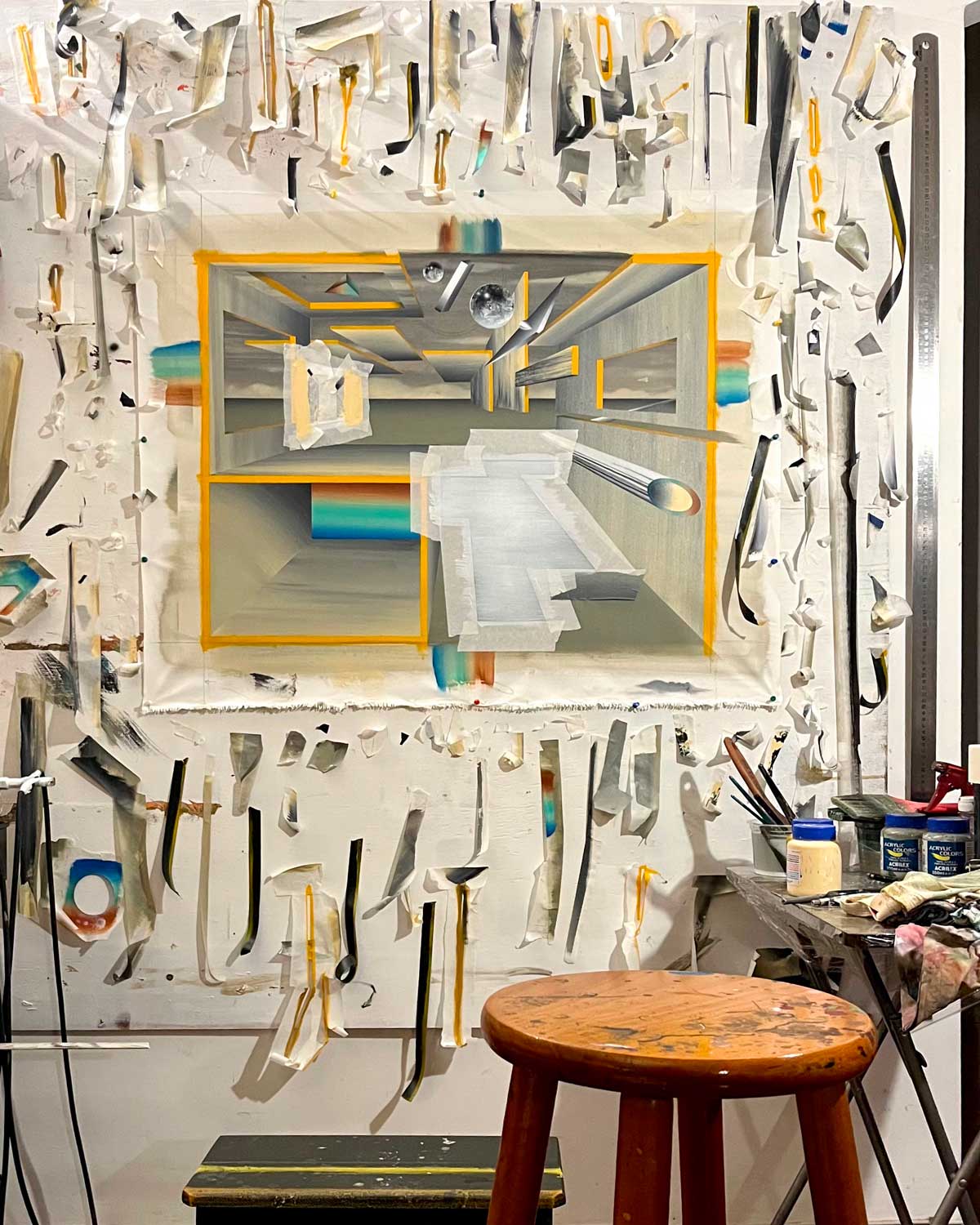
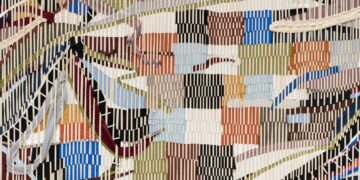
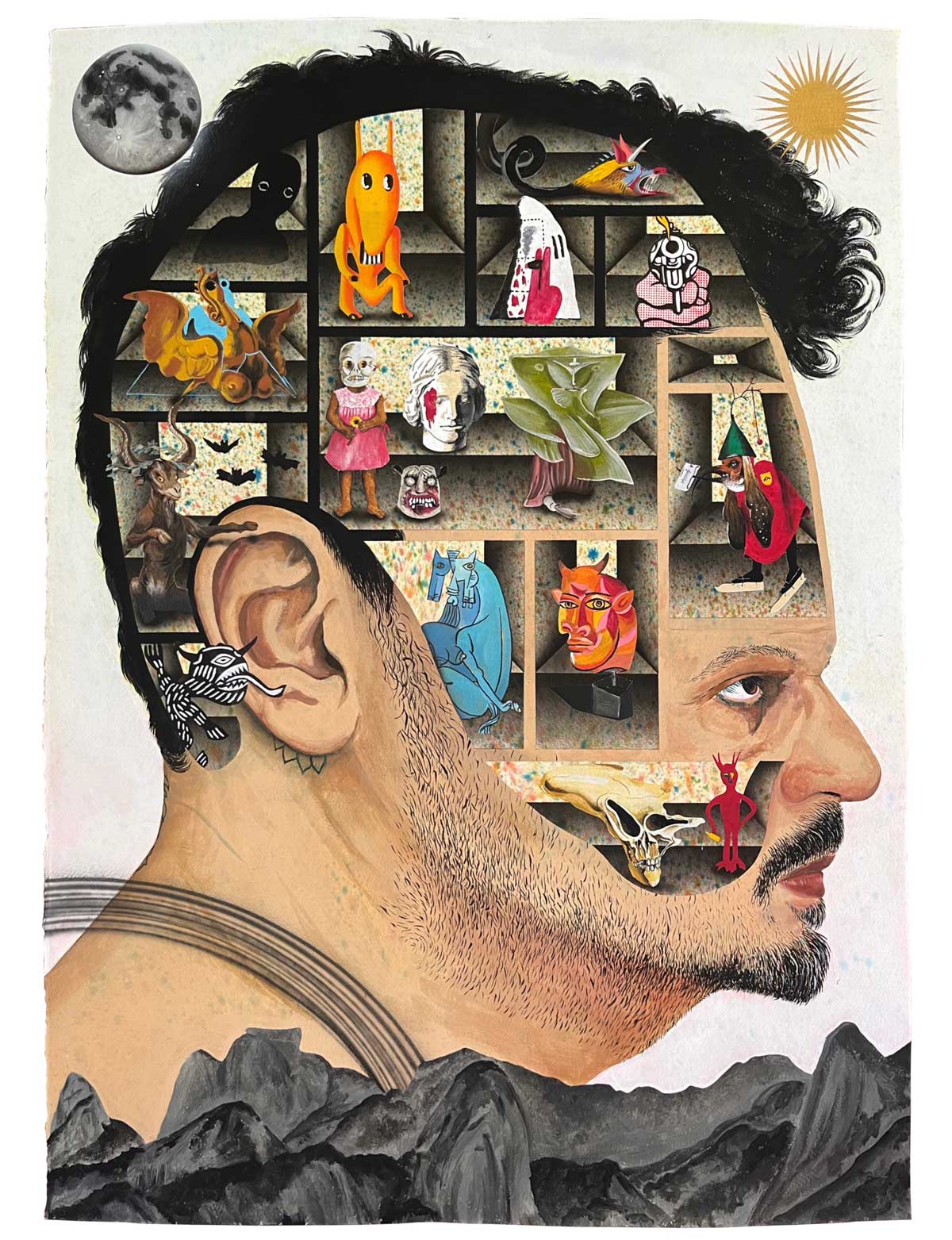
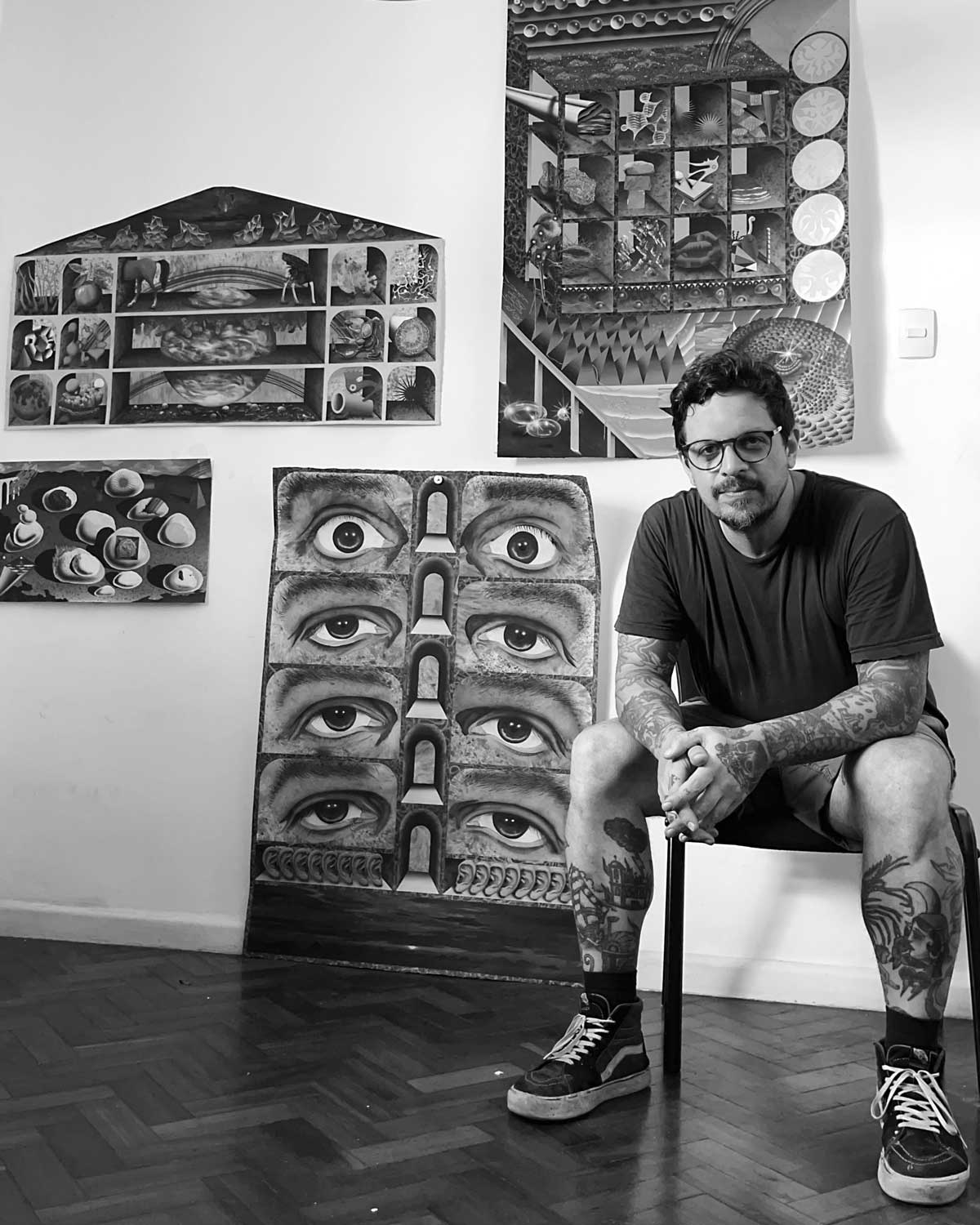
Working in series, each centered around a particular theme, became the way I found to investigate the subjects that resonate most deeply with me. Repetition creates a visual language; language accumulates; accumulation eventually reaches exhaustion, inevitably making room for a new series. The abstract paintings I made during the pandemic evolved into Repositories, a body of work that organizes personal mythologies into structures reminiscent of cabinets of curiosities. That series, in turn, developed into assemblages, which led me to loosen the formal rigor in Occasions, before more recently returning to a greater sense of structure in Entr’acte.
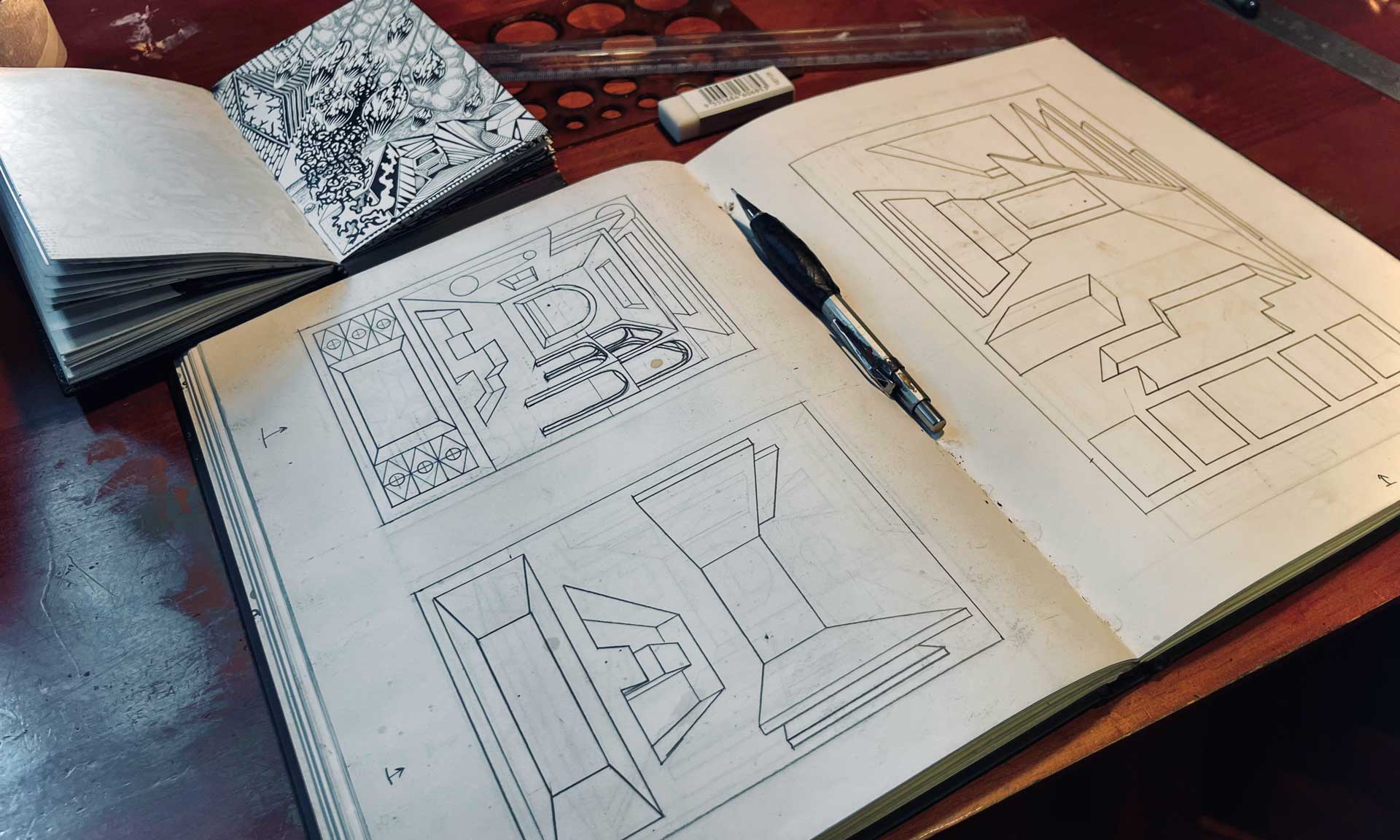
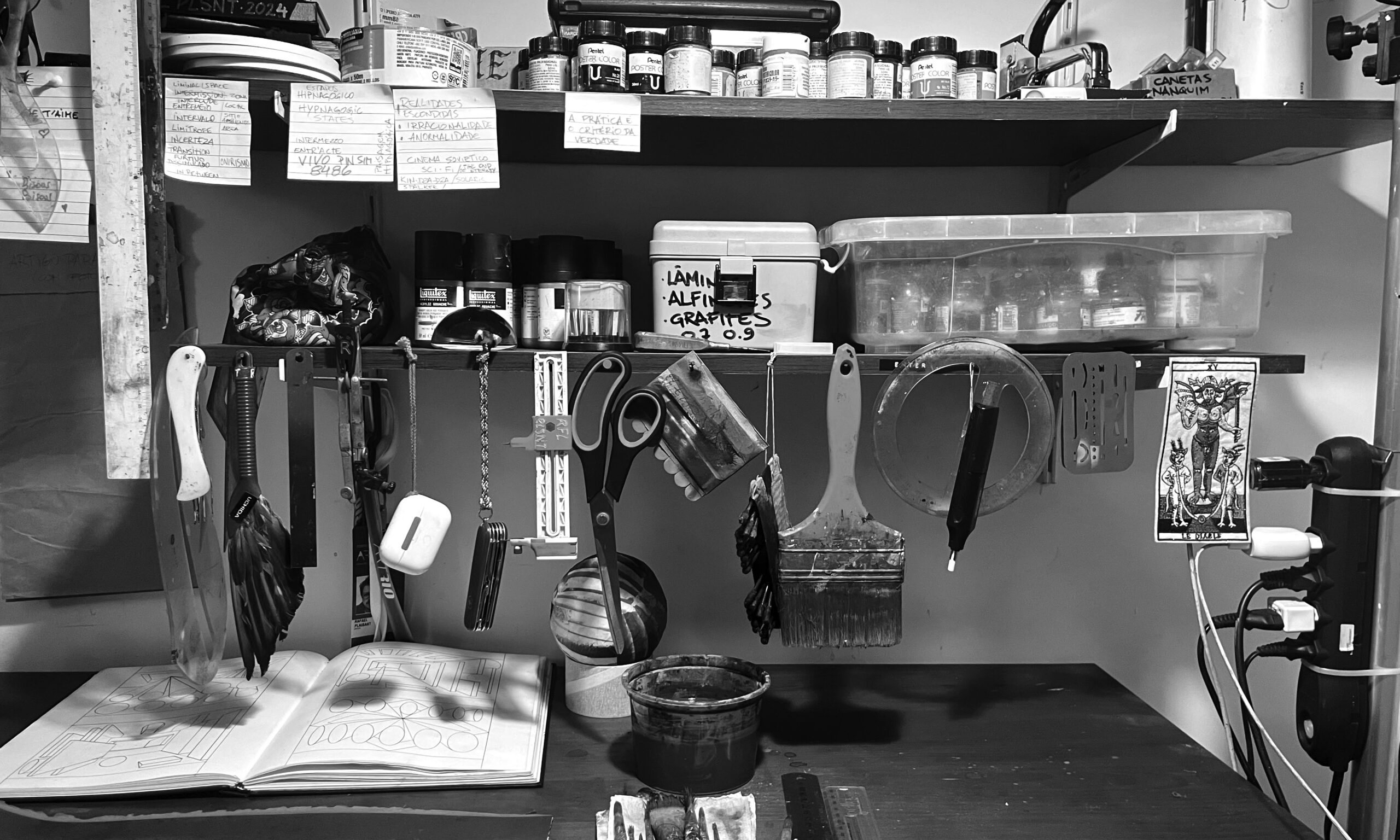
Today, my studio occupies the living room of my apartment in Botafogo, making my practice continuous and integrated into everyday life. There is no fixed time to work. Before I begin painting, I cut rolls of paper into specific formats, spray them with water to release the tension in the fibers, and flick liquid watercolor onto the surface with a small brush to create texture and eliminate the stark white of the paper. While the sheets dry, I make a few sketches in my notebook to establish an initial sense of composition. They serve as a point of departure, but I rarely follow them literally.
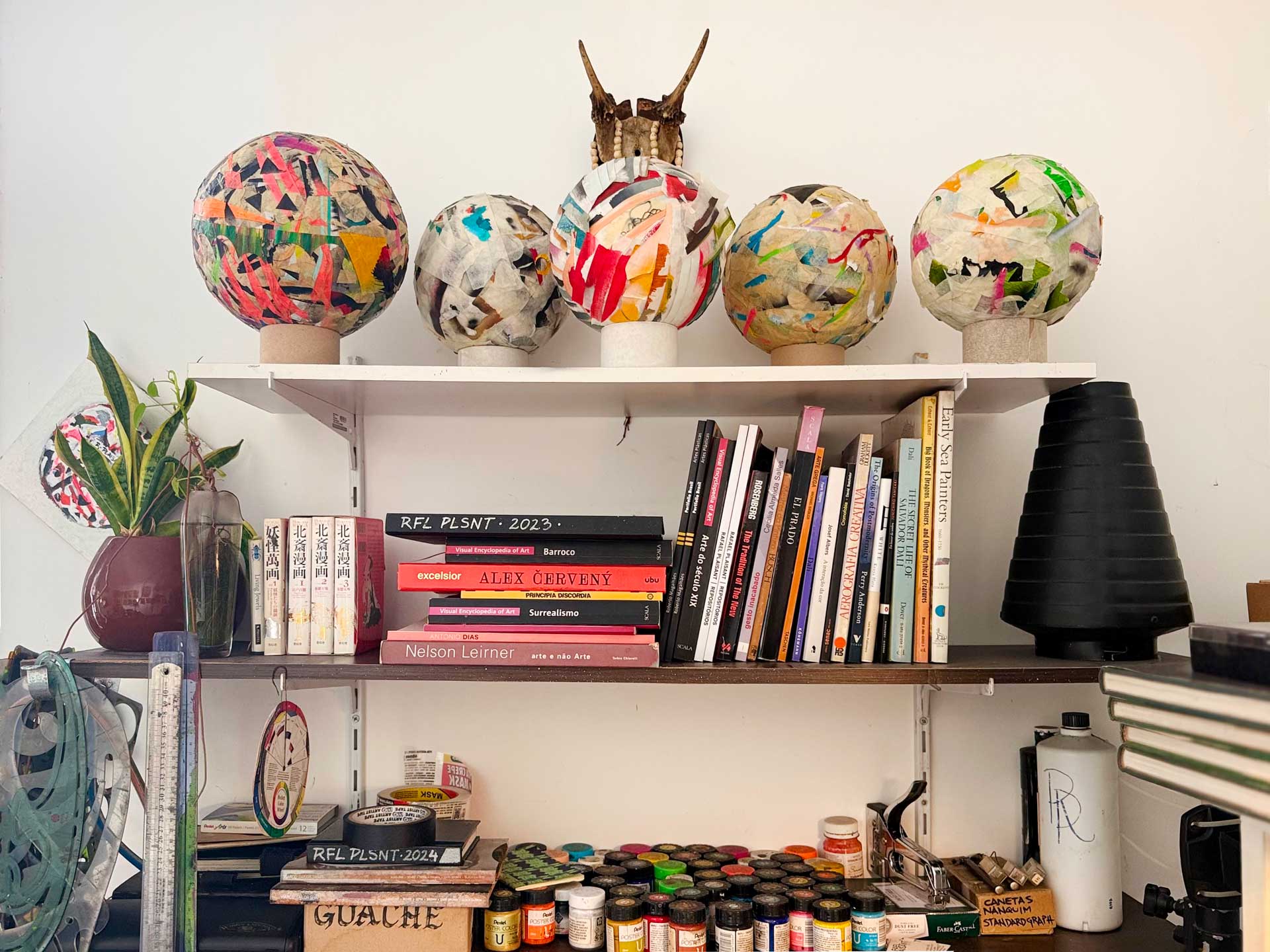
Paper has remained the primary support in my practice ever since my years as a tattoo artist. Traditionally, tattooists use watercolor or gouache on paper to create flash sheets, collections of tattoo designs offered to clients. As I mentioned, I had accumulated numerous sketchbooks and fine papers over the years. My paintings emerge through the free association of images and thoughts while maintaining a consistent visual language. Certain motifs return repeatedly, while new elements are gradually introduced, creating tension and expanding the pictorial field.
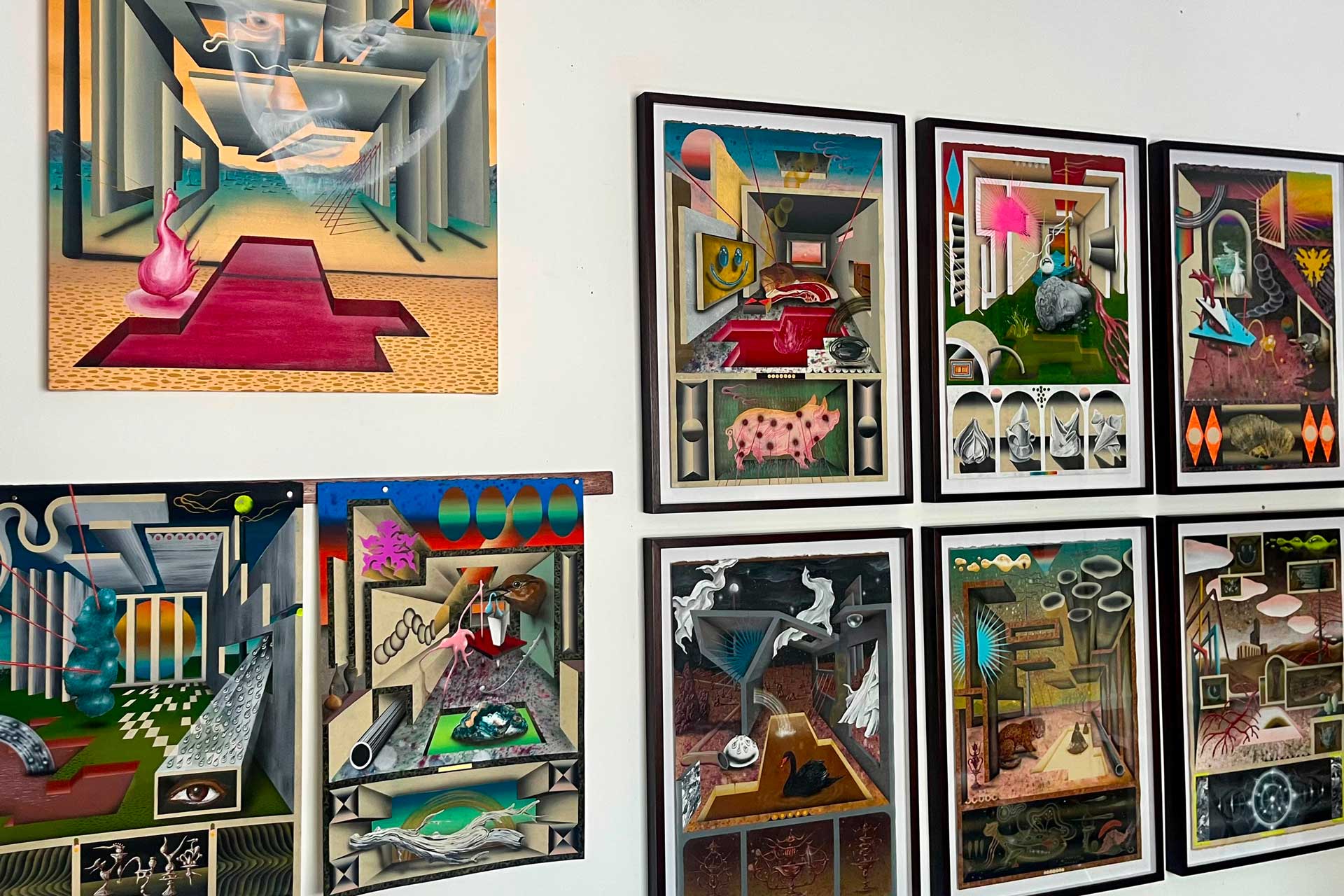
In December 2026, I will present a solo booth with High Noon Gallery at Untitled Art Miami Beach.
You can find out more about Rafael at @plaisant_rafael// rafaelplaisant.com