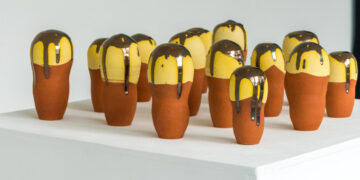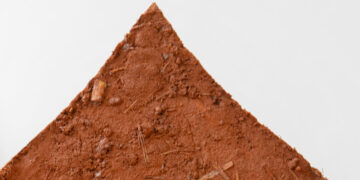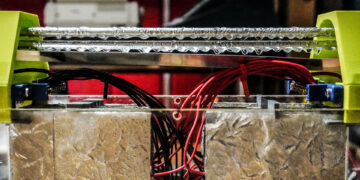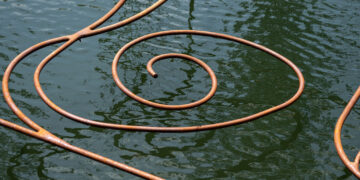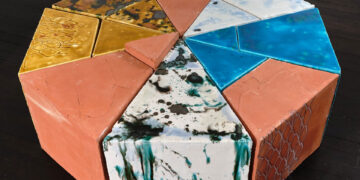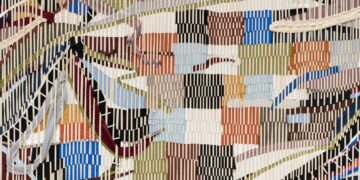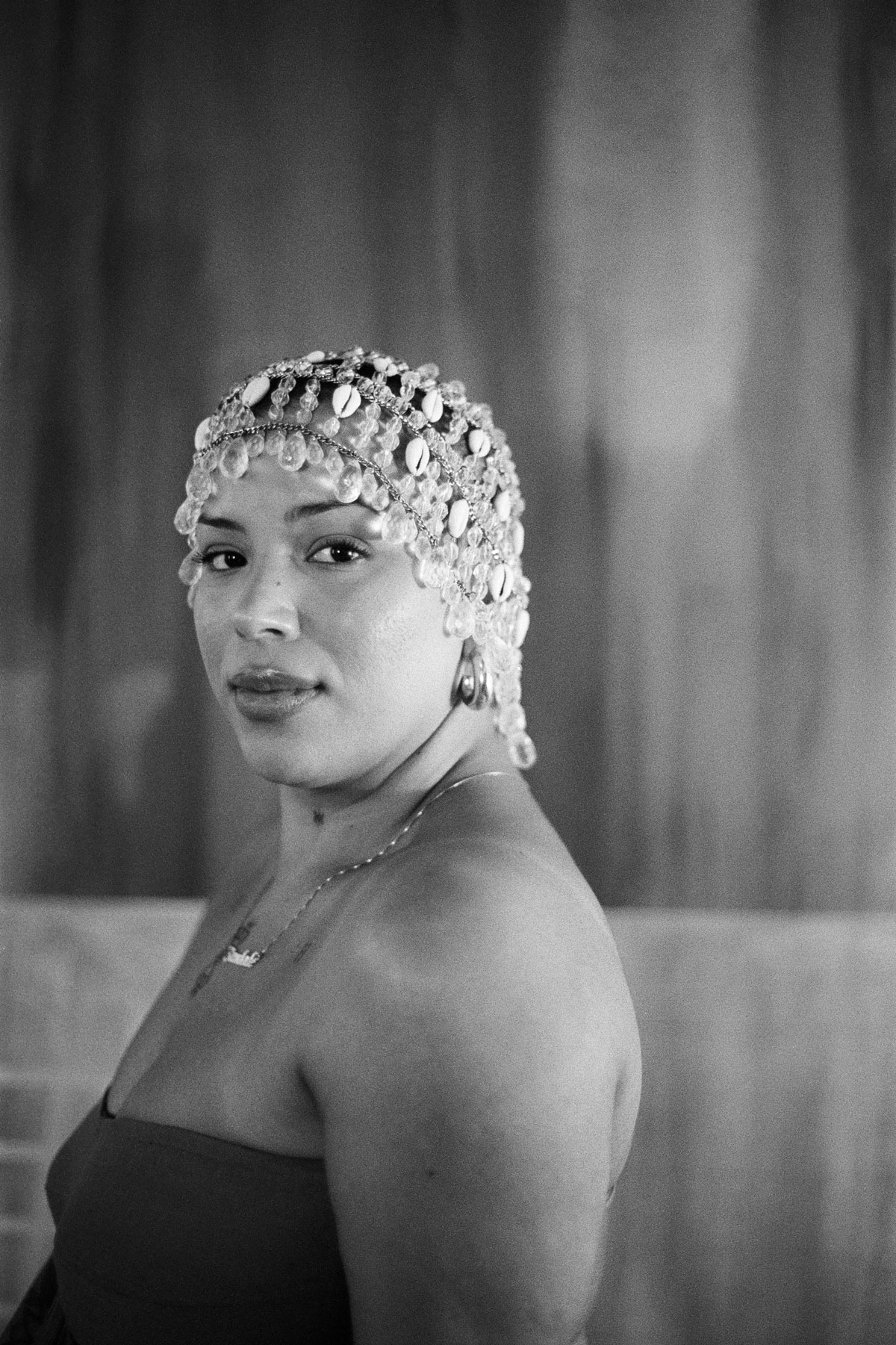
My work emerges from my experience of growing up in São Paulo, a city where unchecked development and the enduring effects of colonial violence can be felt in the urban fabric, in the ways the landscape is subordinated to human interests, and in the bodies of those who inhabit it. From an early age, I felt a discomfort with the monuments and landmarks chosen to represent the histories of this place, and with the lack of possibility for a genuine sense of belonging, both personal and collective. From there began a journey, whose first steps took place while I was still studying architecture, of experimenting with the creation of situations, spaces, and symbols—through painting, sculpture, drawing, video, and photography—where the possibility of reconnection might emerge again.
Perhaps because of my background in architecture, I feel comfortable working at a large scale, and I am particularly drawn to opportunities to create immersive works that can be experienced with the entire body, where the person encountering the work can become part of it. Through these works, I hope to offer a possibility, however temporary, of being held and of belonging. I like to think of them as spaces where we can enter into relationship with nature, with our inner selves, and with the beings around us.
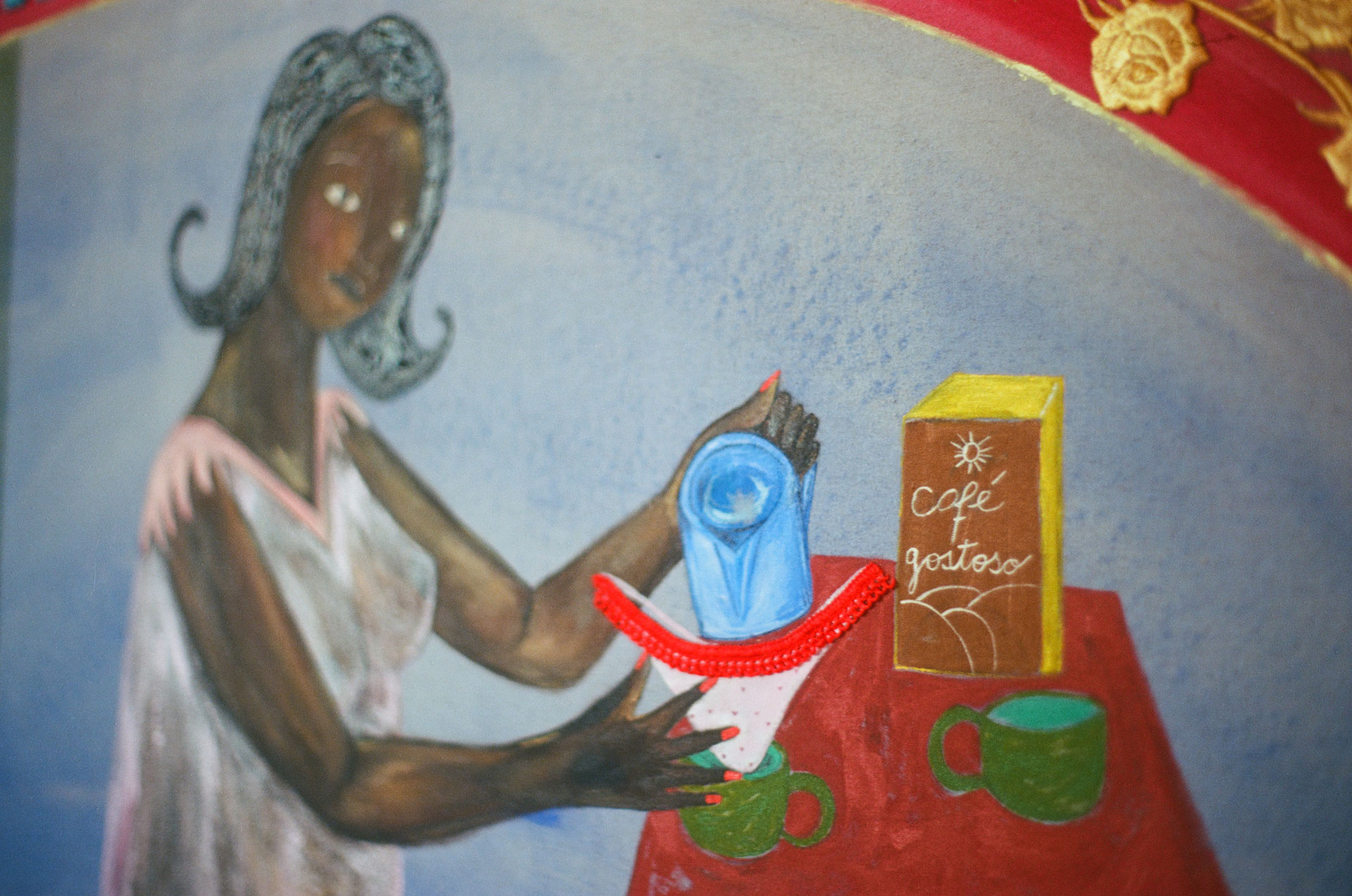
Within this gesture lies the hope that this temporary state of care, connection, and belonging might offer some sense of meaning, or the tools necessary to move toward a more balanced future, one in which we tread more lightly and remember our interdependence and our role in caring for one another. This also means nurturing the strength each of us carries within: the gift contained in each individual and the contribution each of us makes as a being within an ecosystem.
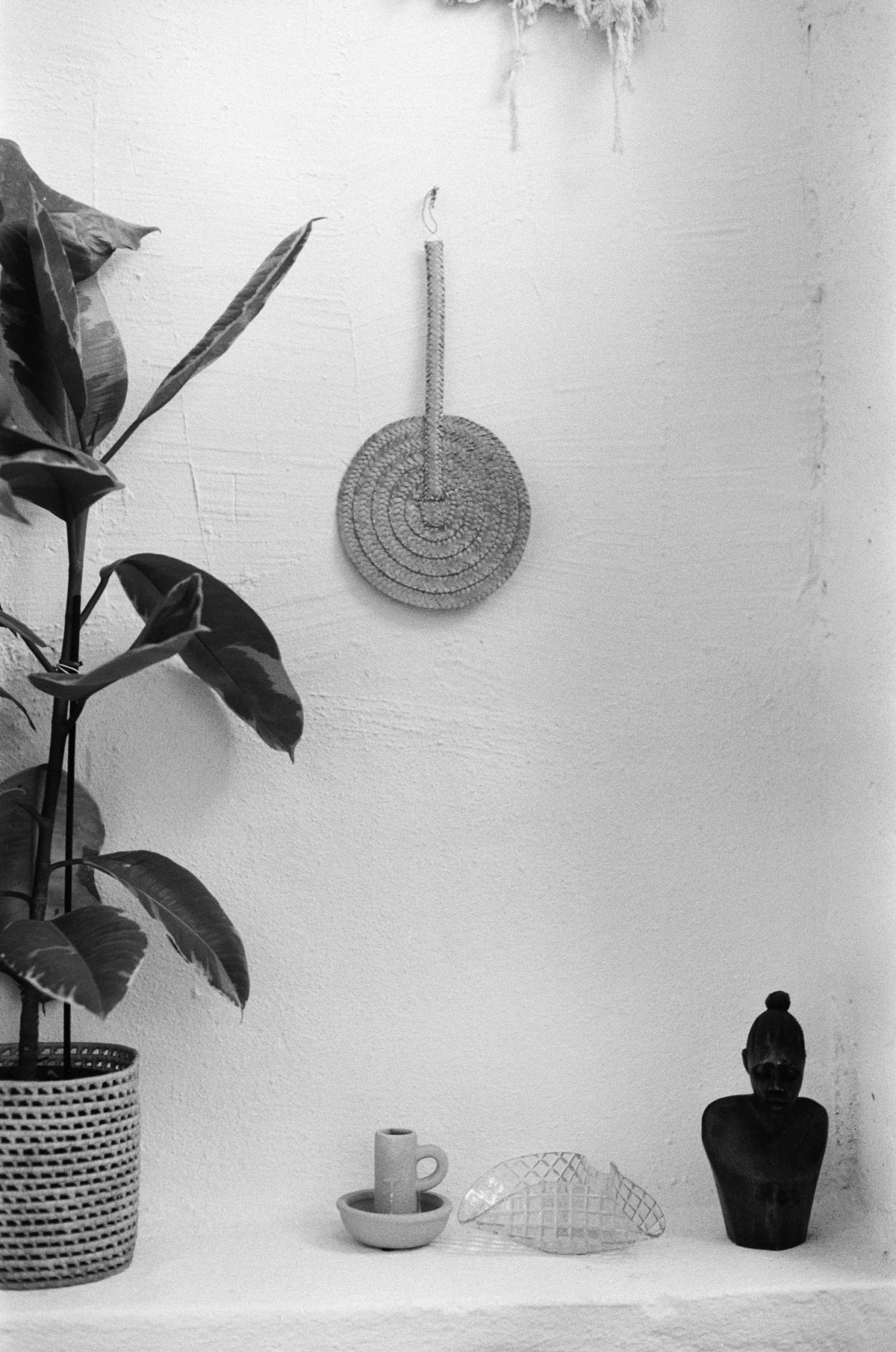
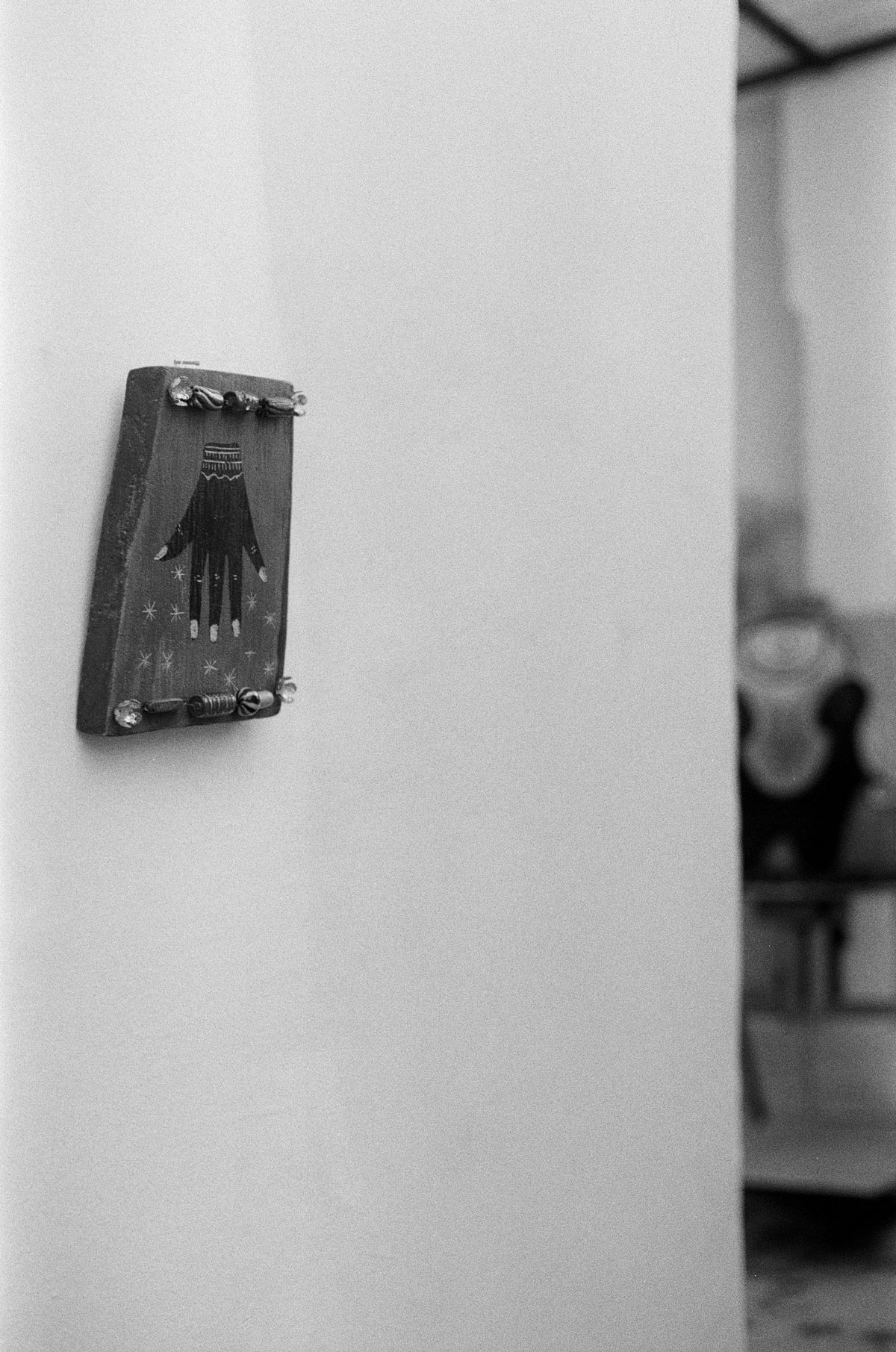
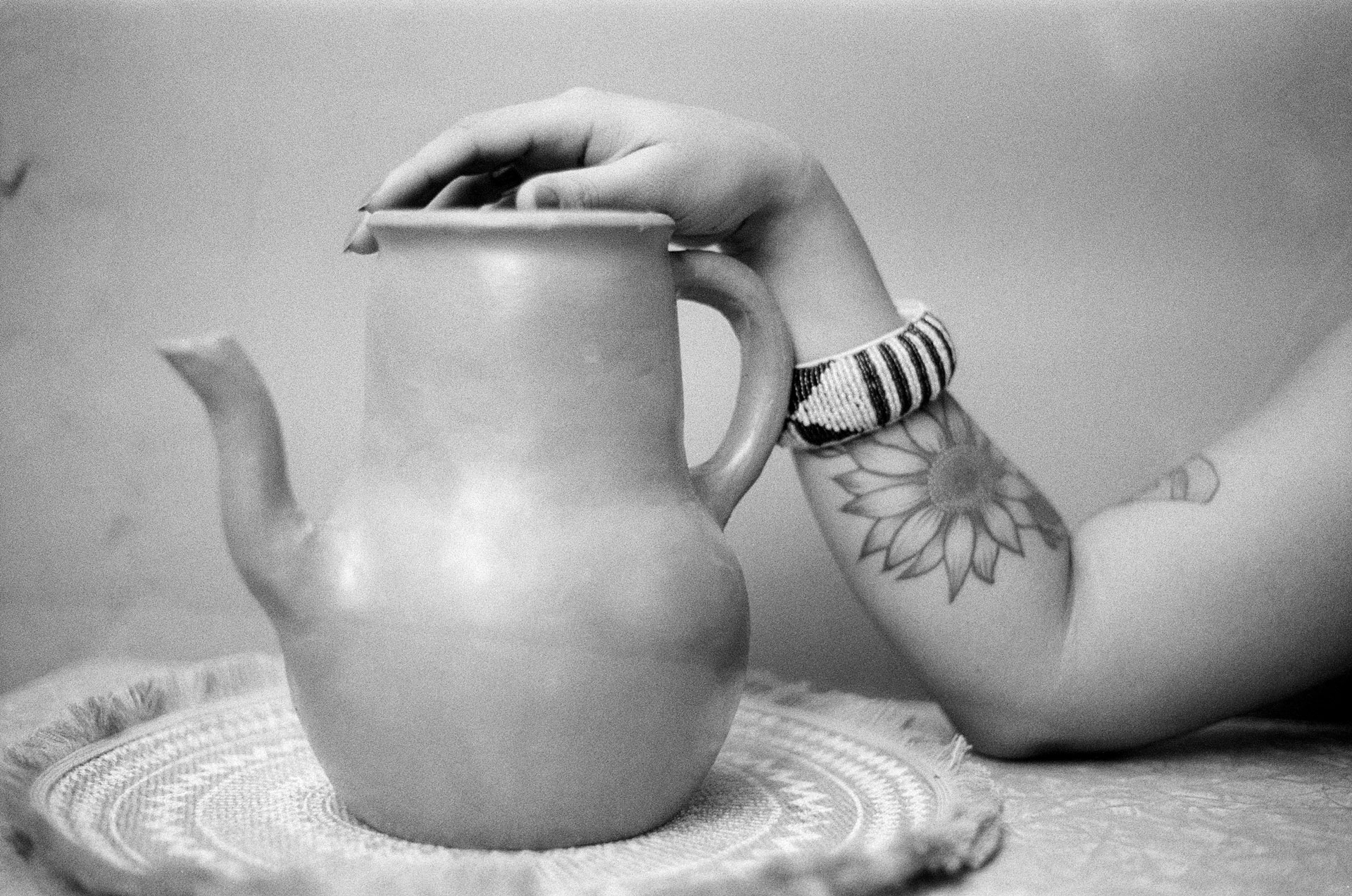
Often, this understanding is not immediately apparent in the way the works materialize; these ideas are not necessarily explicit characteristics of the work. Yet they are foundational to the way I work—from my studio practice to my work as an educator, collaborator—with other artists, community leaders, thinkers, and curators—and organizer.
There is something about what remains unspoken or not immediately visible in the work that has to do with intentionally creating space for each person to encounter it autonomously: to find their own route through it, to establish their own relationship with it, their own way of experiencing and activating it, and, in a sense, of making it their own. The work is more interested in being an invitation, a “starting point,” than a statement or definitive “end point.” It is like a map rather than a prescribed path, or a toolbox rather than a single given solution.
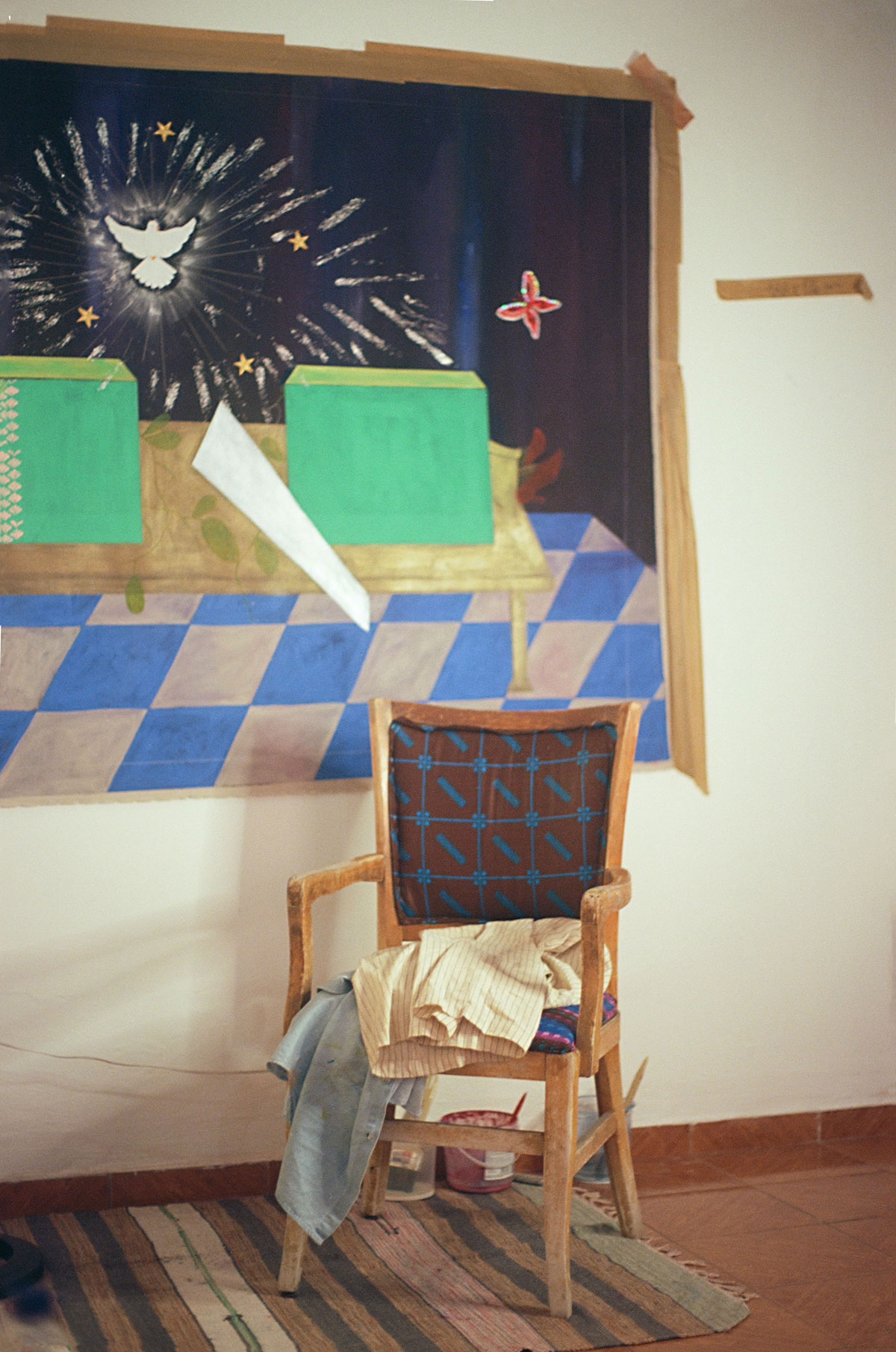
There is something here about trusting people, trusting art, and recognizing the importance of remaining in a constant state of transformation—of being vibrantly alive—and offering that pulse so that it might resonate with the pulse of another.
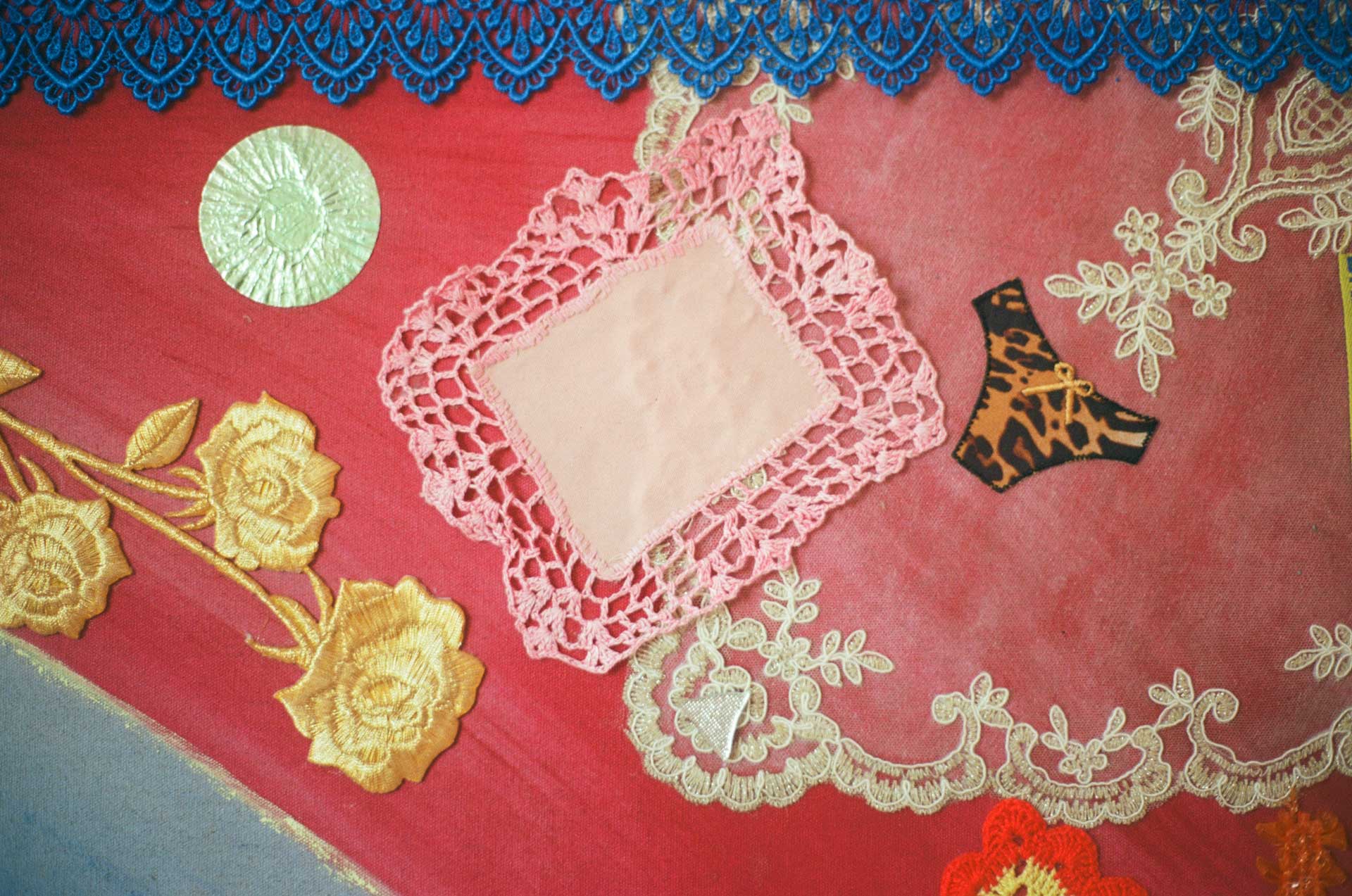
My work unfolds in cycles. There is a root, a foundational thread that runs through its origins, but with each cycle it takes on an entirely different form—perhaps like the caterpillar and the butterfly, or a tree that falls and becomes a decomposing trunk and humus for the next tree. In practice, this means that each cycle can feel like starting again from zero, experimenting and doing things I have never done before. This has happened with ceramics, natural dyeing, cyanotype, and other processes; each work asks for its own technique and material.
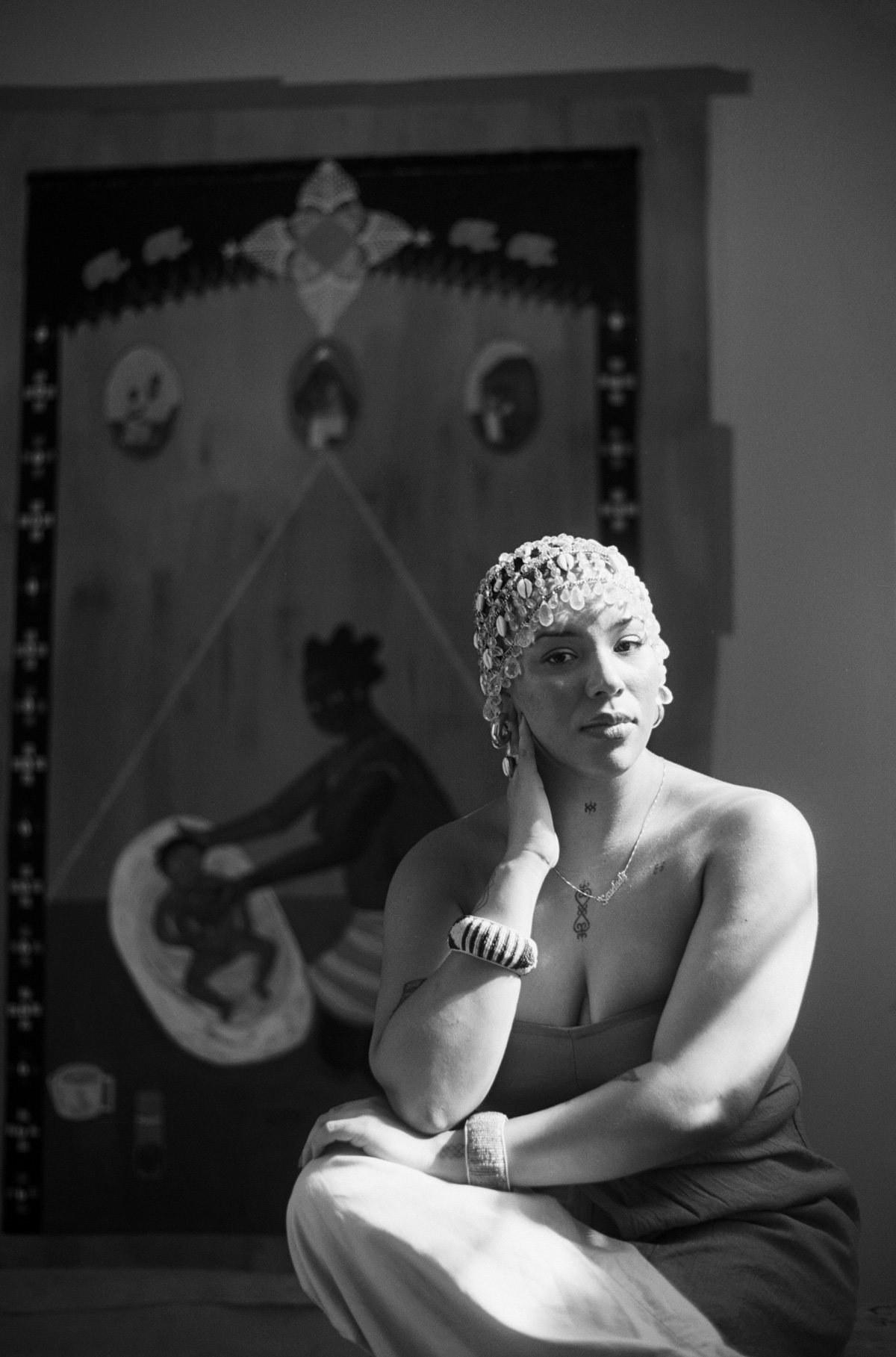
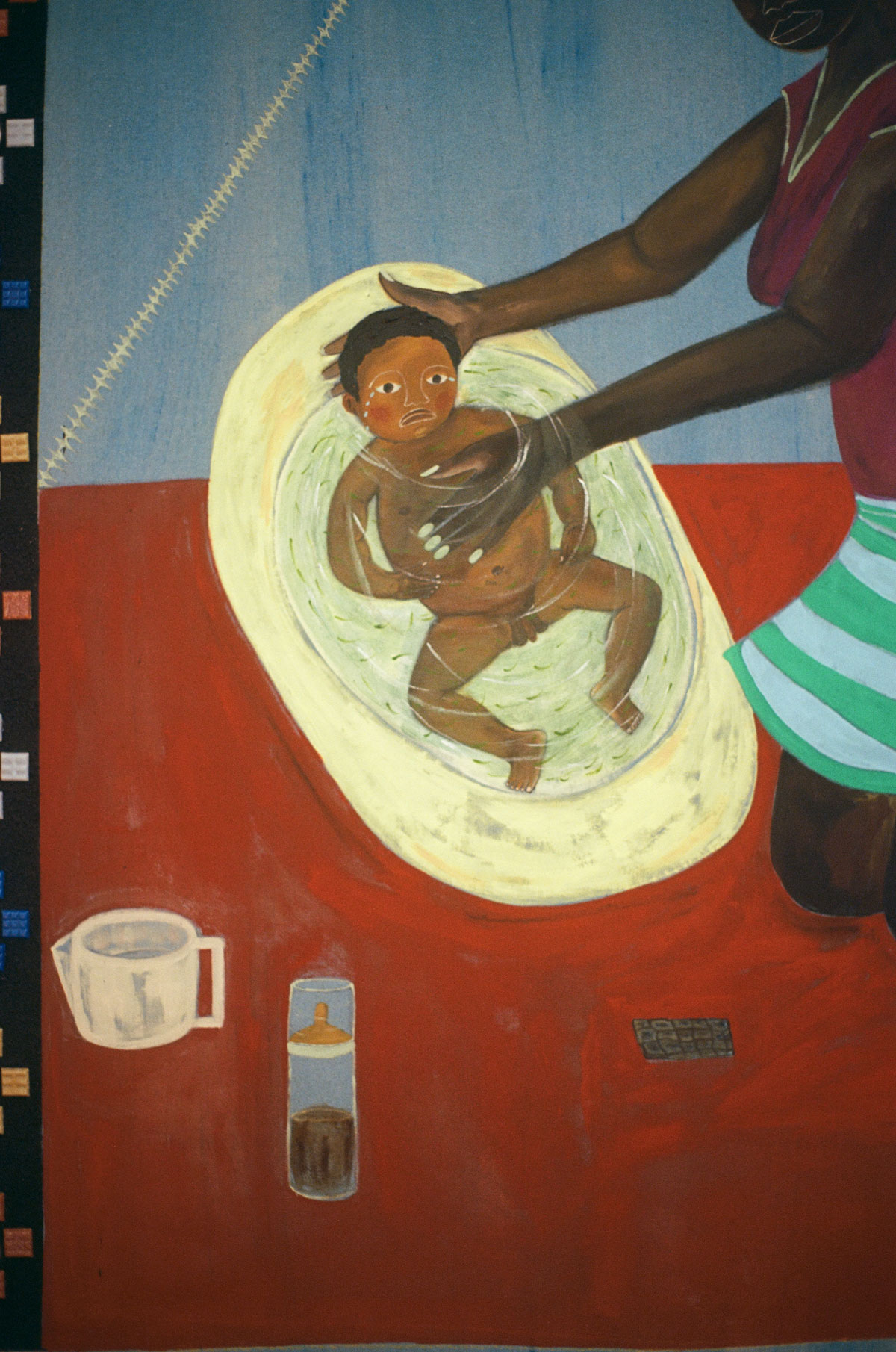
As a self-taught artist, nearly all of my works have emerged from a “technique” I did not yet know or had never previously had access to, but which became necessary for the subjects, forms, and images that were asking to be presented. Materials are always extremely important to me. Often, beyond being vehicles for telling stories, they are the stories themselves, carrying meaning within their very substance. Materiality is essential to me because it is through materiality that the encounter between the viewer’s body and the body of the work takes place, allowing the work to be experienced holistically.
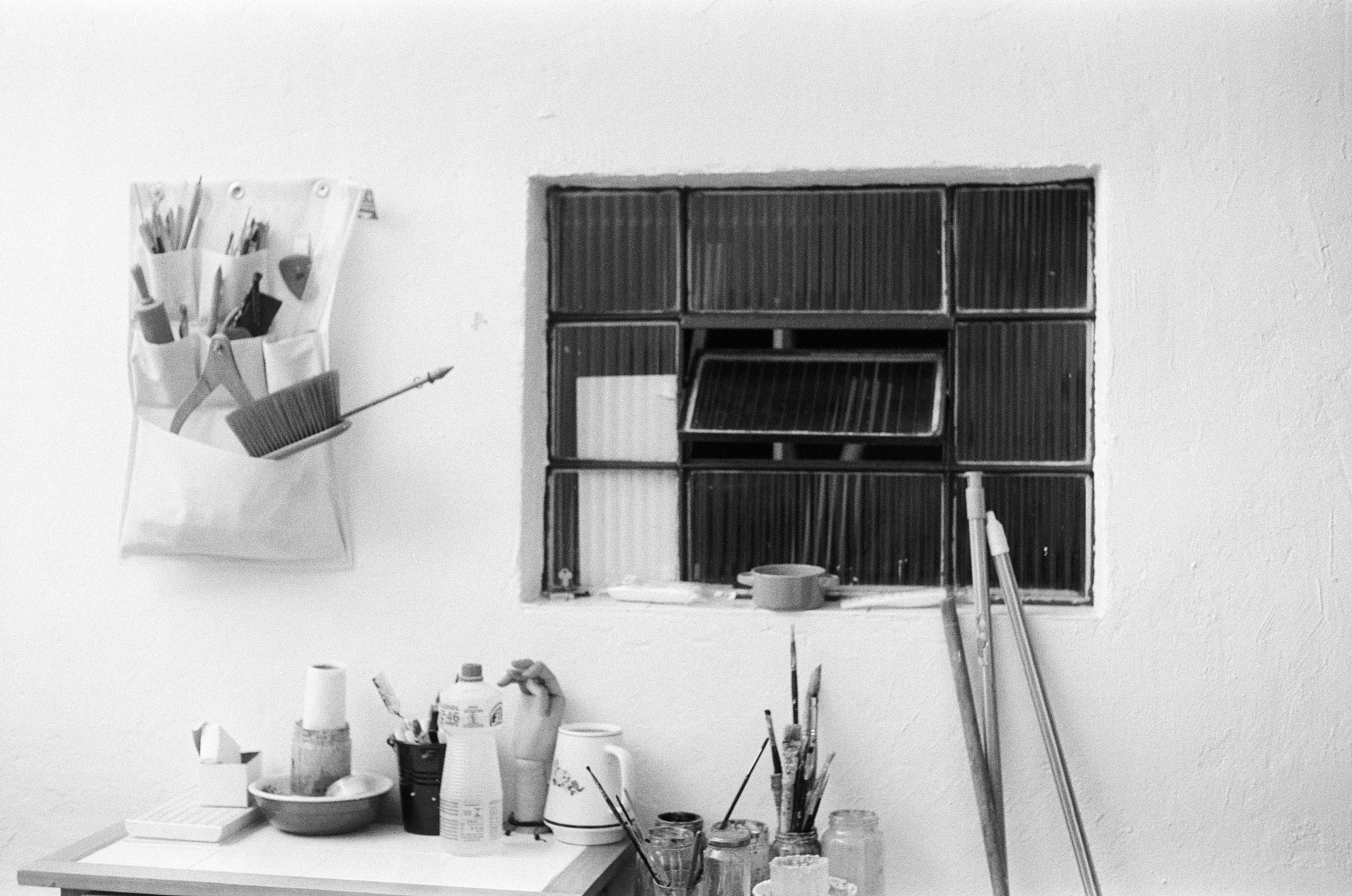
The choice of materials also reflects a concern with creating work grounded in care, just as the themes guiding the work are grounded in care—for people, nature, the body, the spirit, well-being, life, the vital force of each being, and the act of nurturing strength. The materials and methods I use reflect this concern: not overburdening anyone, creating as little waste as possible, avoiding the idea of anything being “disposable,” and offering a sense of circularity, in which one thing can nourish the next and a sense of abundance, sufficiency, and interconnectedness can be cultivated.
Sometimes this also takes shape through gestures that may fall outside the scope of the “art world” or an exhibition. It can be found, for example, in the way I work with students and mentees whom I have the opportunity to accompany, offering them elements that might allow them to flourish autonomously into their own potential, while engaging in a kind of work that trusts in an expanded sense of time. Or, more practically, it can be found in choices that make it possible to create work without generating waste or using materials that harm the environment.

Most often, these decisions and gestures take place within a certain “invisibility”; they are not made explicit. But I also like to understand these decisions as forms of “capillary disobedience,”* in the words of Argentine sociologist Rita Segato. They are small gestures, but they spread, pollinate, and multiply, carrying the potential to generate change or have an impact according to the specificities and needs of their places and communities.
Small transgressions, deviations, and everyday practices at the margins of the established order that are capable of eroding hierarchies and destabilizing structures of power over time—particularly patriarchy and coloniality. The idea appears prominently in Contra-pedagogías de la crueldad and is discussed in a recent talk by Rita Segato at IMS-SP.
Most often, these decisions and gestures take place within a certain “invisibility”; they are not made explicit. But I also like to understand these decisions as forms of “capillary disobedience,”* in the words of Argentine sociologist Rita Segato. They are small gestures, but they spread, pollinate, and multiply, carrying the potential to generate change or have an impact according to the specificities and needs of their places and communities.
Small transgressions, deviations, and everyday practices at the margins of the established order that are capable of eroding hierarchies and destabilizing structures of power over time—particularly patriarchy and coloniality. The idea appears prominently in Contra-pedagogías de la crueldad and is discussed in a recent talk by Rita Segato at IMS-SP.
When I think about our impact, our footprint, and what we are leaving behind as a legacy, I also find myself questioning this notion of being a “solo” artist, or of having a “solo” exhibition. Might these terms themselves operate within an order or logic that creates separation between us—and between ourselves and the beings around us—and that, ultimately, is destroying our capacity to dream, to be creative beings, and to sustain life on Earth?
What if we could remember, and be “disobedient” enough, to make visible the fact that nothing—not even the act of breathing that keeps us alive—is ever a solo gesture?
All art is always constructed through a complex network of relationships. It includes childhood memories, teachers who shaped our trajectories, traumas and violence, every particle of the materials physically present in the work and the places they came from, all the people who made the work possible, the ground beneath the space where it is being exhibited, and the ancestors who cared for that place throughout the years before our arrival.
Perhaps because I feel the presence of this entire network holding both my work and my being, I am in constant dialogue with myself about how much of it I should present as “mine” or as “my ideas,” through grand statements or fixed boundaries.
It is through this process that I have been transforming the way I speak about things, deconstructing the language I was taught during my formative years—a language that has more to do with separation, between worlds, beings, materials, and disciplines—and allowing it to be remade as an embodied language, one that is part of this interconnected, interdependent, implicated network.
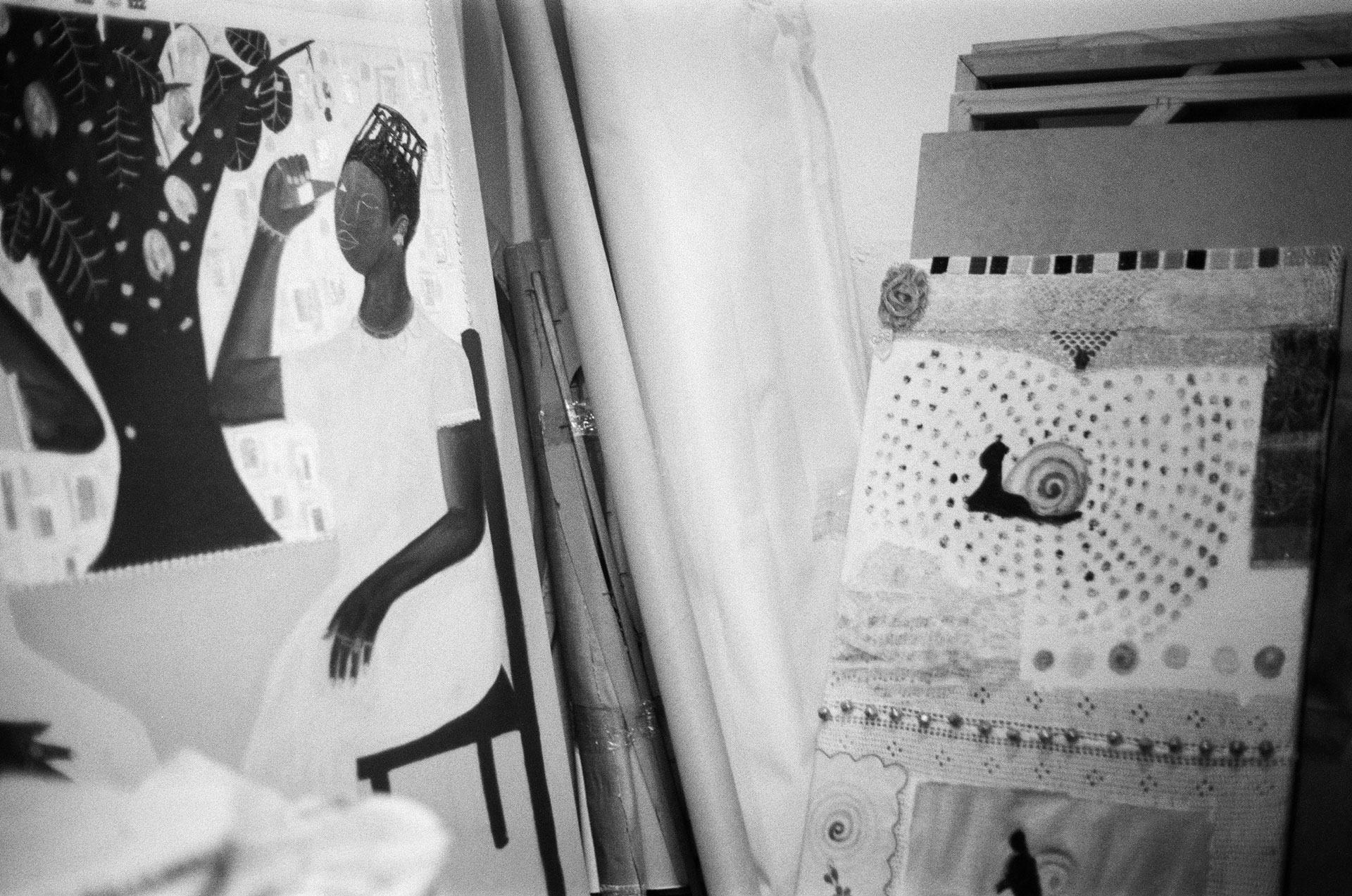
I am currently working on a project in collaboration with three other artists, in which we are creating a site-specific work entirely collaboratively. We chose, even if not rationally and without necessarily needing to declare it, to work in this way. It is a work that emerges from listening: to what guides and connects each of our individual practices, to the space in which we are exhibiting, and to each material chosen to compose the installation—the vast majority of which has been collected or made with care and time.
Perhaps this is my way of “treading lightly on the Earth,”* echoing the call Chief Seattle made to the United States government at the end of the nineteenth century—and to all those who would later occupy his ancestral lands—a call that Ailton Krenak continues to invoke in his talks centuries later.
May we continue making art as a way of caring for the force of creation, the force of life, the force within each being, and our collective strength.
“You will surely take this place, and your children will occupy this place. Teach your children to tread lightly upon the Earth. If you continue at the same pace you are following, you will produce so much waste that, in time, you will succumb; you will die upon that waste. You will die beneath your own vomit, beneath your own waste.”
Translation organized by Ciclo Selvagem in the Caderno Selvagem, Carta do Chefe Seattle Comentada por Ailton Krenak.
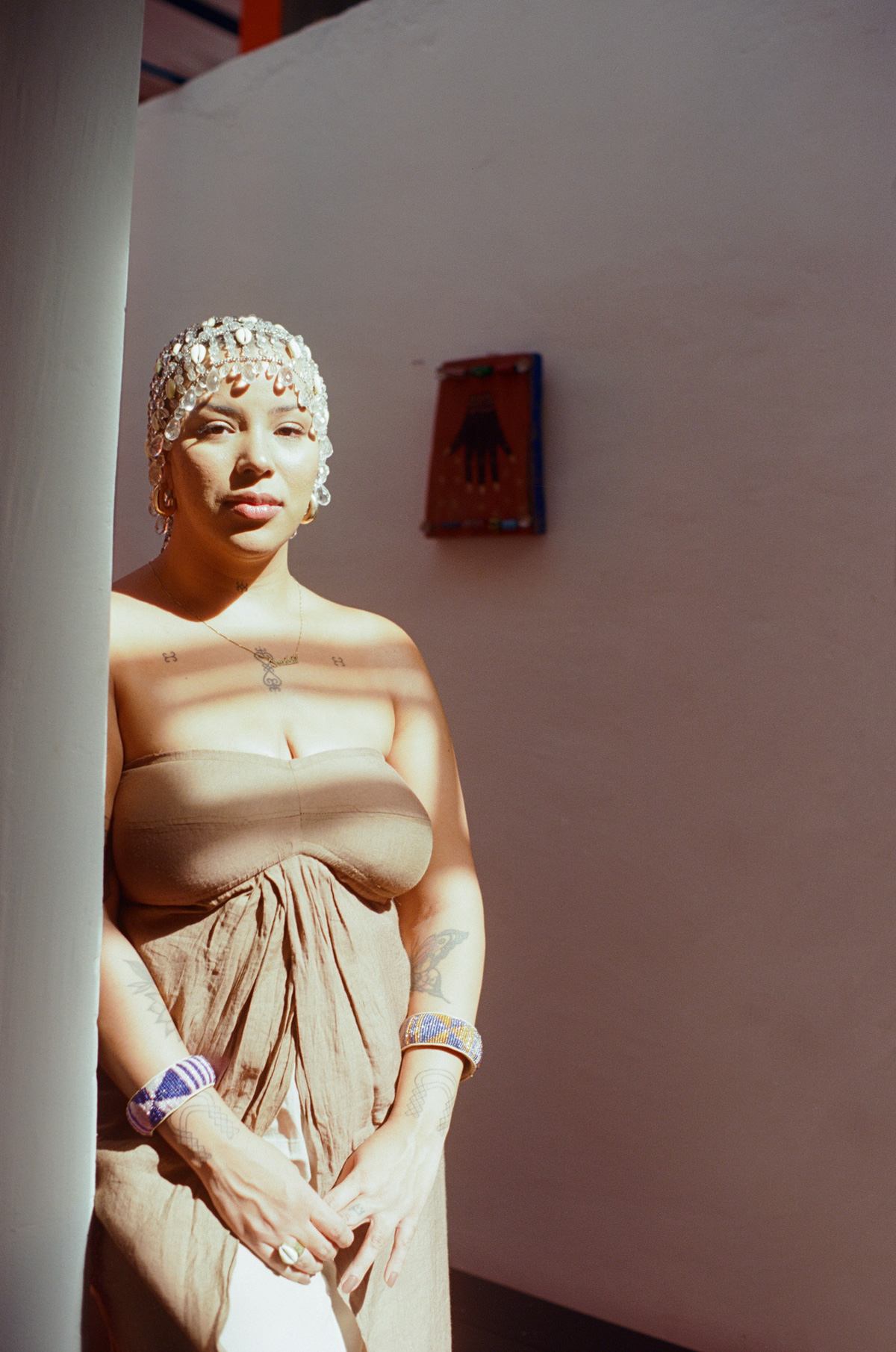
You can find out more about Larissa at @azuolarissa // www.simoesdeassis.com/artistas/larissa-de-souza
Photos: Anita Goes