Although sewing and textiles were deeply connected to her family and Aimara’s ancestry, Apaza soon realized that these fabrics also carry stories of silence, violence, and power. Arequipa is also the second city in Peru with the highest rates of domestic violence, with nearly 77% of victims being women. The transmission of tradition from one generation to the next is neither homogeneous nor a simple, one-sided wrapped-gift. When Apaza first inherited her mother’s sewing machine, she saw it as an opportunity to break the silence, to sew as a new form of knowledge and social critique.
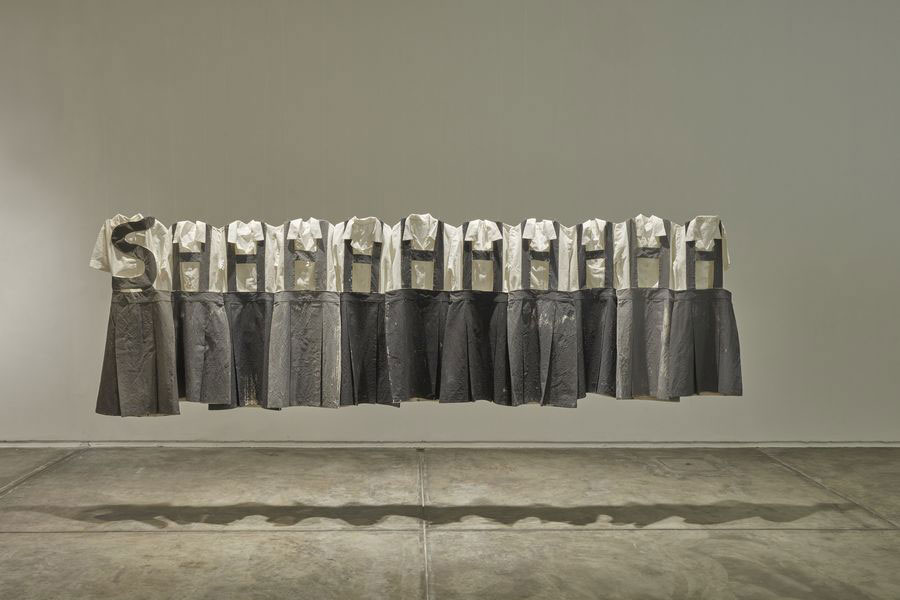
Nereida Apaza Mamani, Silencio. Installation of school uniforms, 157.5 × 39.4 × 19.7 inches. View of the exhibition “Listening with the Hands,” ICPNA, Lima, 2024.
Photo: Juan Pablo Murrugarra. Courtesy of the artist.
“El bordado es mi lengua materna“ (“Embroidery is my mother tongue”) – Nereida Apaza Mamani
Back in the Escuela Nacional de Arte Carlos Baca Flor in Arequipa, Nereida didn’t have the funds to buy the classic set of painting materials to execute her assignments. The thread, then, appeared as a solution. Not only a material much more accessible in her own home, but also something deeply significant culturally. She began weaving canvases, and soon the cuadernos were born.
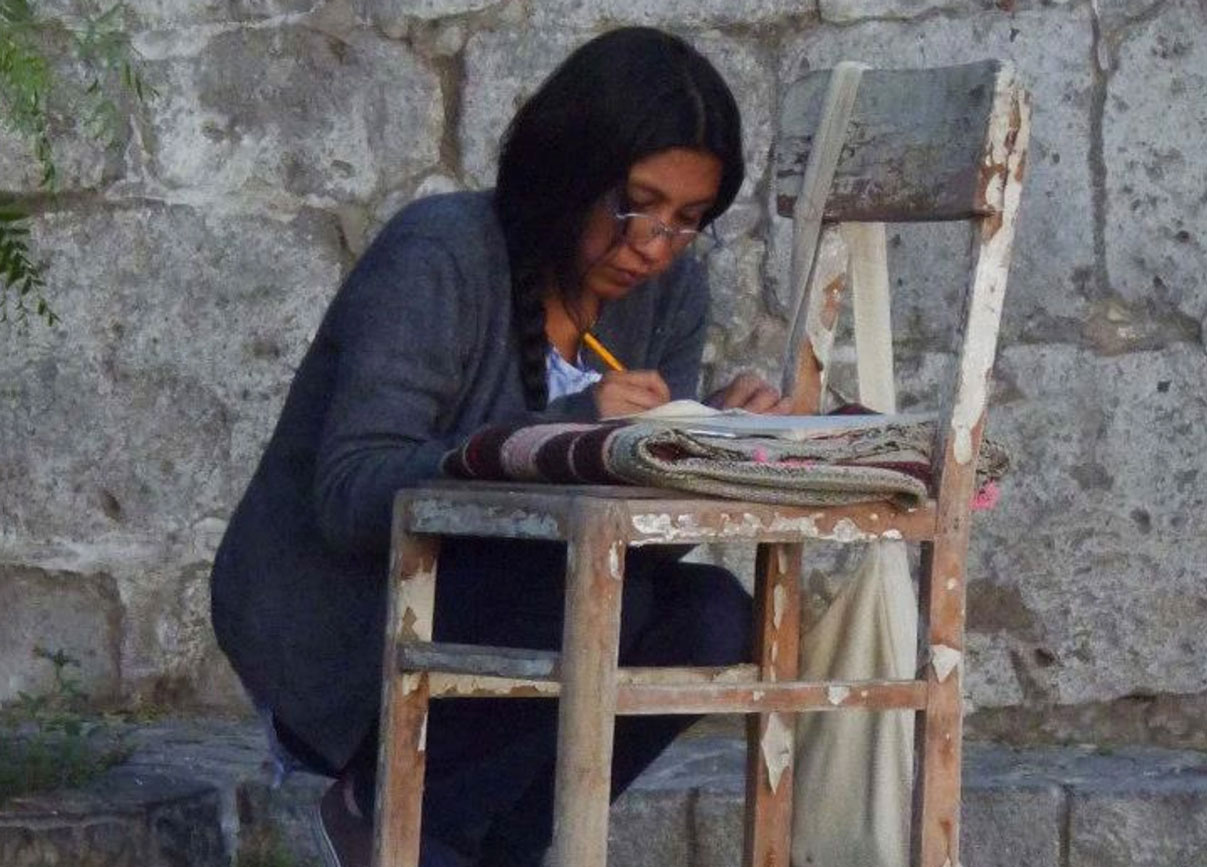
Silence (Poetic Action) by Nereida Apaza Mamani, 2013, Campo Redondo Square, San Lázaro, Arequipa, is a silent poetic intervention in which poems are embroidered in public space alongside an old molle tree. Courtesy of the artist.
She began sewing page after page of cuadernos escolares, which eventually became her artist books. The covers will be familiar to many Peruvians, as they are part of the standard notebook used in the national school system. Apaza explains: ” I feel that through the notebook, you can express so many things: a critique of the education system, a critique of society, or simply the enjoyment of life. Scribbling in my notebook is something I can now do freely on fabric, without anyone punishing me for it.”
In Cantos Domésticos, she questions the education women have received in Peru, an education often grounded in submission and passivity. For her, artistic practice is deeply intertwined with political activism. Cantos Domésticos takes the form of a notebook of poems and exercises, conceived as school assignments that investigate words and their meanings, verses, and images.
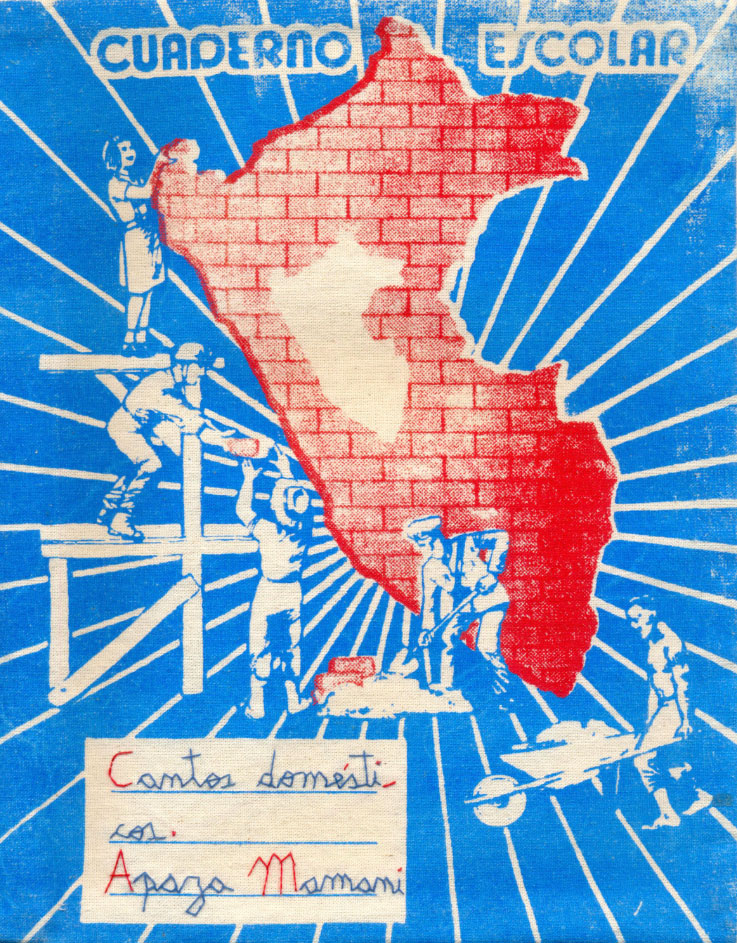
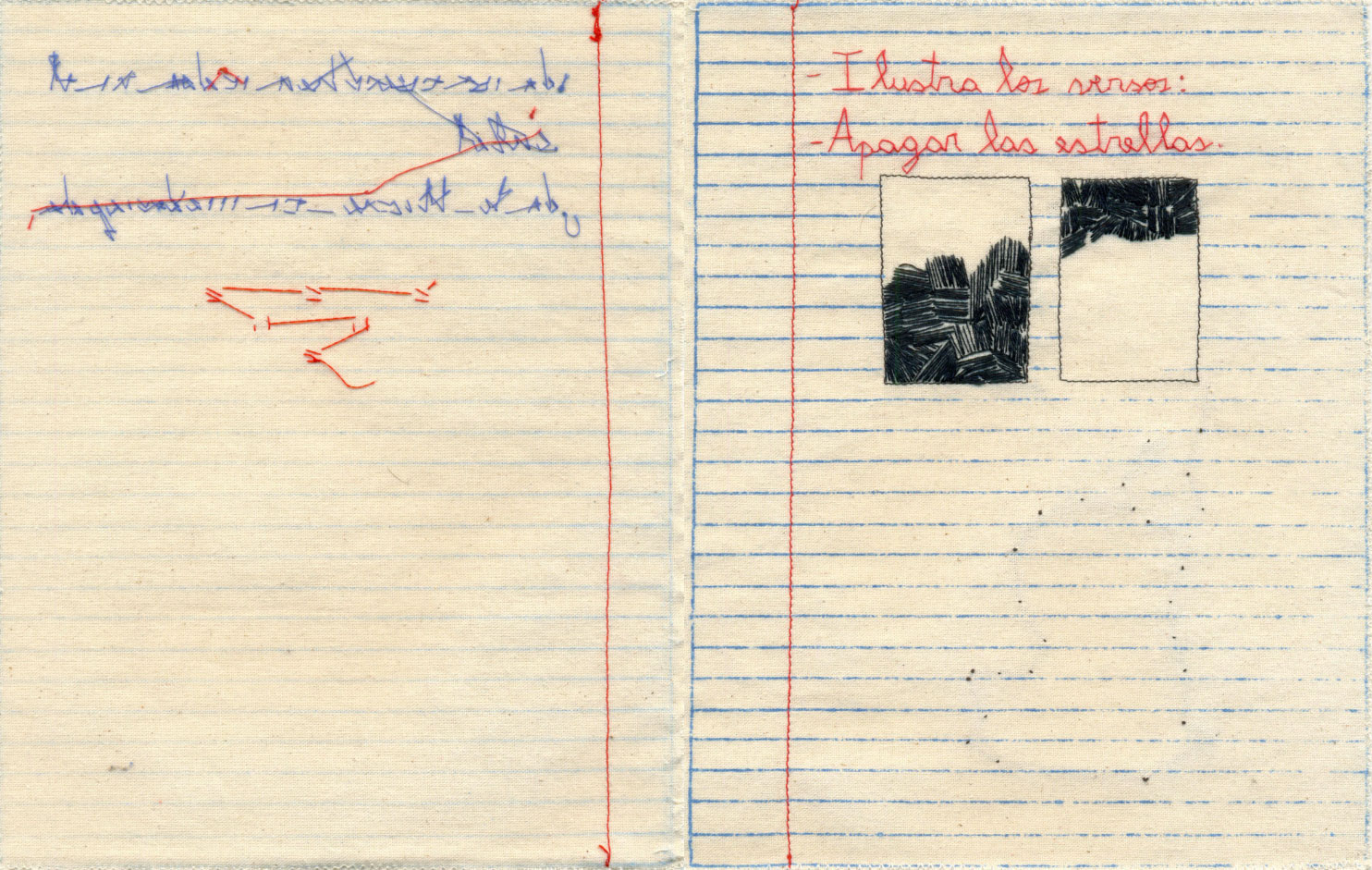
Nereida Apaza Mamani, details of Cantos Domésticos, 2020. Silkscreen and embroidery on fabric, artist’s book. Courtesy of the artist.
The signifying duality of the word ‘doméstico’ here is particularly useful to comprehend what the work entails. Doméstico, as an adjective for something concerning the home, or as domesticating, forcibly adapting something for human control. With attentive eyes on feminicide and domestic violence in her work, Nereida sews possibilities of existing in a notebook space that offers both a space for protest and for collective thinking, for experiences shared collectively, turning them into resistance.
In 2019, Nereida participated in a residency at the British Museum, where she was appointed the inaugural artist in residence at the Santo Domingo Centre of Excellence for Latin American Research (SDCELAR). As part of the residency, she worked with the museum’s Peruvian collection and produced new artworks that were later acquired by the British Museum.
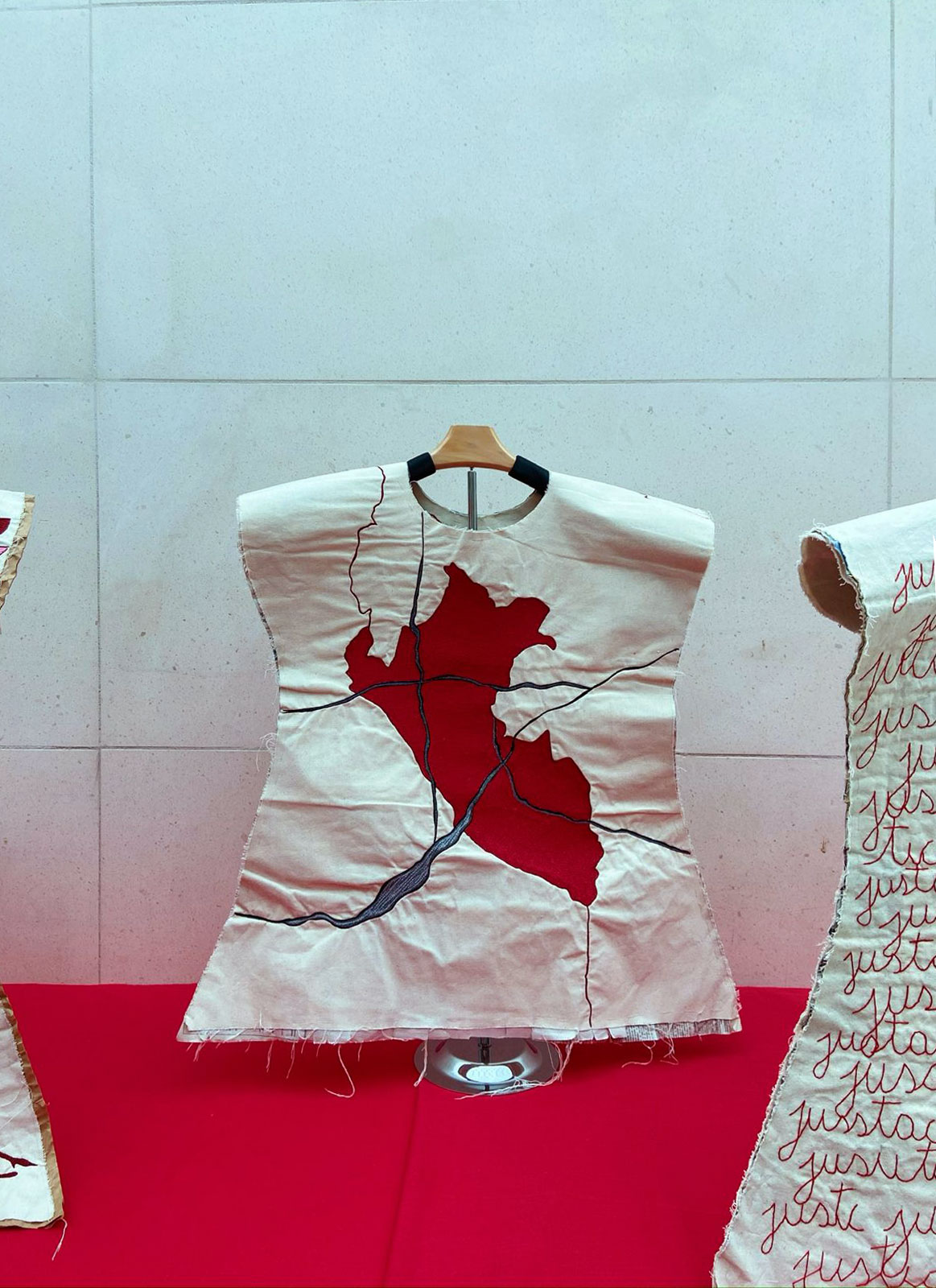
In dialogue with the historical investigation in her artistic practice, some of the objects were representative of national heroes, connected to the independence of Peru. One of the objects was the bibs of a traditional dance performed in Peru: Negrerias. The dances themselves represent a big polyvalent meaning. Originating in the Afro-Peruvian communities, they symbolise both a defiance of colonial rule and the emancipation from slavery. The dances have been appropriated by the Quechua and Aymara communities, and constitute an act of re-imagining cultural history. However, Apaza’s work addresses the diverse questions of Peru by reinterpreting the concept of negreria. Usually made from a colourful embroidery technique, the bibs represent celebratory narratives of Peru’s independence.
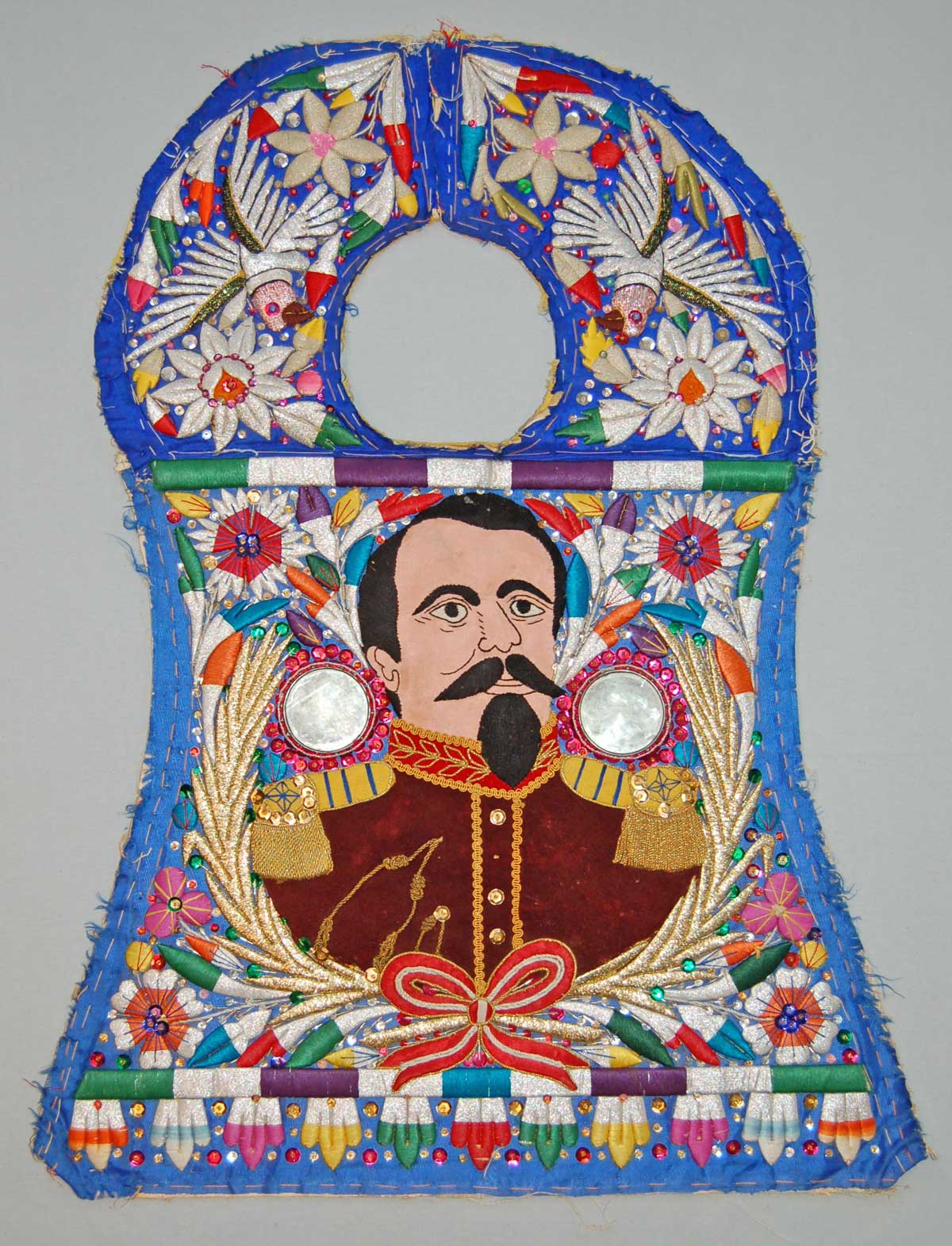
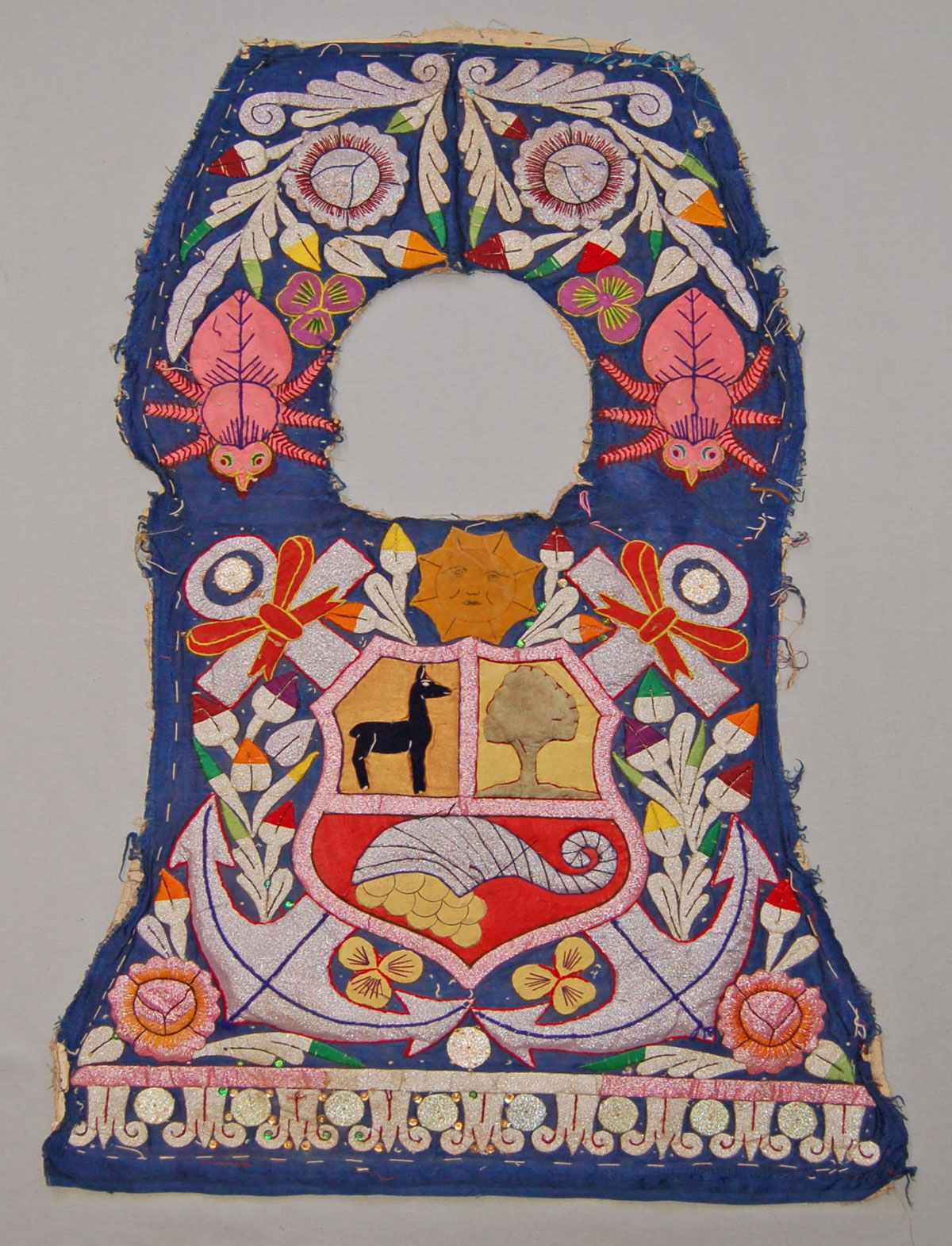
Nereida Apaza Mamani, Bibs from the British Museum’s Negrería collections, 2019. Courtesy The Trustees of the British Museum.
The historical portraiture embroidered on the bibs acts as a celebratory token, in which the values of bravery and a fight for freedom are remembered and honored. Within this process, some existences are ignored, sustaining a narrative that univocalizes what these bibs show: white, military men, and symbols of national prosperity.
As an act of subversion, Nereida creates Presidential Message, a bib that carries the words of the historiographer Jorge Basadre, in which the country is seen far from a totalising view: ‘Those who only care about the past, ignore that Peru, the real Peru, is still a problem. Those who fall into bitterness and pessimism ignore that Peru is still a possibility. By reverting the visual speech present on the flag’s shield, the work is critical of a national celebration, honouring its possibilities, but not ignoring its problems’.
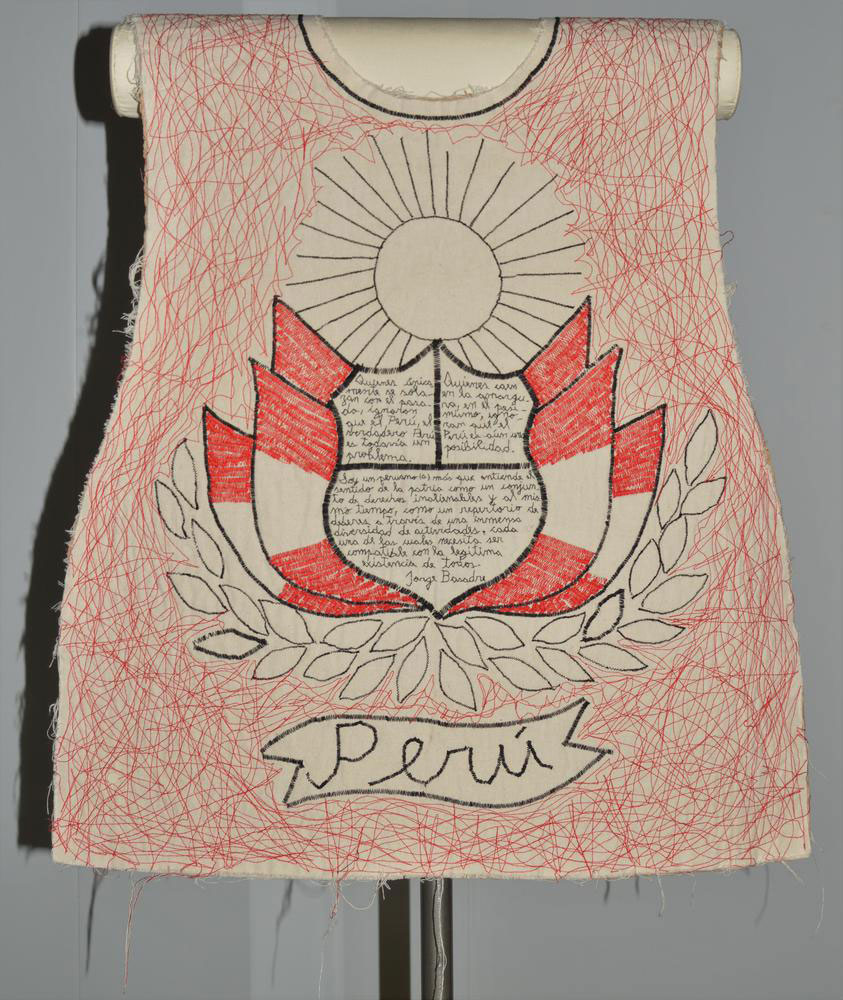
Nereida Apaza Mamani, 2019. Courtesy of The Trustees of the British Museum.
The bib embodies contradictions, in which the words uniting problem and possibility carry the word ‘manana’ (tomorrow) on their backs. The artist Salazar (1981) uses the word ‘manana’ to illustrate the postponement of changes in Peru. By using the same colours of Peru’s flag, Mamani lends them a different political meaning, in which the white is representative of peace, and the red, of the blood that wrote the history of Peru, both during the many battles and the violence of colonisation, but also of its current correspondent expressions through a state work, converted, among many expressions, into police violence.
Made of calico, the bib references a material commonly used in museum contexts to wrap textiles in storage. The material itself serves as a commentary on practices of concealing in museums. The calico represents a power dynamic: it is not just a wrapping for artefacts, but also a metaphor for how certain narratives have the power to ‘wrap’ or control, while others remain concealed. By using this material, Apaza’s work highlights the layers of invisibility and silence, concepts that are both conceptually and physically present in the museum. Apaza’s work not only provides a view that is reflective of a multifaceted history of Peru, but it also challenges the prevailing narrative that conceals much of its complexity. By inviting Apaza to think from and with the collections, it was possible to look at surviving in its complexity, in its blood, both in its shed and its pulsating form. Now, Apaza’s work figures at the museum’s Wellcome gallery.
In 2024, she took her collective practice forward, and returned to the museum with new negrerias, dancing together with the collective Baila Peru, in a performance that echoed [Hélio] Oiticia’s parangoles [Brazilian visual artist and sculptor], conflicting with the British Museum’s architectural and discourse structures. Carrying the celebratory and critical act of inviting neglected existences to dance, in a choreography that houses both gestures of belonging and exclusion, the gathering between these women reflects the multifaceted forms and possibilities within which the history of colonialism, violence, and women can choreograph different futures and the birth of new narratives.
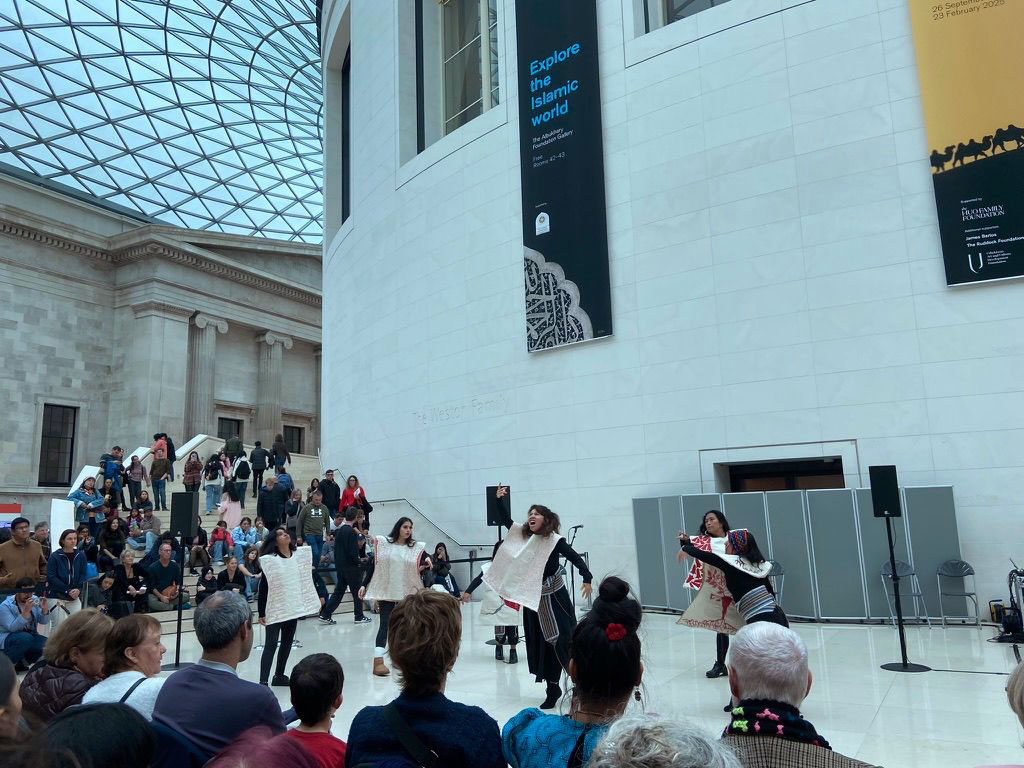
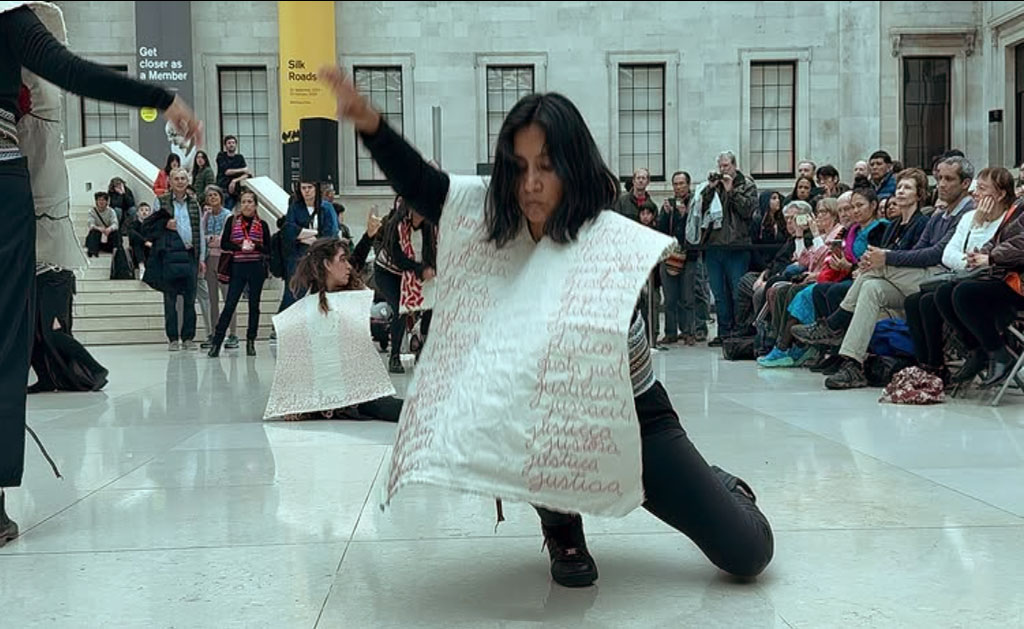
Nereida Apaza Mamani, performance with Baila Perú, British Museum, 2024. Photo: Amanda Dourador. Courtesy of the artist.
Through embroidery, Apaza developed what can be understood as a memory project. By engaging with historical objects connected to her ancestry, she reflected on her own experience of being far from home, in a city where cruelty and xenophobia have increasingly become normalized within public policy. During this period, she created her own map of London. The book London A–Z brings together poems written by Apaza during her stay, embroidered onto pages made from materials that reference those used in the British Museum’s textile storage to protect works in the collection.

Nereida Apaza Mamani, London A-Z, 2019. Courtesy of The Trustees of the British Museum.
“Many of us who have migrated—myself included, as my family is also migrant—have lived in communities where, through these expressions, we have created a unified sense of community. These practices express beliefs, desires, and also challenges, through diverse forms of expression. Even if these practices continue in the city in very limited ways, they remain part of who we are. If I invite someone to a dance here, to a cultural activity where we will move together, people come. They have the opportunity to connect and be part of a community.”
The art of Nereida reinforces that addressing the colonial legacies inherited in education systems, languages, territories, and gender stigmas is indeed a path to shape a better future. While some criticism might arise on artworks that take the stage to vocalise suffering and injustice as being pessimistic or reinforcing negative stereotypes, Nereida’s work proves the opposite: it is precisely by debating so bravely these issues that she makes it possible to look at them, to address them, and dance our way through it, preferably, together.
In a recent catch-up, we discussed her performance works and reflected on the place of decoloniality outside our own countries. What we can unlearn from these traditions, and how we might create alternative art systems. We concluded this text in the same spirit as our conversation, and in the way Nereida said goodbye to us: “Te mando un gran abrazo desde el sur” [“Sending you a big hug from the South”].
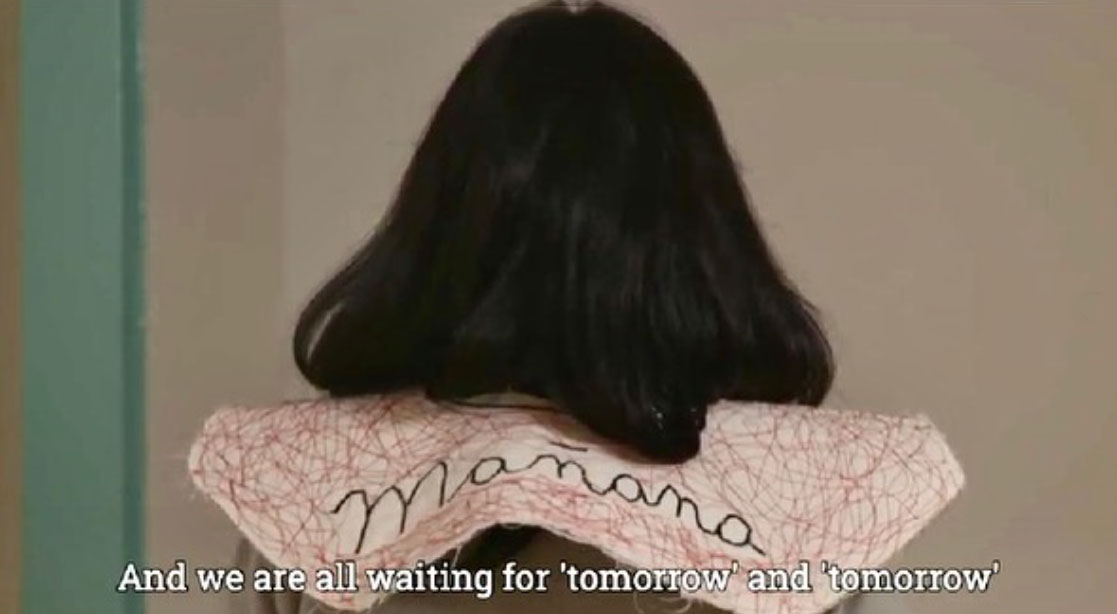
Nereida Apaza Mamani, 2019. Courtesy of The Trustees of the British Museum.
Giovanna Querido is a writer and holds an MA in Arts Administration from Columbia University. Originally from São Paulo, she now lives and works in New York City. She serves as Curatorial Assistant for the Brazilian Pavilion at the 61st International Art Exhibition of La Biennale di Venezia [2026] and for the 39th Panorama of Brazilian Art: After It’s All Said at Museu de Arte Moderna de São Paulo [MAM São Paulo].
Amanda Dourador [Brazil] is a curator and writer based in London. She holds an MA in Museum Studies from UCL, where her research was awarded the Museum Studies Prize and the Institute of Archaeology Master’s Prize. She currently works between Tate Modern and the National Galleries of Scotland, working with travelling exhibitions across the UK.
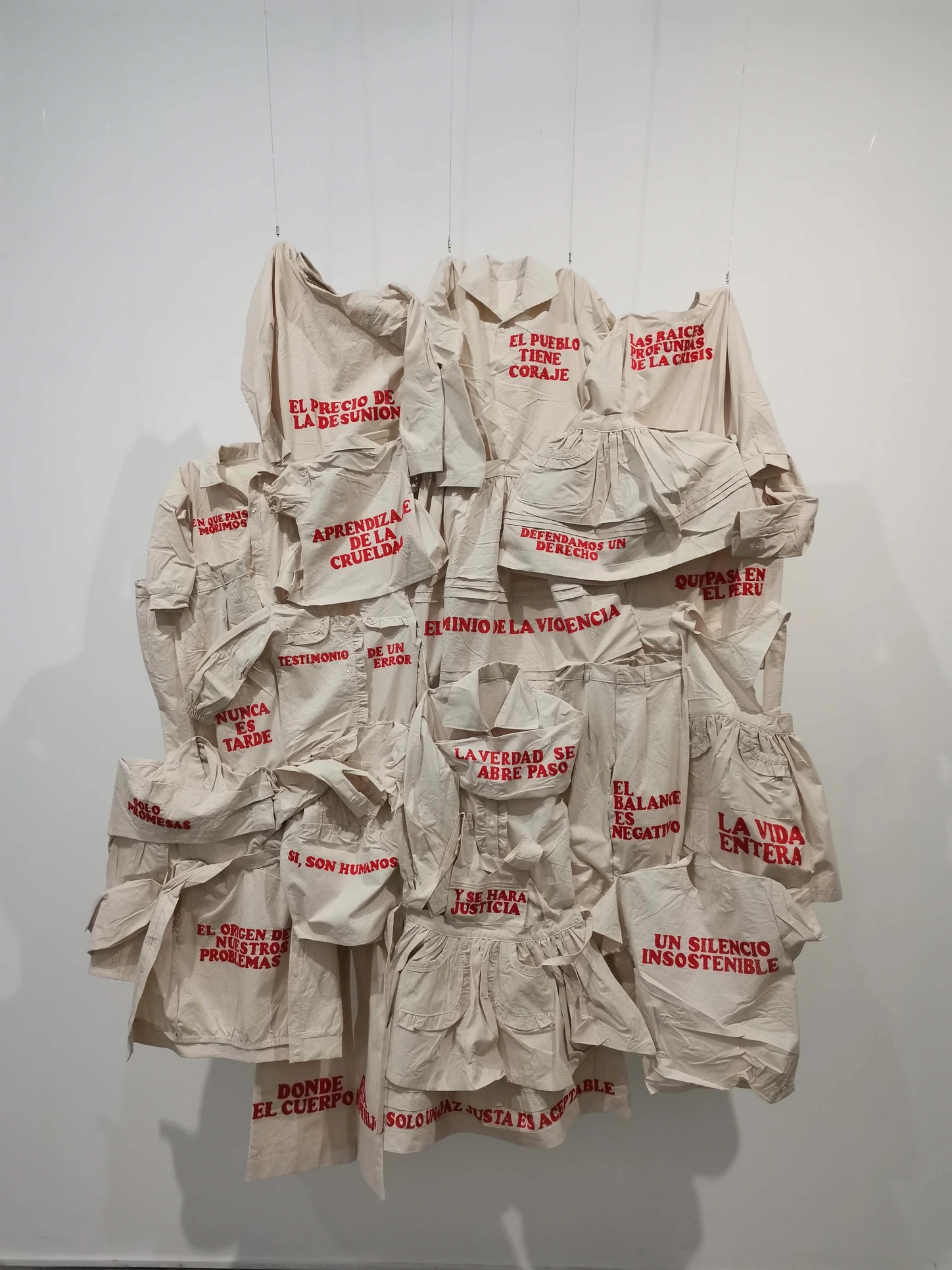
Nereida Apaza Mamani, Escrito Está, 2021. Embroidery on tocuyo fabric. Courtesy of ANFASEP Memory Museum.
Nereida Apaza Mamani is a visual artist whose practice spans a wide range of techniques, including painting, printmaking, stop-motion animation, artist’s books, installation, embroidery, and textile-based processes. Her work incorporates diverse materialities and media to address contemporary political and cultural issues such as gender, identity, and citizenship. Through a poetic visual language, she critically examines and subverts social norms and imposed structures.
Mamani studied at the Escuela Superior Pública de Arte Carlos Baca Flor in Arequipa and at the Instituto Superior Tecnológico Pedro P. Díaz.
Selected solo exhibitions Listening with the Hands [ICPNA–San Miguel, Lima, 2024]; Poetics – Imagining the World [Hay Festival, Arequipa, 2023]; The Existence of Us [Galería Del Paseo, Lima, 2022]; The Fire of Children [Lugar de la Memoria, la Tolerancia y la Inclusión Social, Lima, 2021]; Patria – Artist’s Books [www.cuadernospatria.com, 2021]; The Light of Darkness [Galería Del Paseo, Lima, 2020]; Invisible Homeland [British Museum, London, 2019]; To Live [Centro Cultural Peruano Norteamericano, Arequipa, 2019]; Time Is a Myth [Centro Cultural Chaves de la Rosa, Arequipa, 2018]; The Mother of the Lamb [Pucara Bulls Art & Design Store, Arequipa, 2017]; The Fire of Children [Museum of the Santo Domingo Convent – Qoricancha, Cusco, 2015]; The Heart of a Bird [Centro Cultural Peruano Norteamericano, Arequipa, 2010]; Without the Rose We Can Do Nothing [Galería Juan Pardo Heeren, ICPNA, Lima, 2010]; Dialectics of Peace — public space intervention [Plaza de Armas, Arequipa, 2010]; Alice [Galería Celda de Arte Virtual, 2009]; and Levitations in Paris [Alliance Française of Arequipa and Trujillo, 2009].
Selected two-person exhibitions including La Voix Humaine with Raúl Chuquimia [La Centrale, Paris, 2019]; Symbolism of Emancipation: The Culture of Freedom with Raúl Chuquimia Ramos [Convento de Santo Domingo – Qoricancha, Cusco, 2014]; Young Talents: Arequipa with Lucio Puma Ydme [John Harriman Gallery, British Cultural Centre of Lima / San Juan de Lurigancho Gallery, 2010]; and See Double with Zoraida Acosta Silva [Centro Cultural Chaves de la Rosa, Arequipa, 2007].
Nereida has participated in numerous group exhibitions, including Peru and the Andes – Living with Land and Sea [permanent exhibition, British Museum, London, 2023[; Now What – Drawing Edition [John Harriman Gallery, British Cultural Centre of Miraflores, Lima, 2023[; I’m Not Going to School Anymore: Education, Institution, and Image in Recent Peruvian Printmaking [Museo del Grabado ICPNA La Molina, Lima, 2023]; Old Signs / New Rotations: Experimental Poetry in Latin America [Museum of the University of Antioquia, Colombia, 2023]; YUYAYMANAKUNAPAQ WIÑAYPAQ PARA RECORDARNOS SIEMPRE [José María Arguedas House, Ayacucho, 2023]; Healing Earth [Sismo Espacio, Arequipa, 2023); Latin American Brunch (Enhorabuena Espacio, ARCO Madrid, 2023]; Threads That Resist, Threads That Subvert [John Harriman Gallery, British Cultural Centre, Lima, 2022]; Contemporary Imaginaries, Vol. I [Museo de Arte de Lima – MALI, 2021]; Denying the Desert [Museo de Arte Contemporáneo de Lima, 2021]; Moi Nous Elles Les Nouvelles Chimères – Post-confinium [Espace Saint-Rémi, Bordeaux, 2021]; Galería Barroca – Amtaña / Remember [8th Arica Barroca Festival, 2021]; Visual Resistances, Civic Aesthetics [Metropolitan Museum of Lima, 2021]; A Spirit in Motion – Cultural Networks of Amauta Magazine [Casa de la Literatura Peruana, Lima, 2020]; 11 Contemporary Artists from the White City in Houston [University Academic Center Gallery, Houston Baptist University, Texas, 2012]; Peruvian Painting Today [Museum of the Americas, Miami, 2011]; and The Last Lustrum [Raúl Porras Barrenechea Gallery, Ricardo Palma Cultural Center, Lima, 2010].
Mamani’s work is part of several public collections, including the British Museum [London], the Museum of Contemporary Art of the Universidad Nacional Mayor de San Marcos [Lima], the Central Museum of the Central Reserve Bank of Peru [Lima], Casa de la Literatura Peruana [Lima], and the Museo de Arte de Lima [MALI], as well as numerous private collections in Peru and abroad.
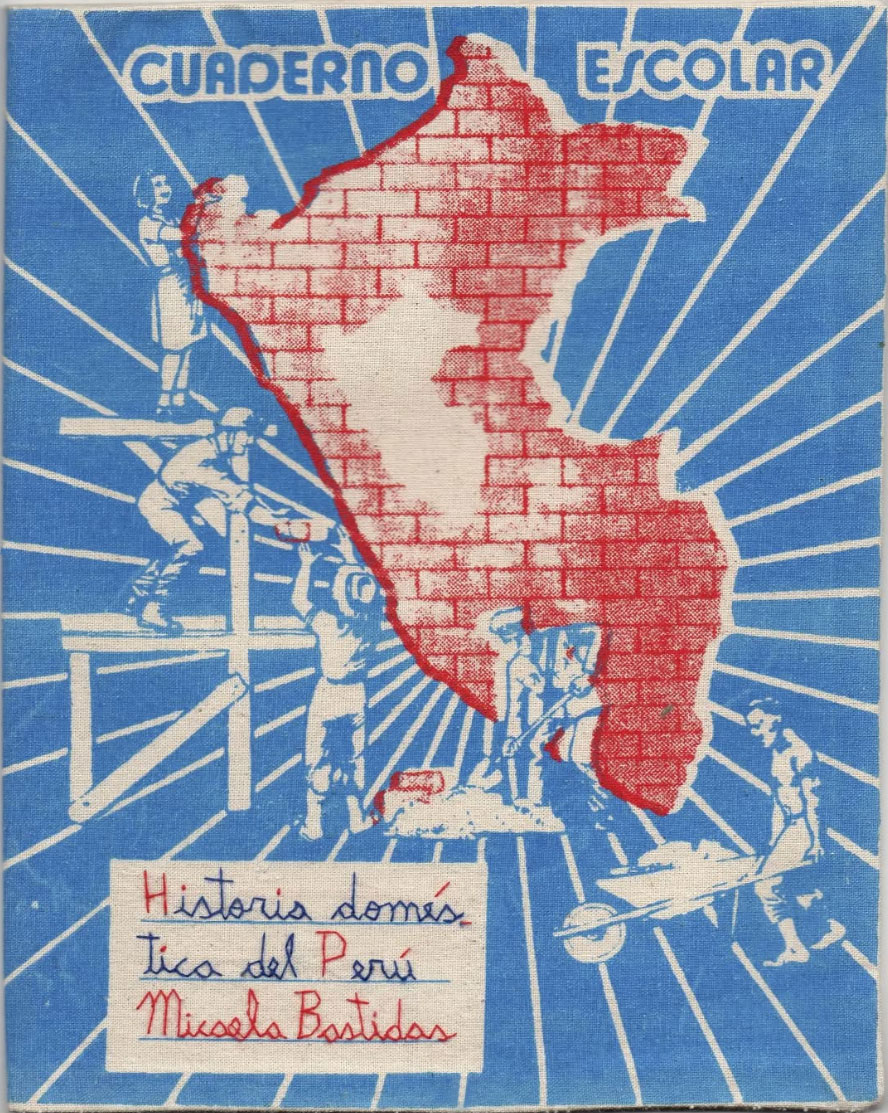
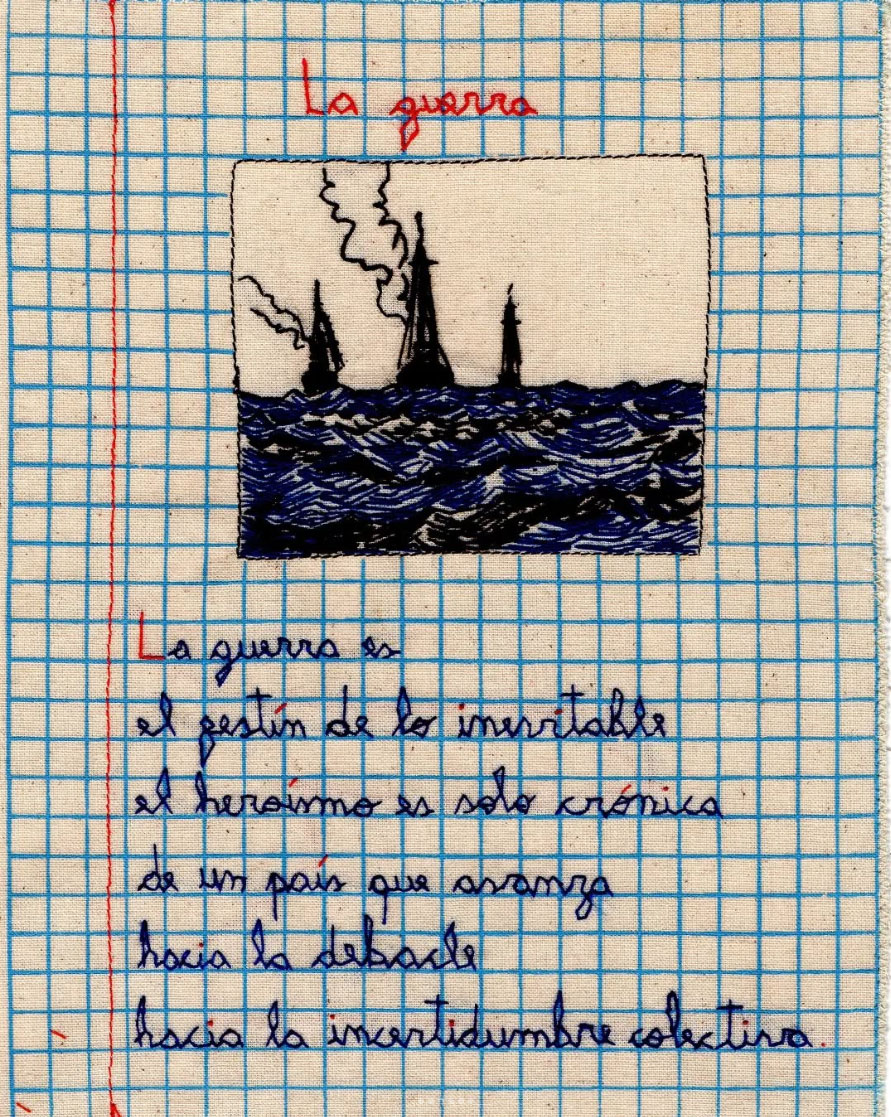
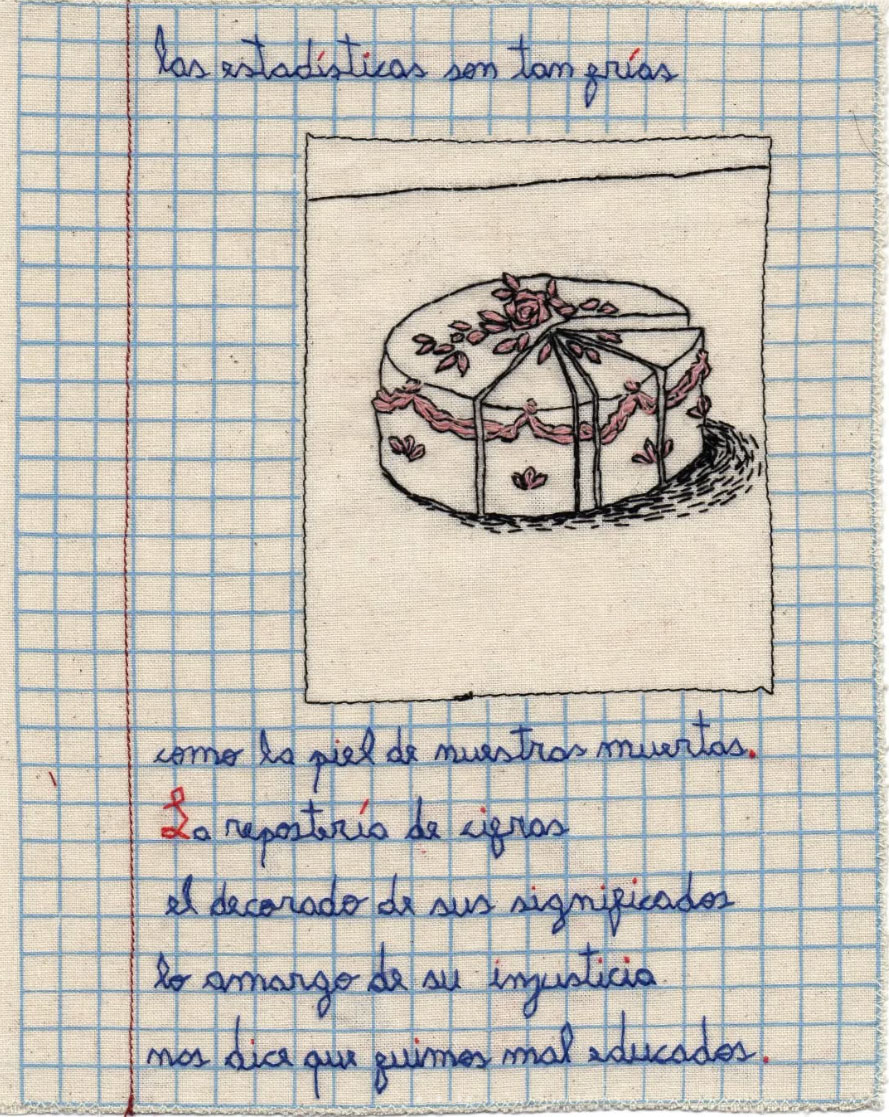
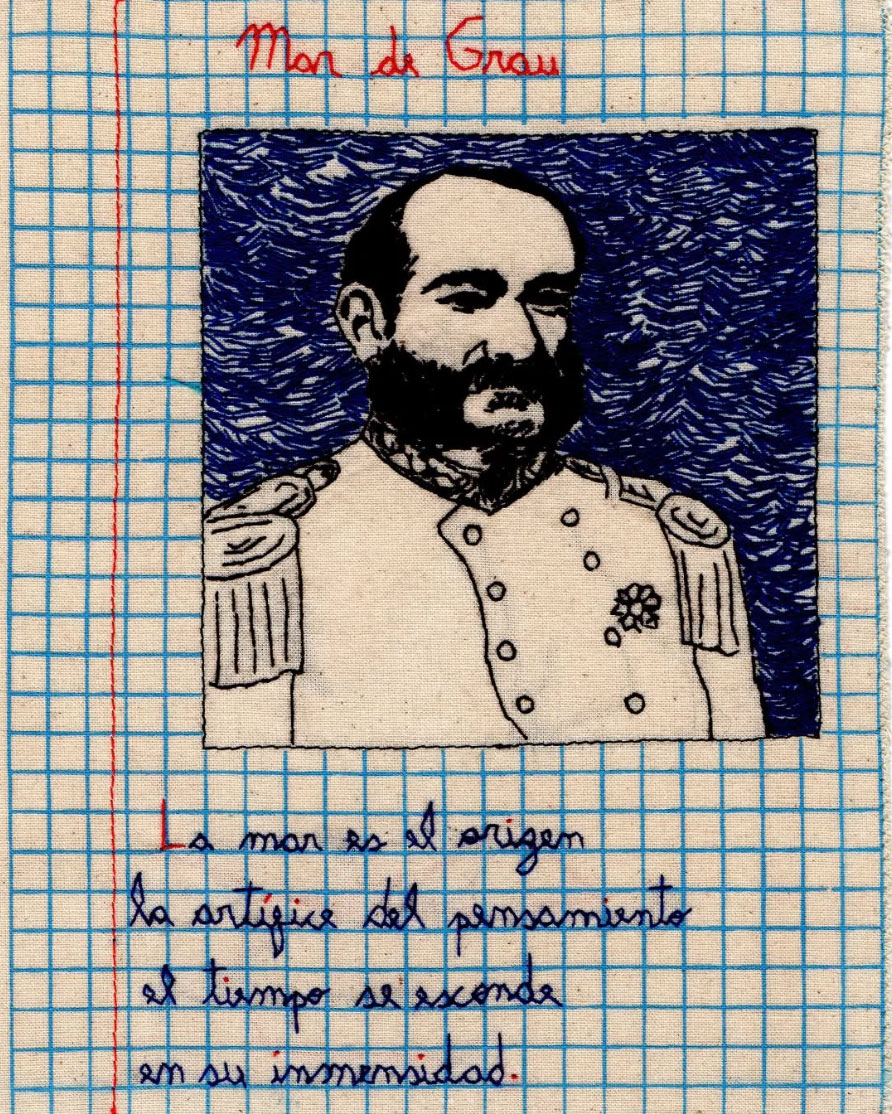
Nereida Apaza Mamani, details of Historia Doméstica del Perú, 2020. Silkscreen and embroidery on fabric, artist’s book. Courtesy of the artist.
Hero image: Nereida Apaza Mamani, details of Silencio, 2015. Silkscreen and embroidery on fabric, artist’s book. Courtesy of the artist.