Heller’s biography is a fundamental force within his practice. Raised within the Hare Krishna movement in the United States, he spent much of his childhood engaging in the rituals and itinerant lifestyle of a devotional community. When Heller was just ten days old, his mother, herself a devoted practitioner, began a decade‑long nomadic journey through Hare Krishna communities across the country, establishing “moving” as the only stable constant in his early life. That early immersion (along with his eventual decision to leave) created a dual awareness that shaped his practice: the intimacy of someone who once belonged, and the distance of someone who stepped outside.
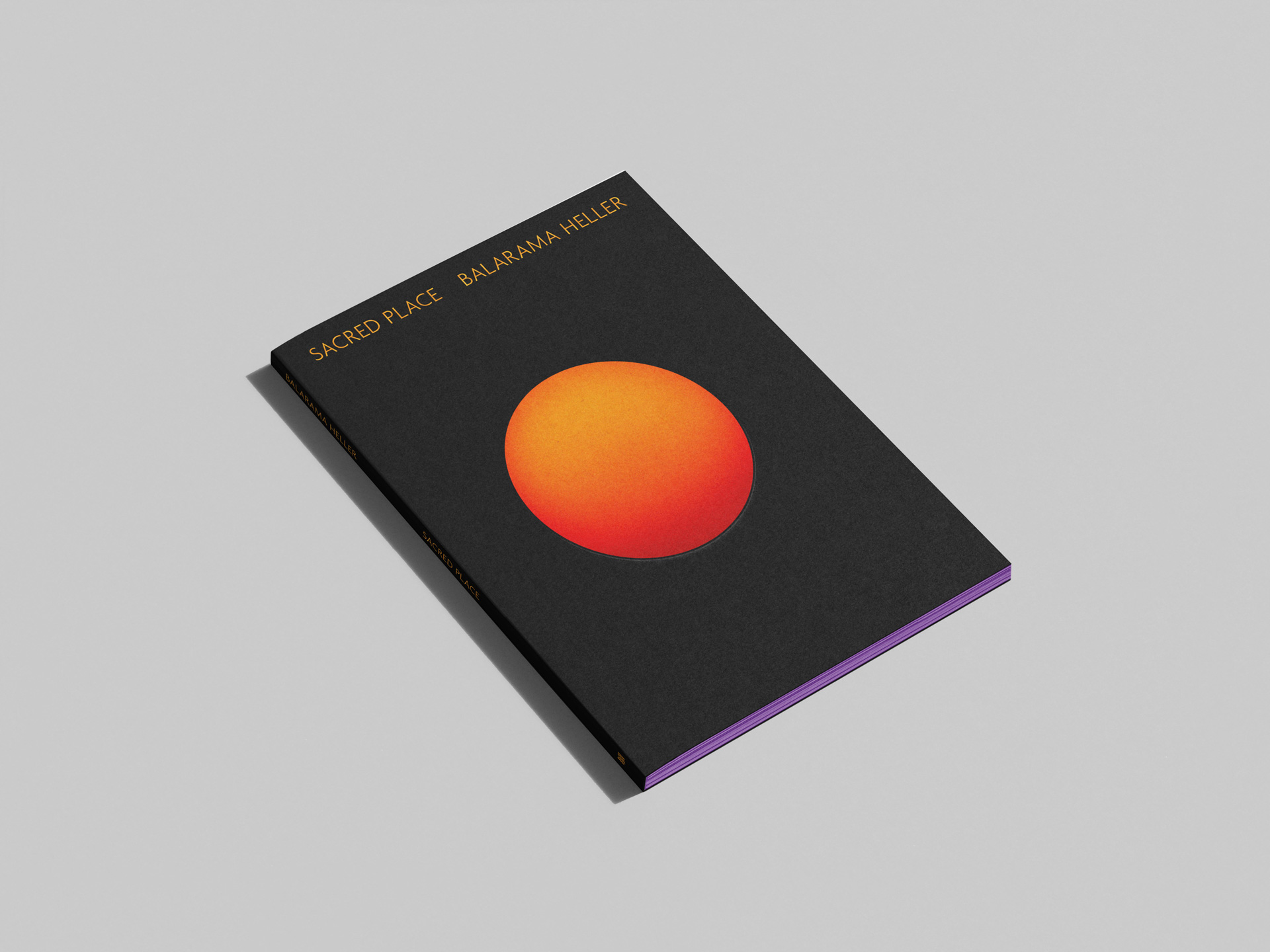
Sacred Place grows out of this tension. The project marks Heller’s return to Vrindavan, one of the holiest sites in the Krishna tradition and a place imprinted onto his childhood imagination. But the series is not a sentimental journey; it is a self-aware re‑entry. Heller photographs with a mixture of reverence, curiosity, and critical subtlety, allowing memory, spiritual history, and contemporary reality to coexist without forcing them into resolution.
Heller made the photographs in the liminal hours before sunrise, a time believed in many traditions (including the one he grew up in) to be particularly permeable, when material and spiritual worlds touch. This choice is not merely symbolic. It shapes the aesthetic and conceptual spine of the book. Darkness and dawn intermingle. Forms surface slowly. Clarity gives way to suggestion.
In one early image, a solitary figure stands on a wooden boat drifting over still water. The entire scene glows in violet and magenta hues, the horizon dissolved. The picture feels less like documentation than an apparition, an articulation of how memory and myth can tint experience. This is characteristic of Heller’s approach: to render scenes that are factual yet touched by something otherworldly.
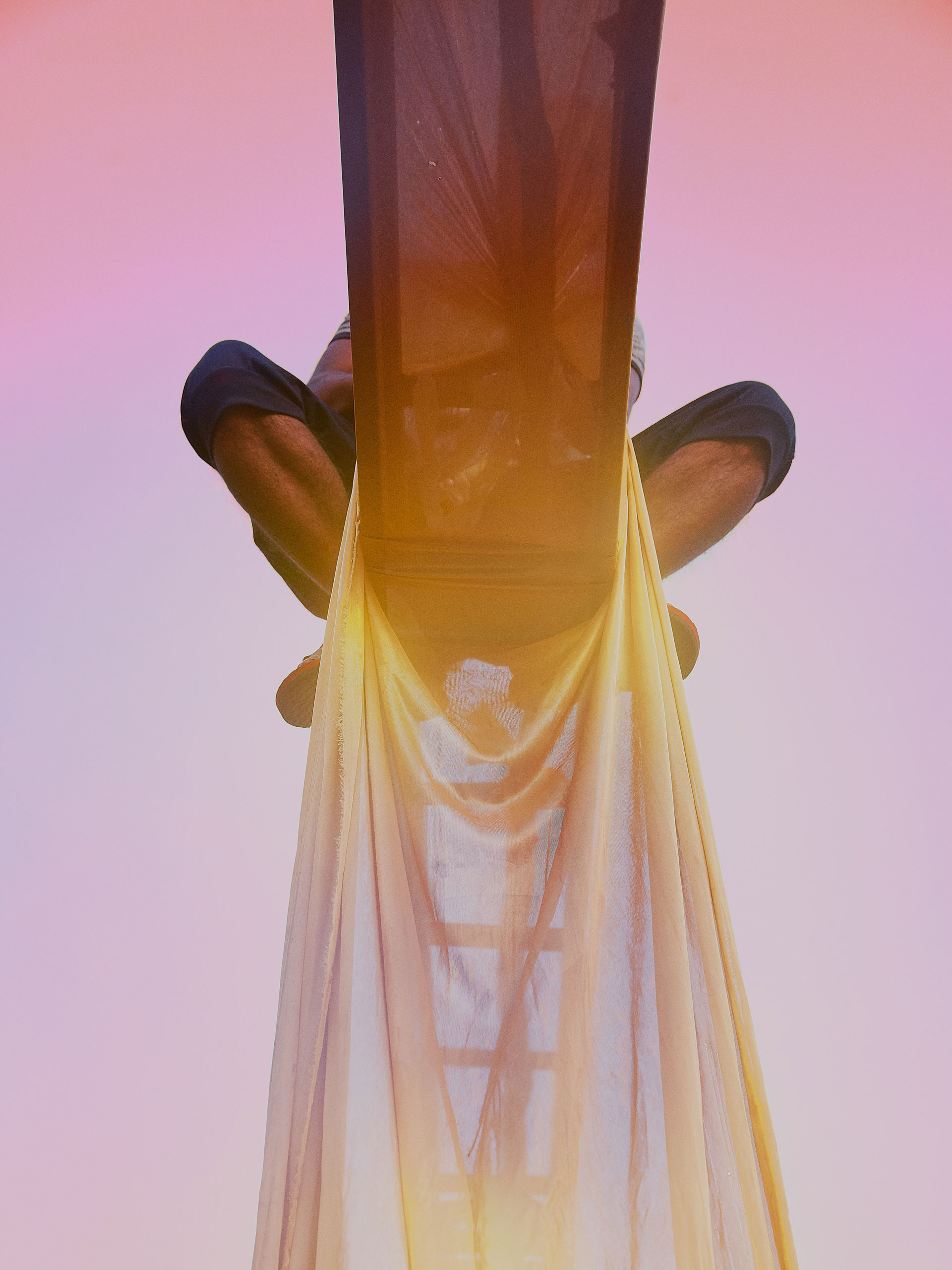
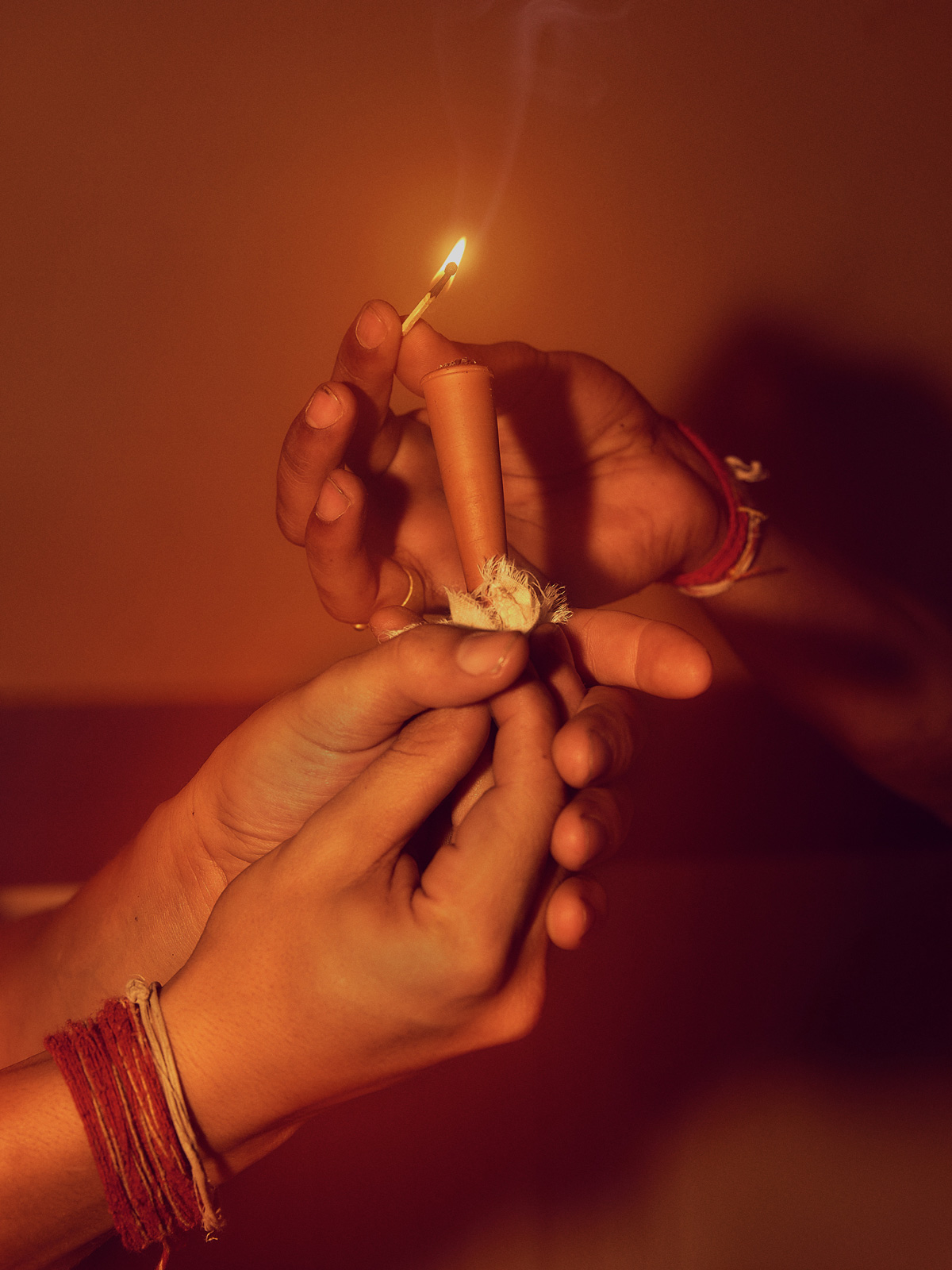
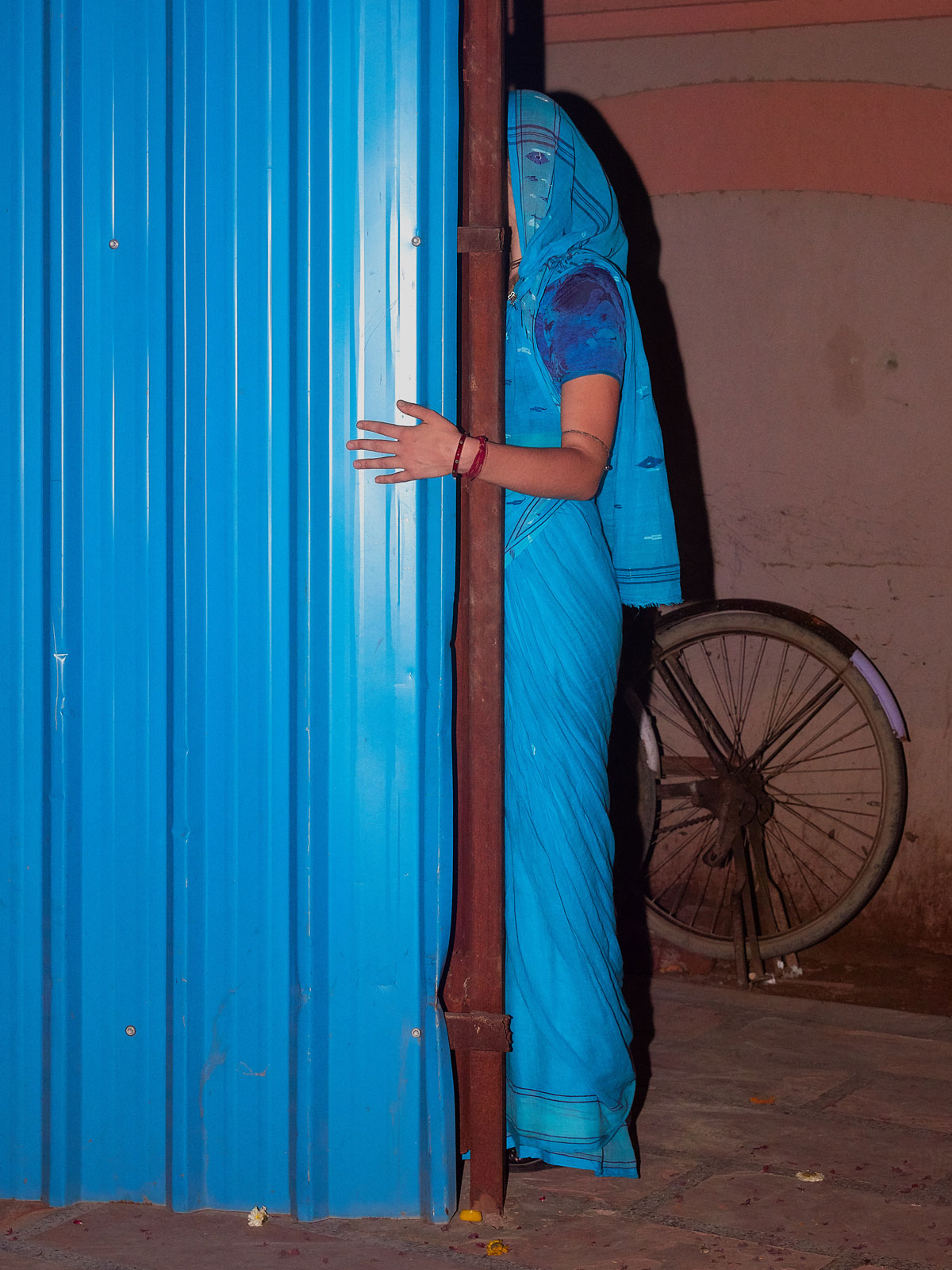
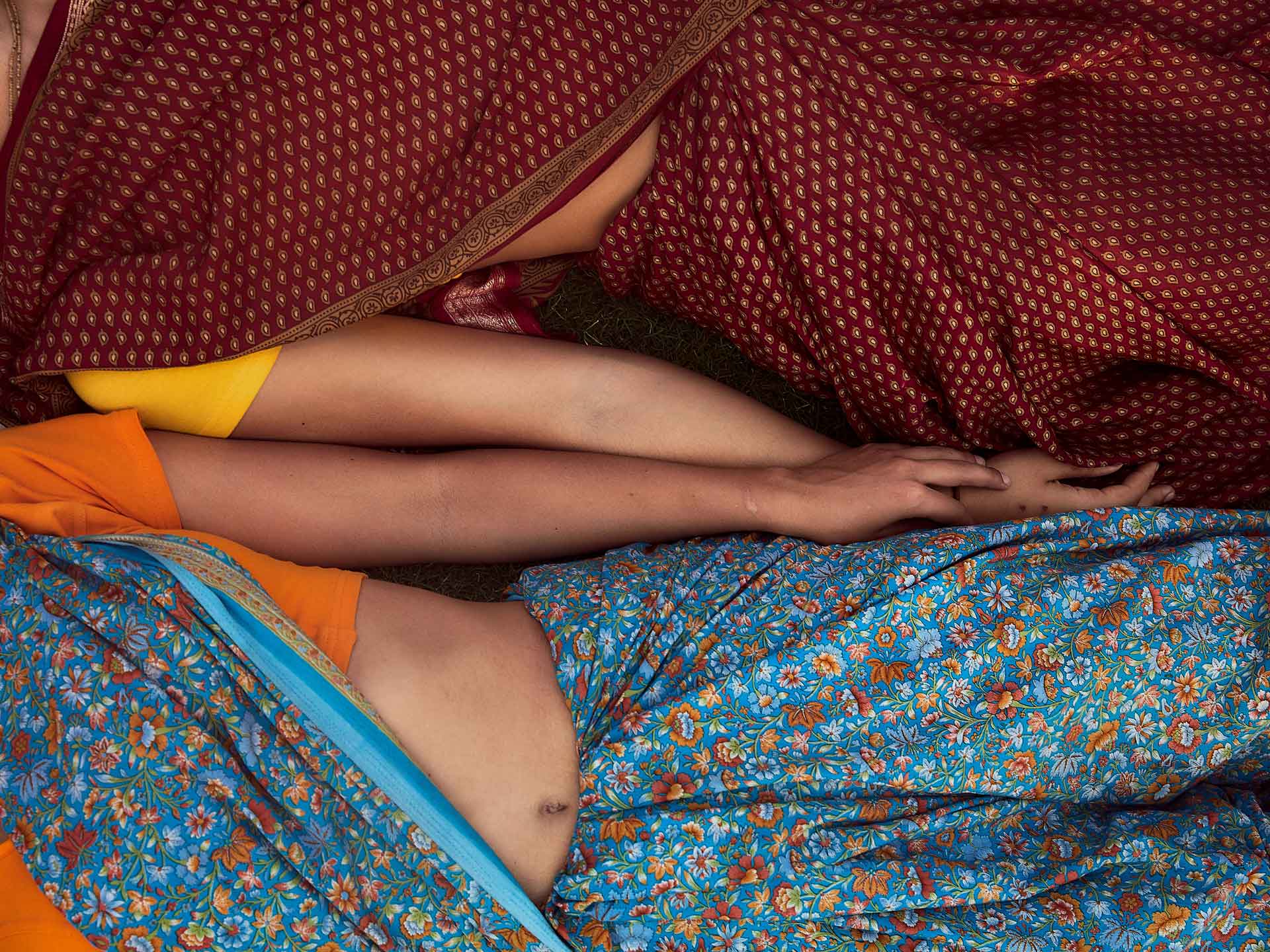
Across the photographs, Heller turns his attention to the physical expressions of faith: hands pressed together, garments catching the first light of morning, surfaces smoothed by centuries of touch. His palette is unusually luminous, sometimes even electric, giving his subjects a radiance that feels both contemporary and timeless. Buildings, statues, and bodies all appear charged, as though lit from within.
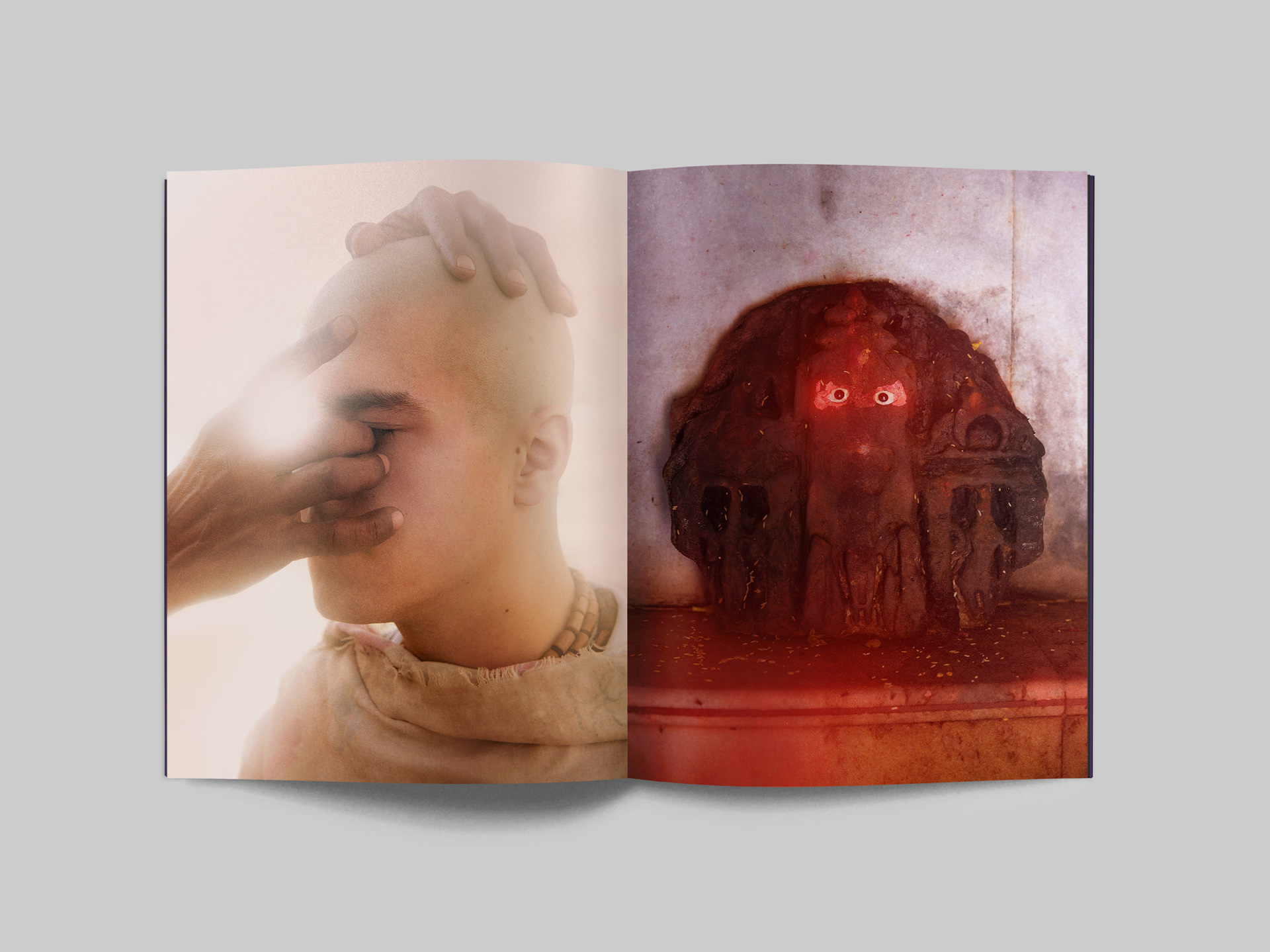
A powerful pairing near the book’s end exemplifies this sensibility. On one page, a tender ritual gesture unfolds: a hand resting on a head, another brushing across closed eyes. Opposite it sits a dark sculptural form marked by age, punctuated by two subtle points of light. Between them, Heller stages a quiet dialogue about the body as a vessel of devotion and the sites that collect devotional energy over generations.
What Sacred Place ultimately proposes is not a fixed definition of sacredness but an exploration of how it shifts across time, culture, and personal history. Heller’s approach is neither nostalgic nor purely documentary. Instead, he occupies a liminal space – between belief and inquiry, memory and present observation. His images hold this tension with clarity and humility. In an era when inherited spiritual structures often feel unstable or blurred, Heller’s work refuses simplification. It shows how the sacred might persist; not as dogma, but as a fragile, luminous presence that flickers in the spaces between things.
With Sacred Place, Heller positions himself as a photographer interested not in answers but in thresholds. His return to Vrindavan becomes a means of exploring how images can carry the weight of personal history, cultural memory, and spiritual longing all at once. The result is a photobook that resonates far beyond its pages; it is a meditation on how we see, remember, and seek meaning in the world around us.
Olga Yatskevich is a co-founder of 10×10 Photobooks, a nonprofit, community-driven organization dedicated to broadening and deepening engagement with the photobook. She has co-edited six anthologies on photobooks, most recently Flashpoint! Protest Photography in Print, 1950–Present (2024), which examines protest and resistance through printed photography. The earlier publication What They Saw: Historical Photobooks by Women, 1843-1999 (2021) received the 2021 Paris Photo–Aperture Foundation Catalogue of the Year Award. Last year, Yatskevich, together with her 10×10 co-founder Russet Lederman, received the 2025 Royal Photographic Society Award for Excellence in Photography Publishing, honoring their outstanding contributions to the field.
In addition to her curatorial and editorial work, Olga is a contributing writer for Collector Daily, a platform that offers photography criticism from a collector’s perspective. She lives and works in New York City.
To know more about Olga: @helka // 10x10photobooks
Balarama Heller (b. 1979, New York) is a New York City-based transmedium visual artist whose work explores the intersection of spirituality, myth, ritual, and science. Working between abstraction and representational spaces, Heller’s practice reimagines archetypal symbols, creating a visual language of preverbal awareness and photographic sublimation.
Recent group exhibitions include Illuminations, curated by Dana Karwas at Yale University’s CCAM (2025), and Poetic Record, curated by Deana Lawson and Michael Famighetti at Princeton University (2024).
You can find more about Bala Heller at @balaramaheller