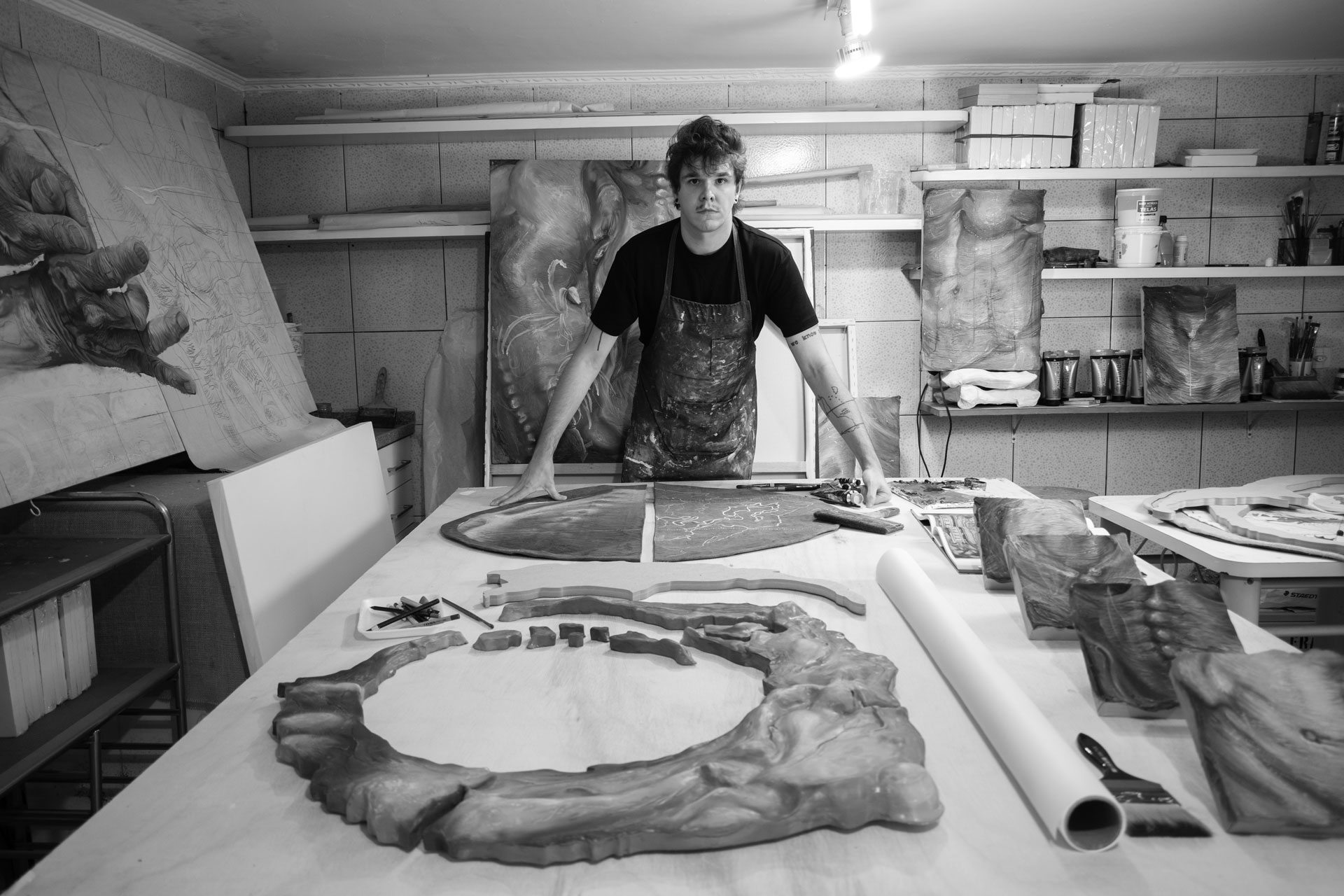
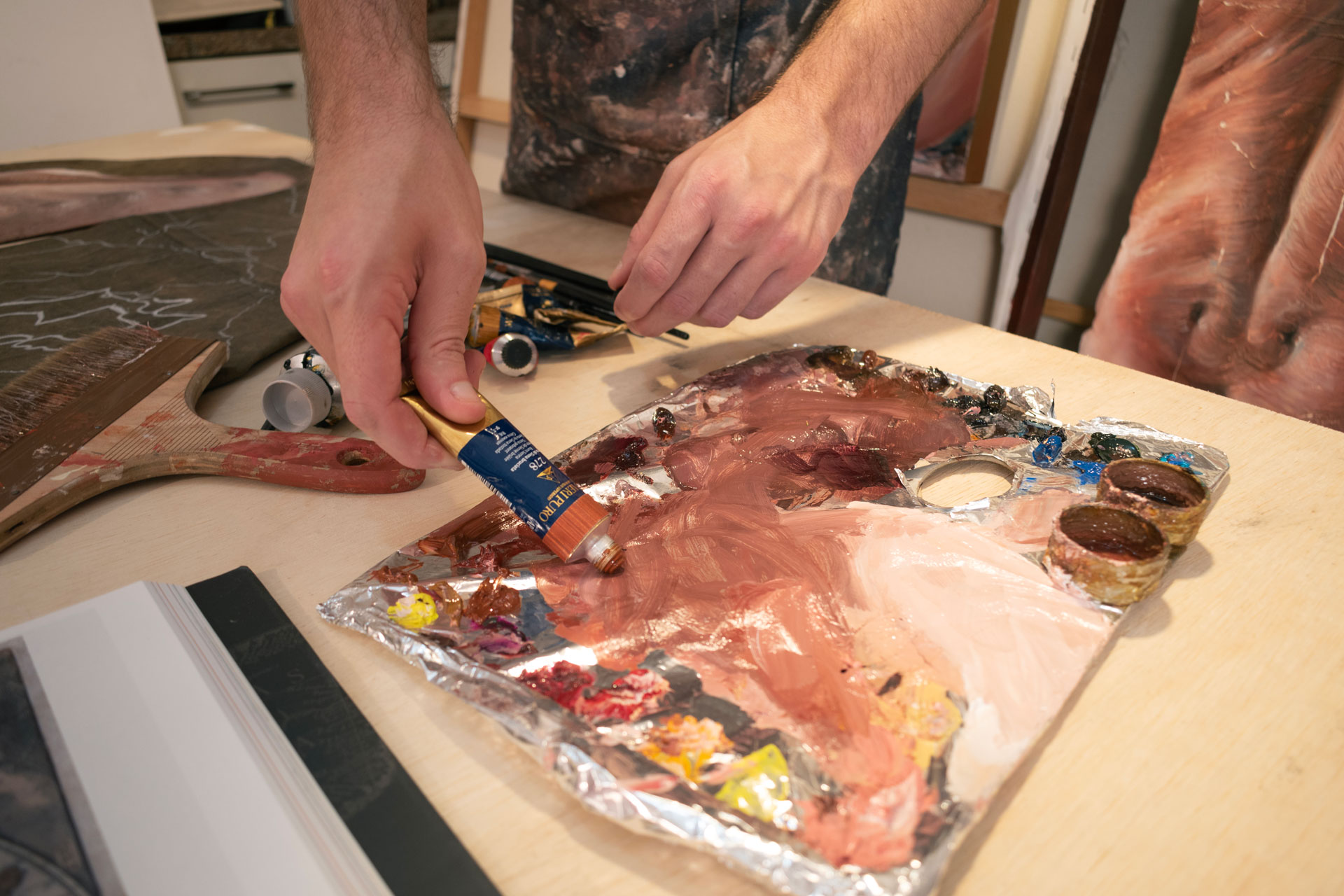
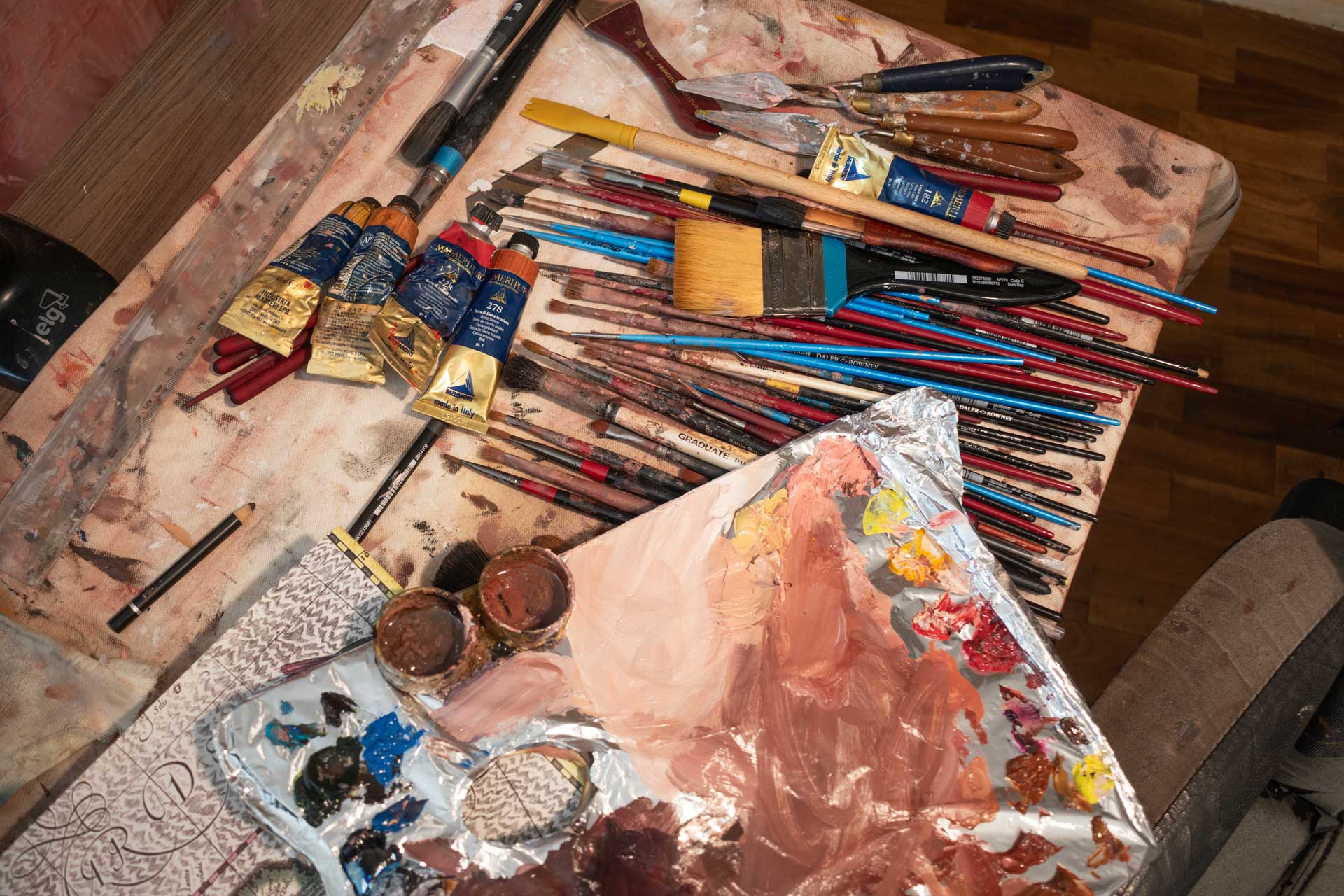
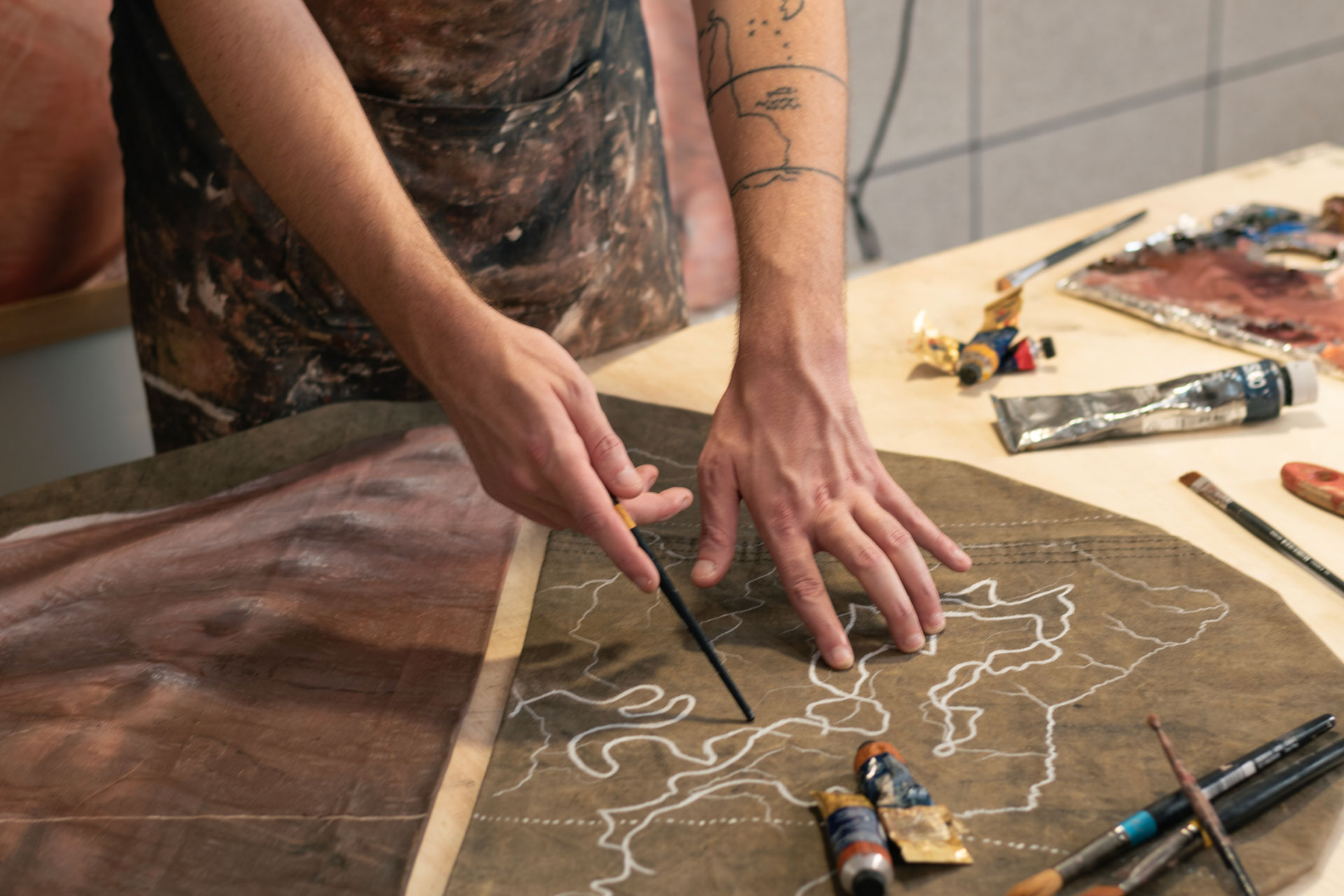
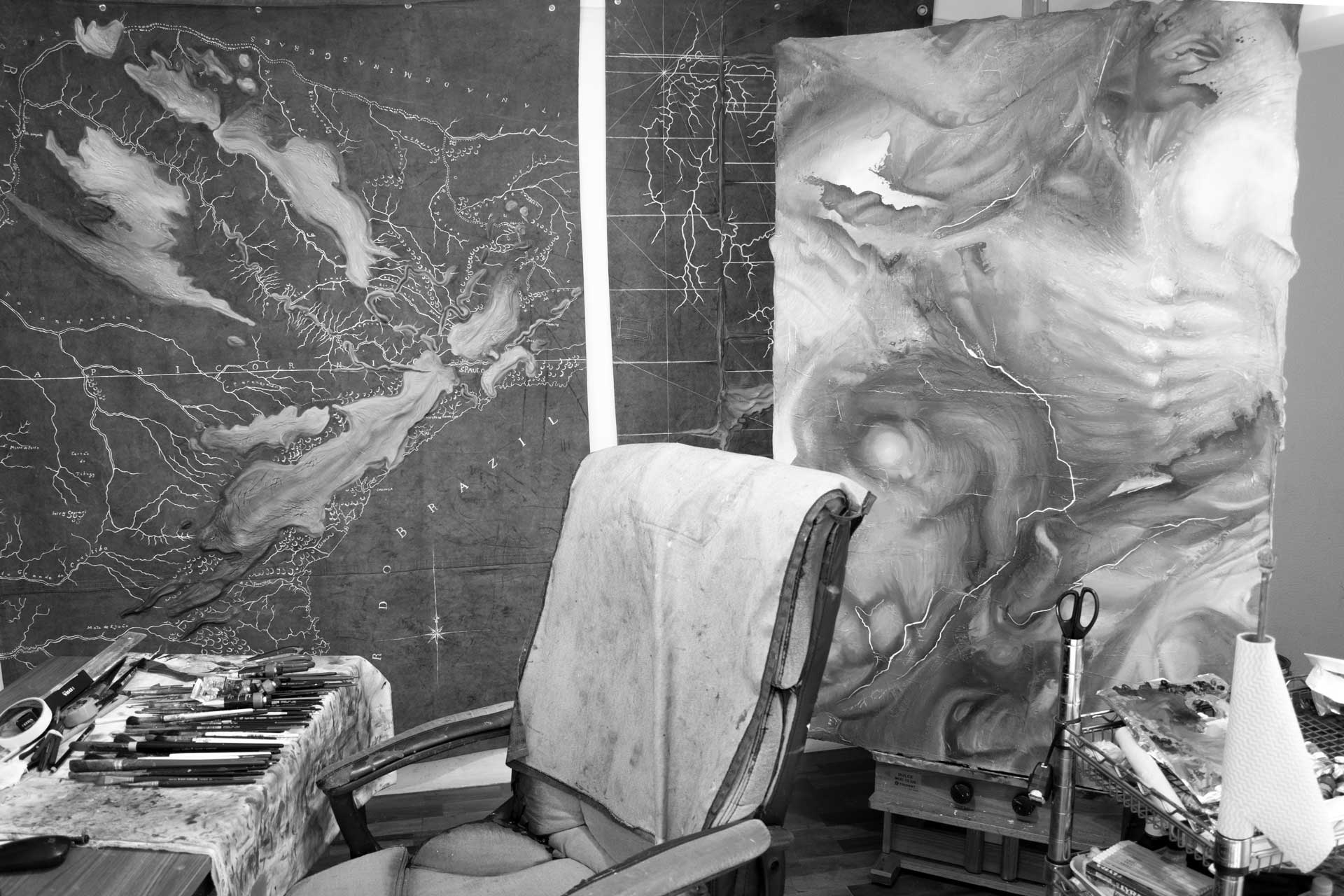
I’ve worked from many studios throughout my life. I began painting in my bedroom, then moved into a small room in the first apartment I lived in. At one point, my studio occupied a former law office; at another, it overlooked the sea and the port of Santos. Today, I work in a space that is both home and studio — and I often catch myself imagining where the next one might be.
Over time, I came to realize that studio practice is less about space and more about time. I work at night and adapt intuitively to wherever I find myself. The studio has become a non-negotiable rhythm, inseparable from life itself — as I believe it should be. Whenever I tried to impose fixed schedules or idealize particular spaces, the work resisted; it simply would not unfold that way for me.
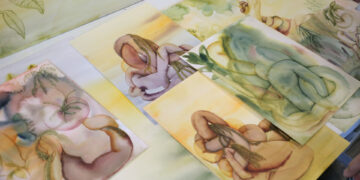
I have always needed to remain with a work for extended periods of time. My early paintings were built through the slow construction of dense networks of pores, skin, veins, and arteries — processes that unfolded over months. It was through conceiving painting as a kind of dissection that I began to introduce intentional cuts, tracing analogies between the human body, geological strata, and cartographic diagrams.
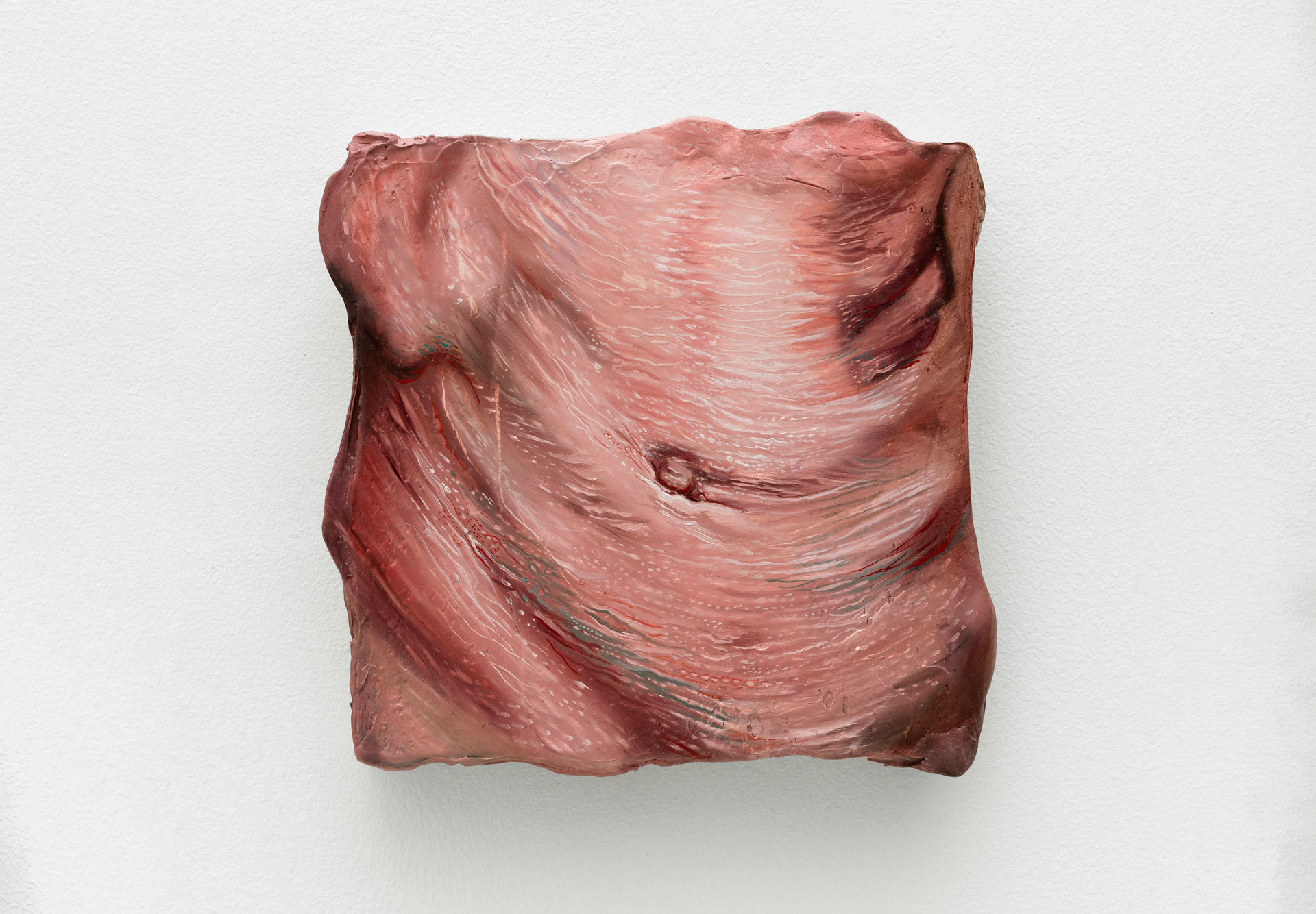
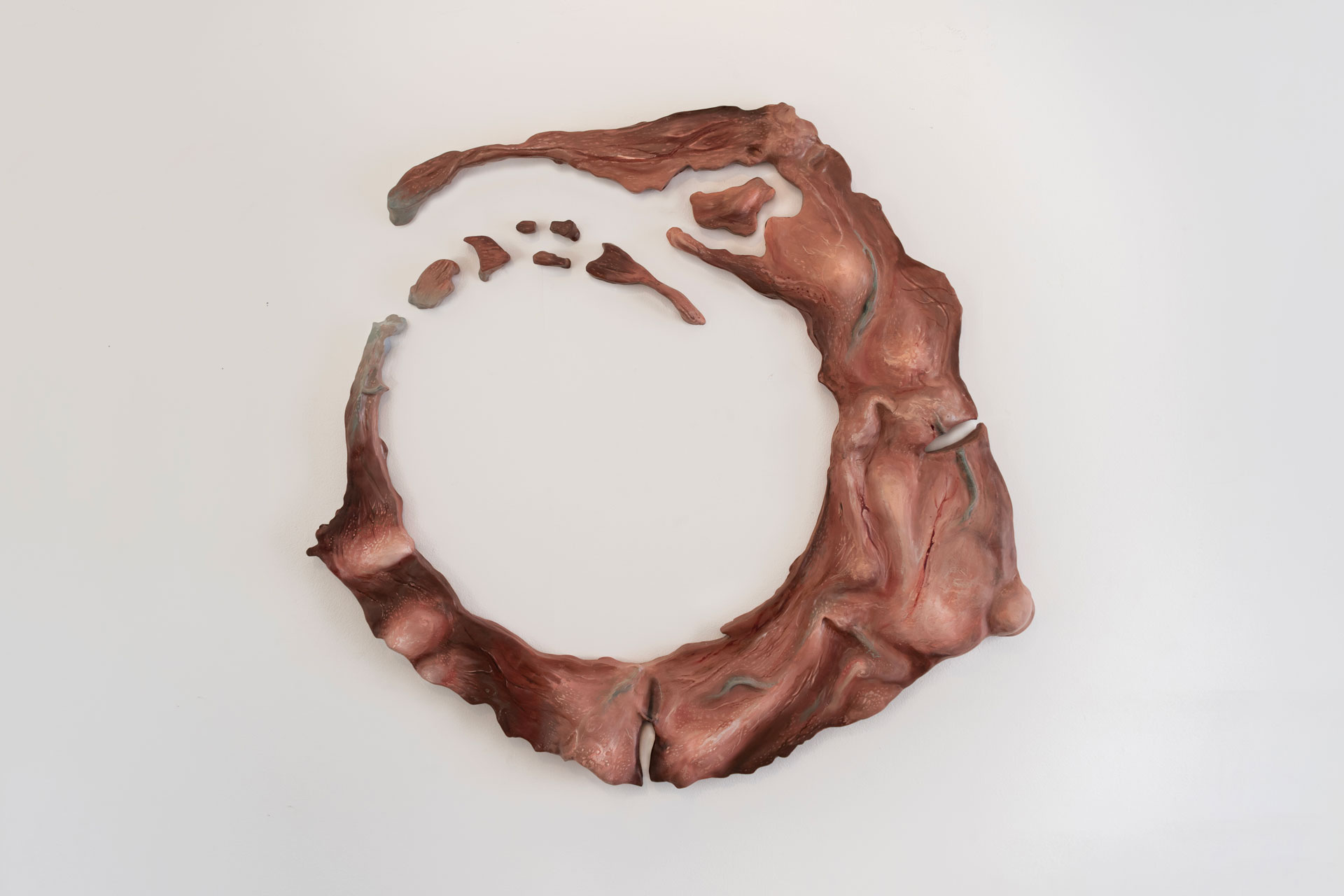
In recent years, I have sought ways for the body to exceed the boundaries of the pictorial field through the exploration of new materials. Working with cold porcelain allowed me to control this expansion more precisely, sculpting anatomical fragments that extend painting into spatial form. Fragmentation became central: masses emerge and detach like drifting continents, suggesting both erosion and tectonic shift.
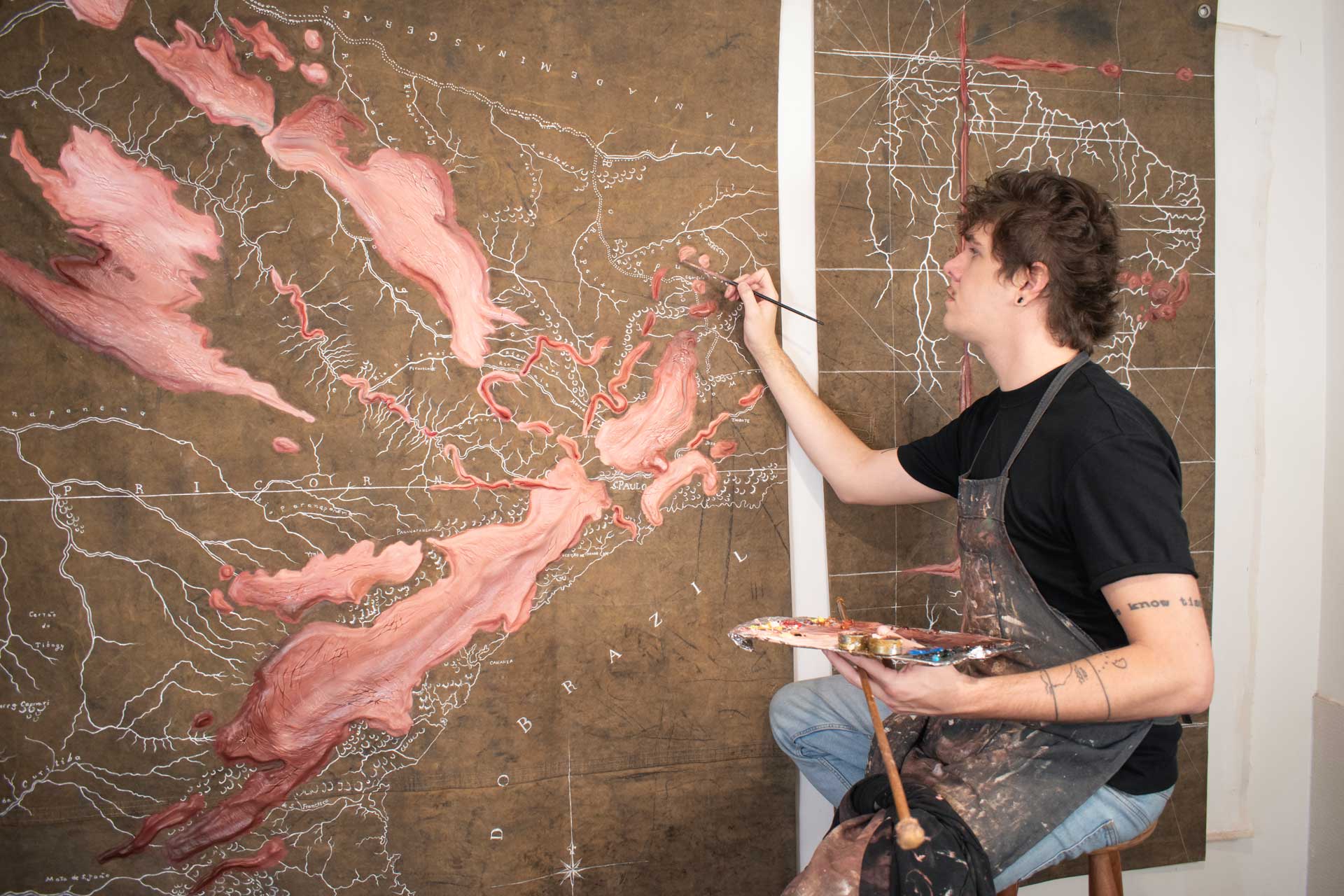
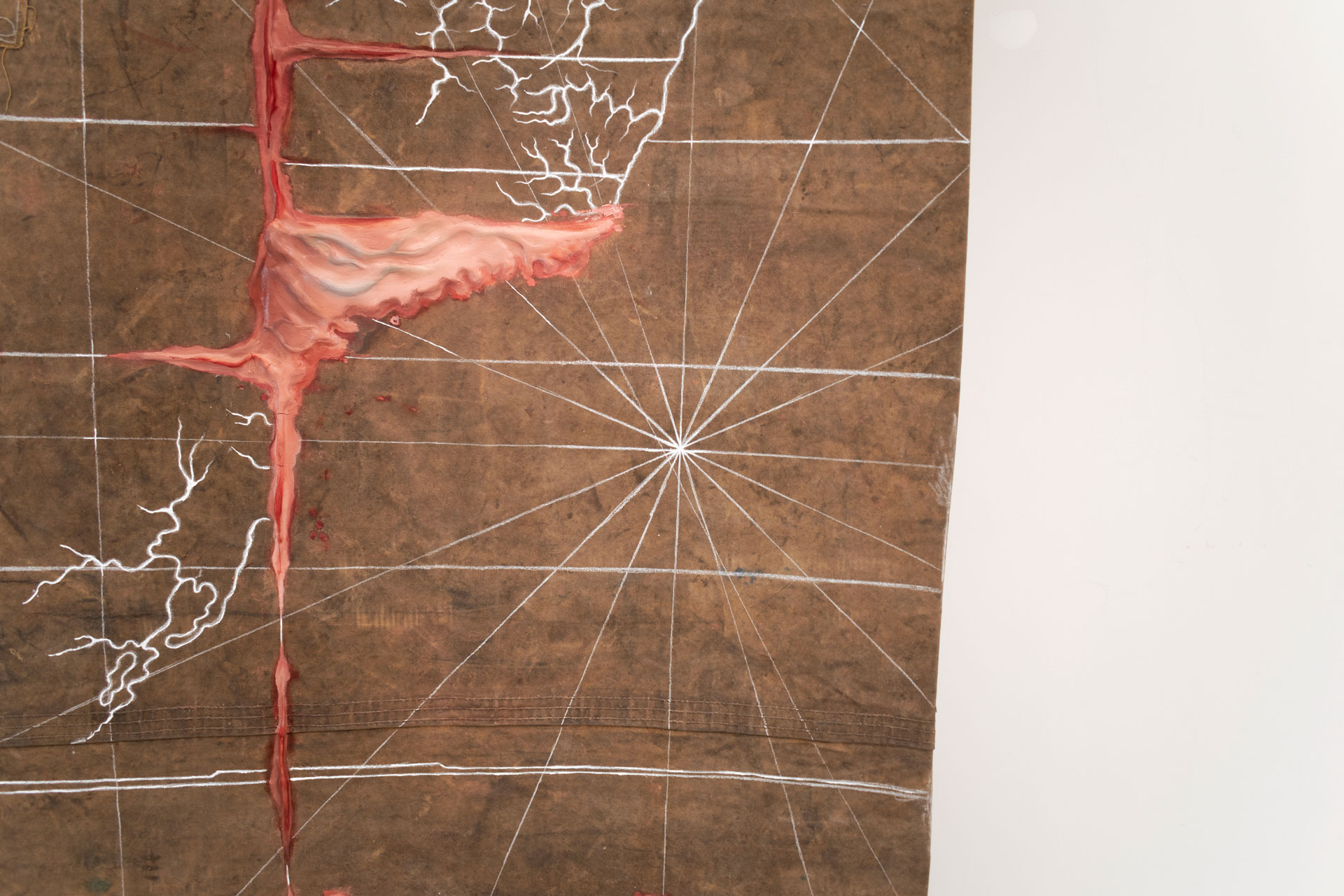
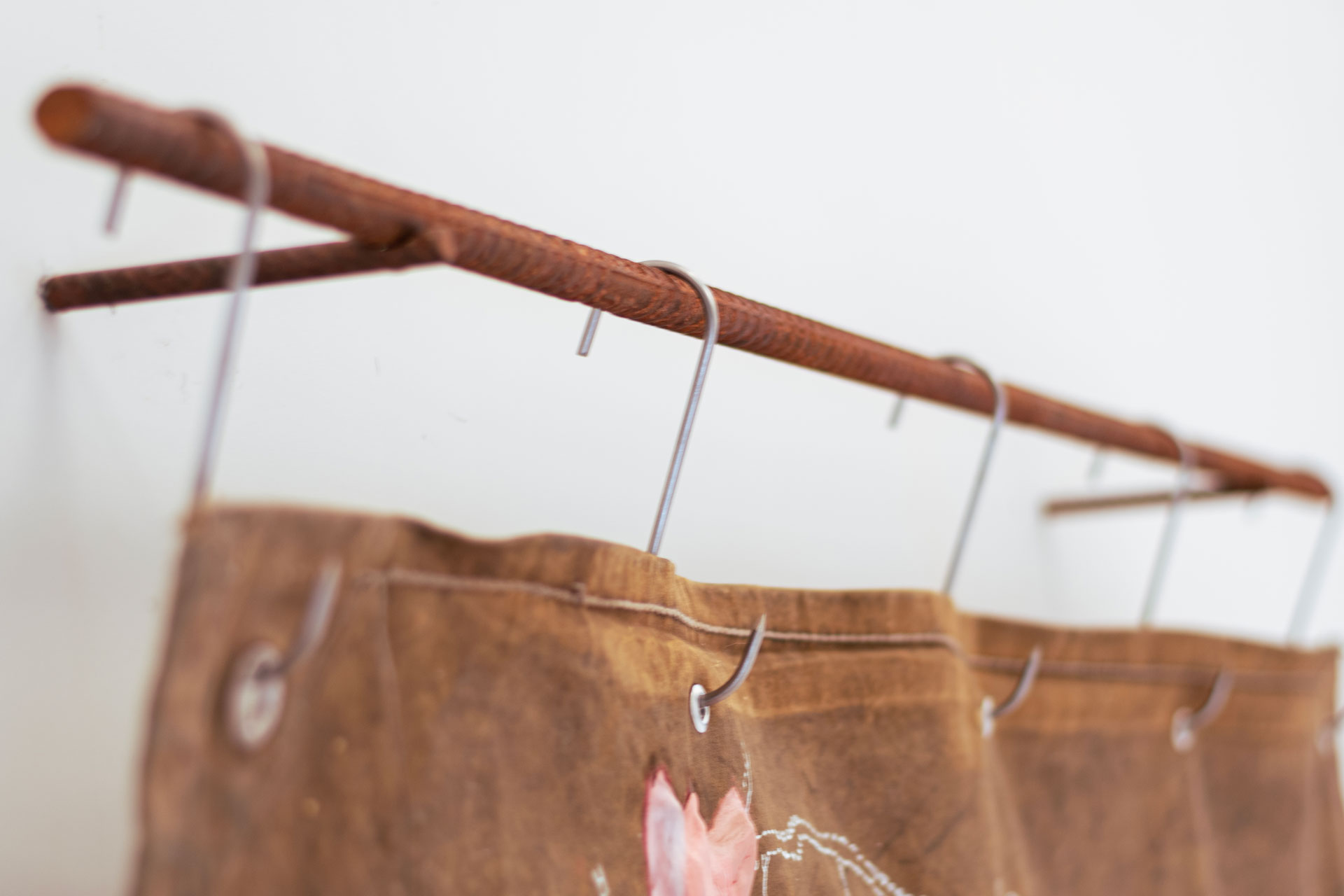
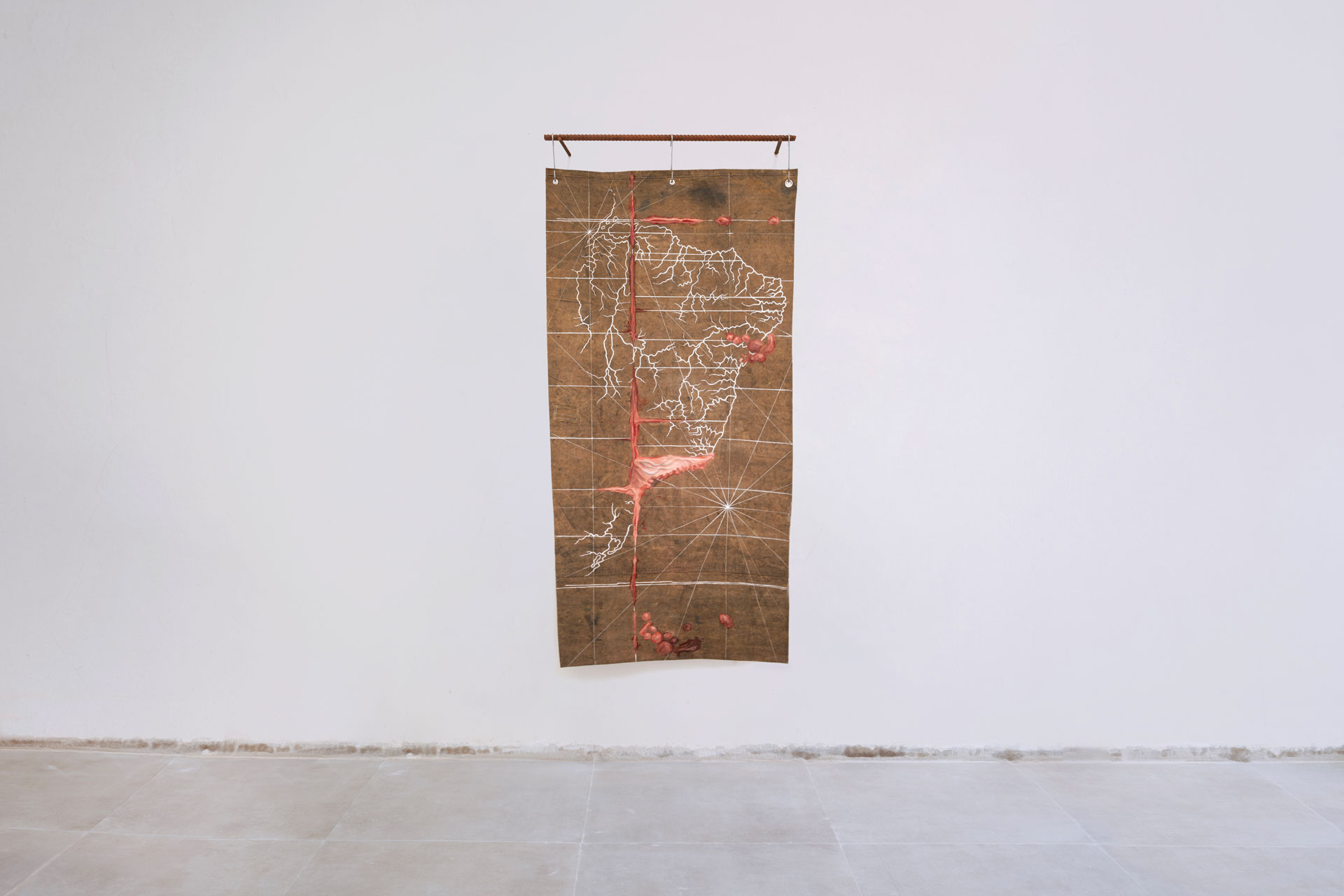
Cartography now serves as the guiding axis of my practice. In my recent work, Corografia Encarnada da Capitania de S. Paulo, I appropriated a historical map from 1792 as a foundational layer. Onto its surface, I applied sculpted and painted areas of cold porcelain that evoke anatomical fragments overlaying territories marked by colonial expeditions, tropeirismo routes, mountain ranges, and rugged hinterlands.
Through these counter-cartographic gestures, the map ceases to function merely as representation and instead reveals itself as process — a living tissue, stretched and incised, inscribed with veins and ruptures that conventional atlases often conceal.
The seeds of this current phase were planted seven years ago, when I first began probing the convergence of anatomy and cartography. Revisiting this trajectory, I find it important to acknowledge that presence in the studio does not always coincide with immediate material output. The intellectual tensions I have navigated — and continue to navigate — have served as guiding lines, quite literally mapping my practice toward a body of work that sustains my sense of purpose and continually pushes me to explore what remains possible within artistic language.
You can find out more about Luiz Escañuela at @luizescanuela
Photos: Courtesy of the artist & Estúdio em Obra