Lauren Pirie

Lauren A. Pirie’s practice is often collaborative, having developed through collective art functions and community events, including those she curated at PRIDE and MOCA Toronto, and through her role as co-founder of the grassroots art and environmental organization The About Face Collective. Her site-responsive installations have been exhibited as part of Nuit Blanche, DesignTO, and Lumière; at the Art Gallery of Burlington; and through ArtworxTO: Toronto’s Year of Public Art.

Spawned from critical reflections on psychosocial and economic structures in relation to ecology and regeneration, Lauren A. Pirie’s paintings, sculptures, and installations are rooted in queer ecological frameworks and investigations into symbiotic relationships in nature. Through biomorphic forms, soft-sculptural installations, and increasingly, living materials, she foregrounds cycles of decomposition, mutual transformation, and renewal in response to systems shaped by domination, extraction, and individualism.

Pirie has participated in residencies at PADA (Portugal); NARS Foundation (New York); and Open Source Gallery’s “The Lot”  and was awarded a Canada Council Research and Creation grant to support the development of her ongoing living soil sculpture project. Her solo exhibition, Hubris, Humus, recently opened at Casa Wabi Sabino (Mexico City), and a duo exhibition with collaborating artist wei will open in 2026 in Oslo at Podium Gallery and Losæter, a contemporary park and art and research site.
My work is always evolving while also being interested in the subject of evolution, of decay and renewal. It’s currently in a period of being especially involved in the decomposition part of the cycle. Through a collaborative research project last year, I started working with literal compost as a material in sculptural work, but processes of things decomposing, changing form, and returning to the earth have been prominent drivers in my drawings and paintings as well.

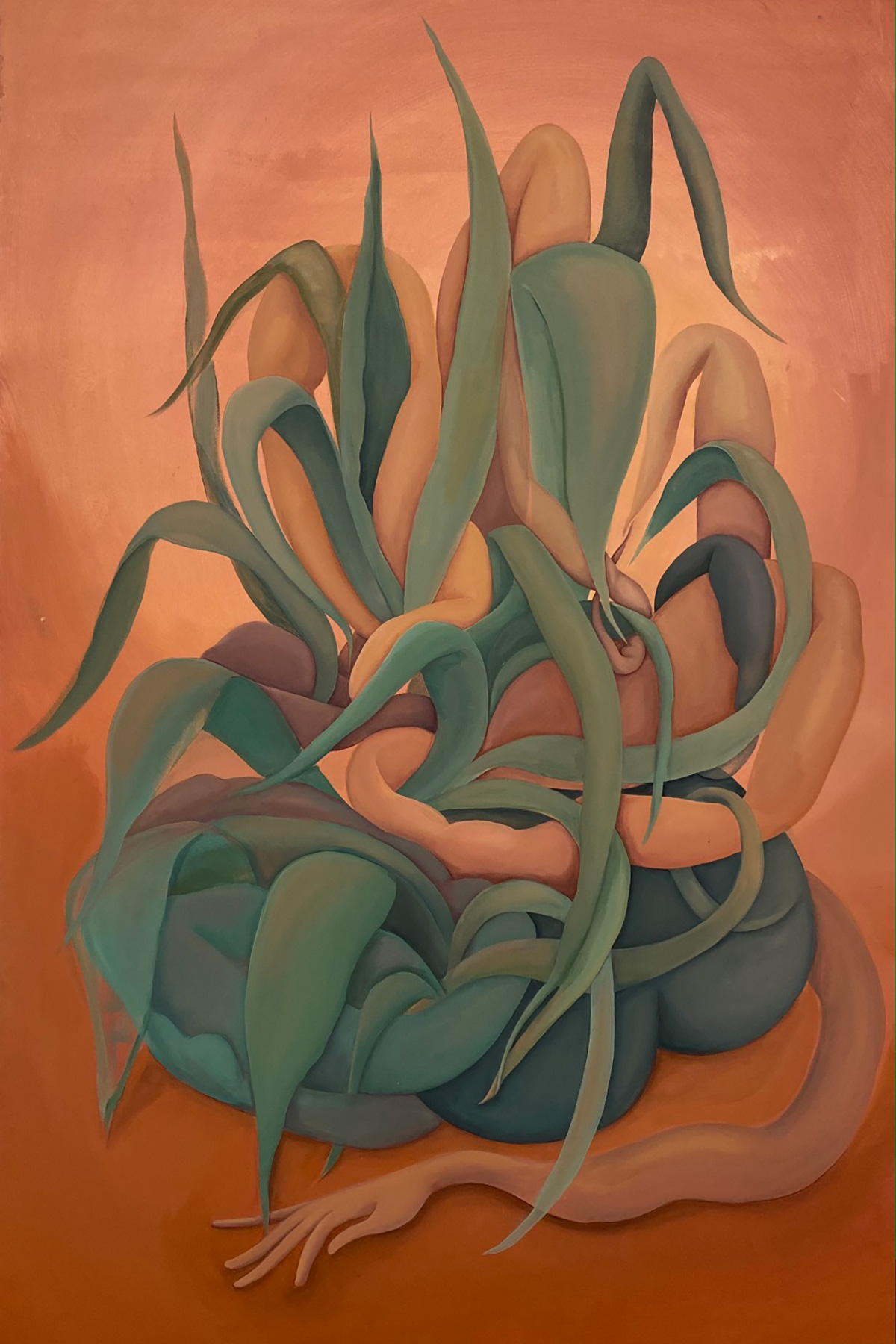
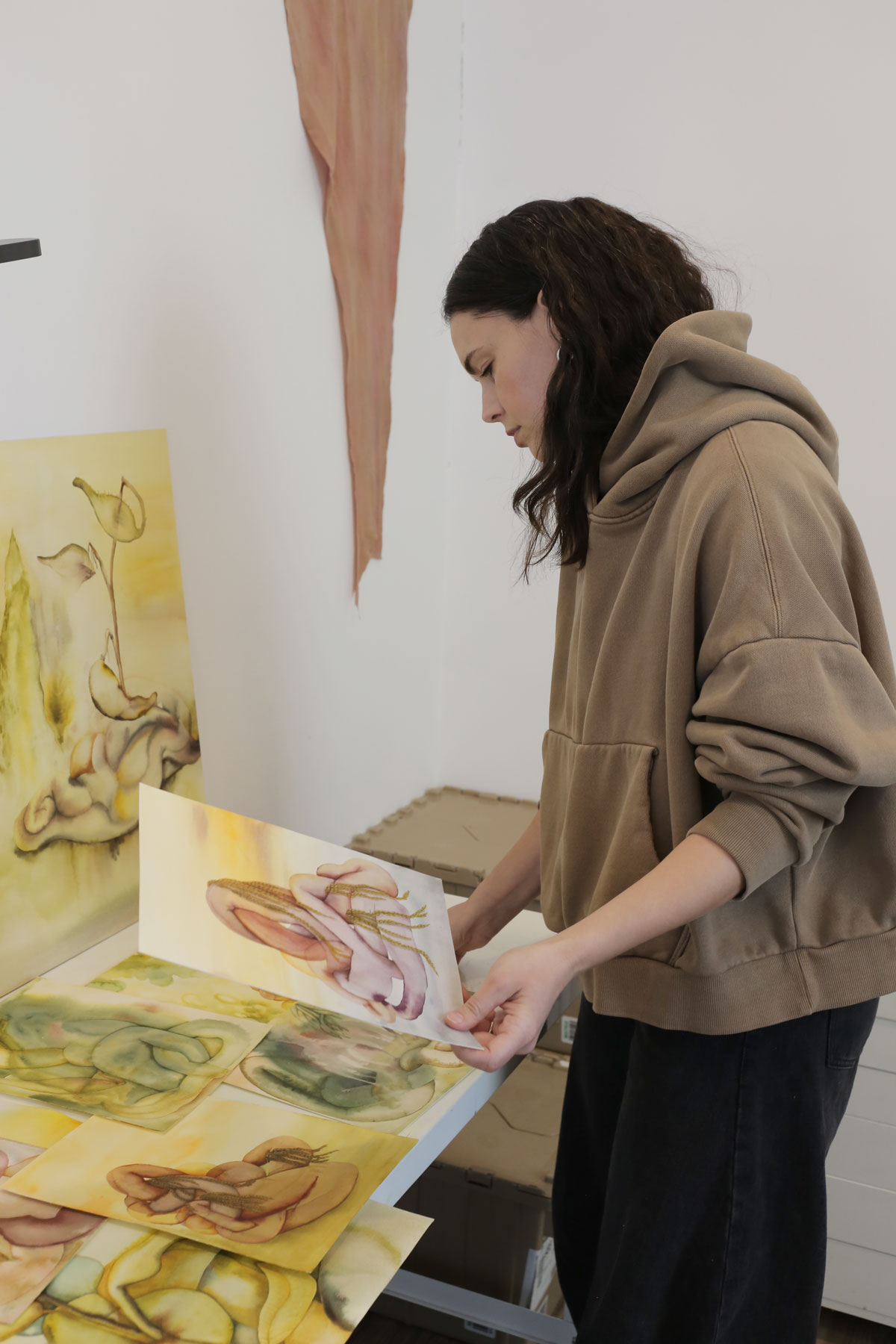
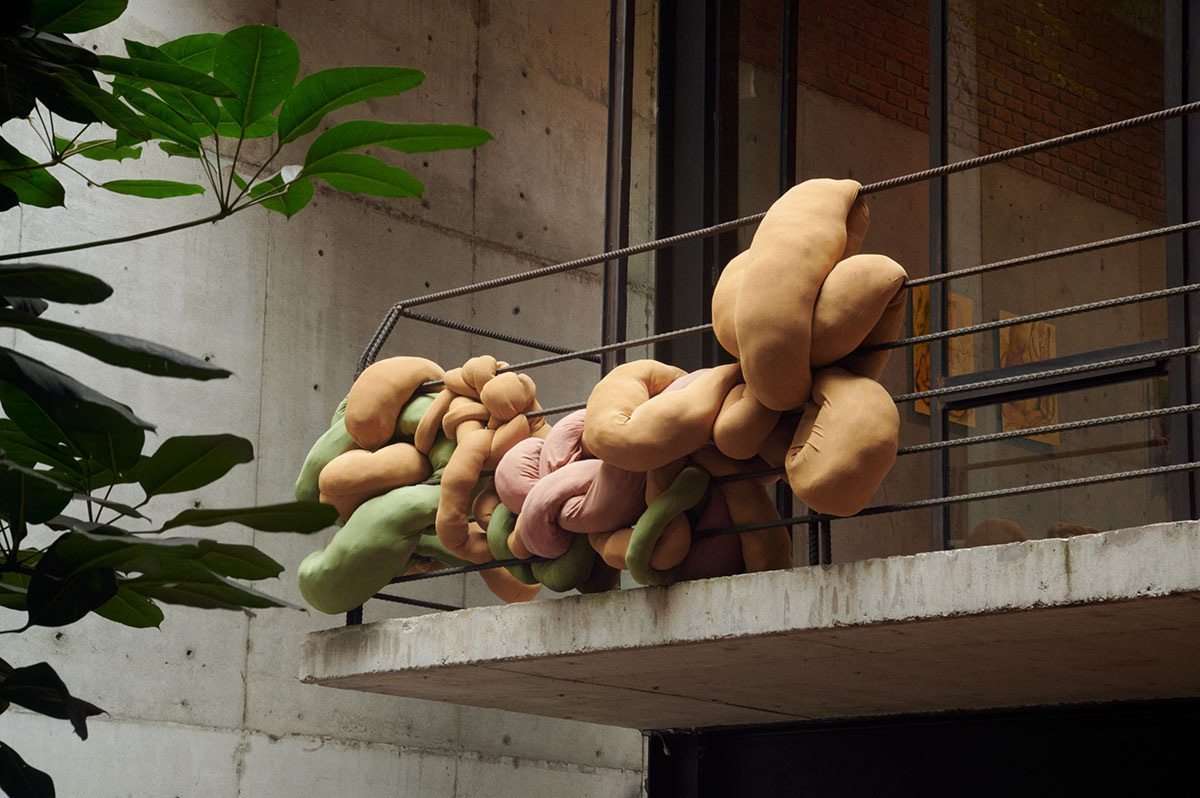
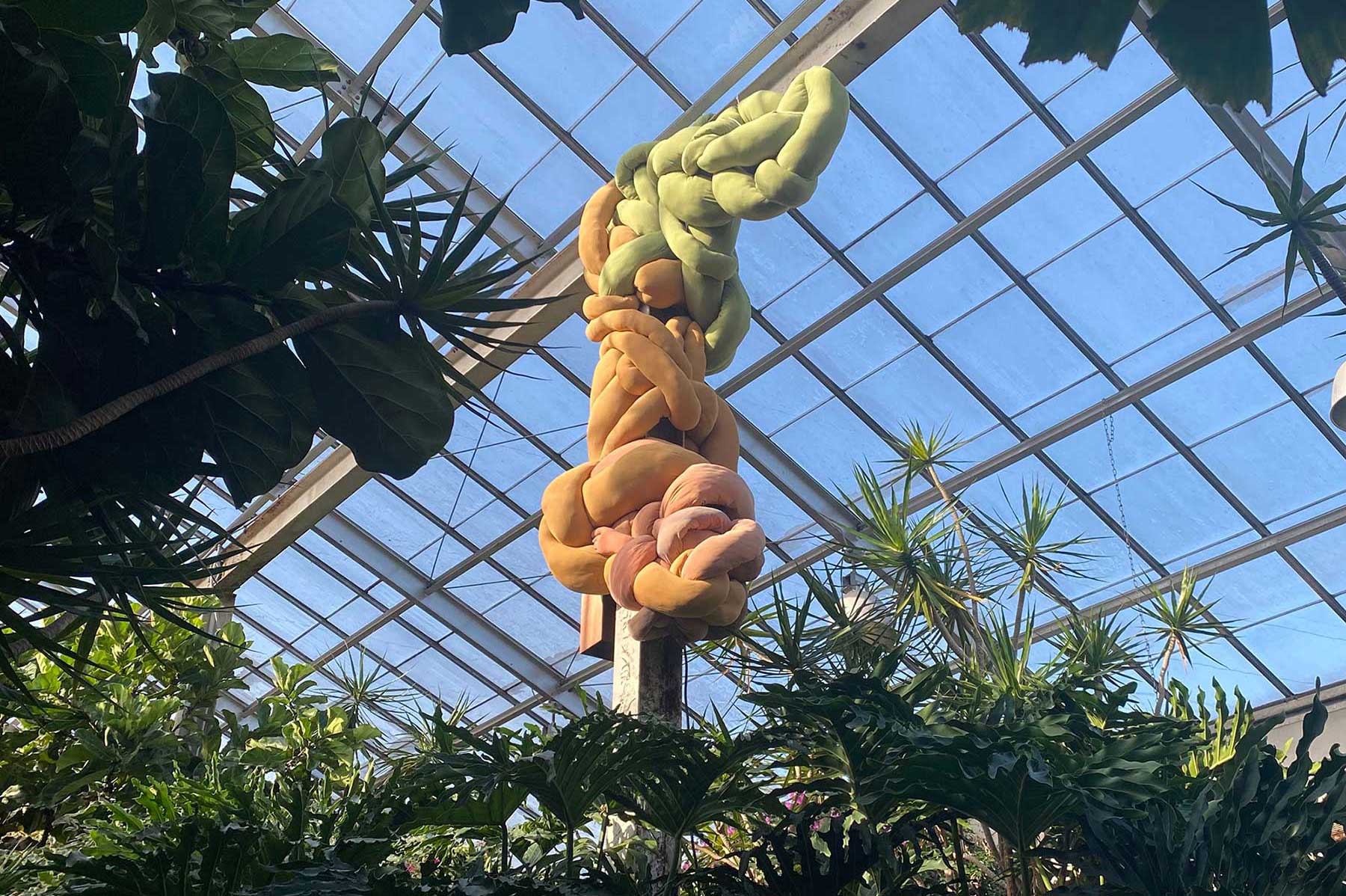
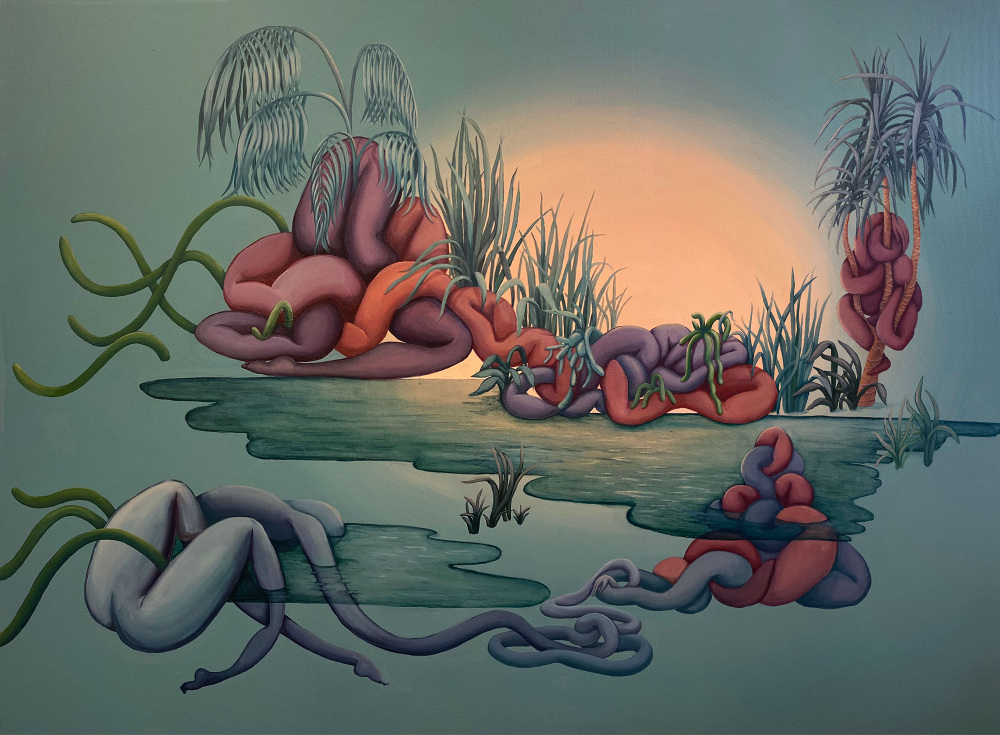
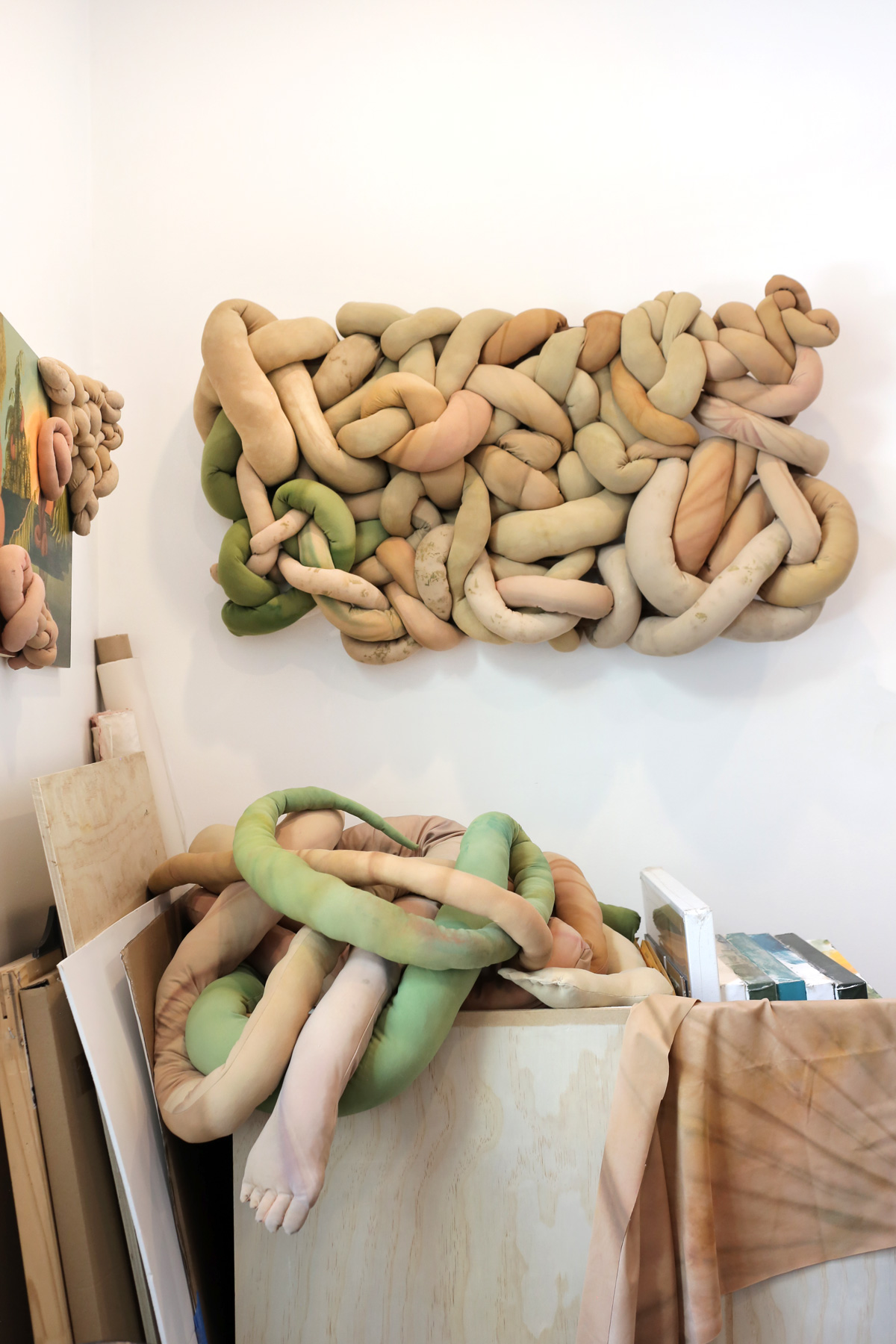
Even before moving into soft sculpture, these intertwined bodily forms had long been recurring in my paintings and works on paper. They feel tangible and lend themselves to sculpture, so I’d imagined them that way long before I finally brought them into three dimensions. Textile felt like an obvious choice for a few reasons. I actually went to fashion school, which turned out to be a long-winded way of realizing I was trying too hard to force my tendencies into what I thought would be a more practical career. 

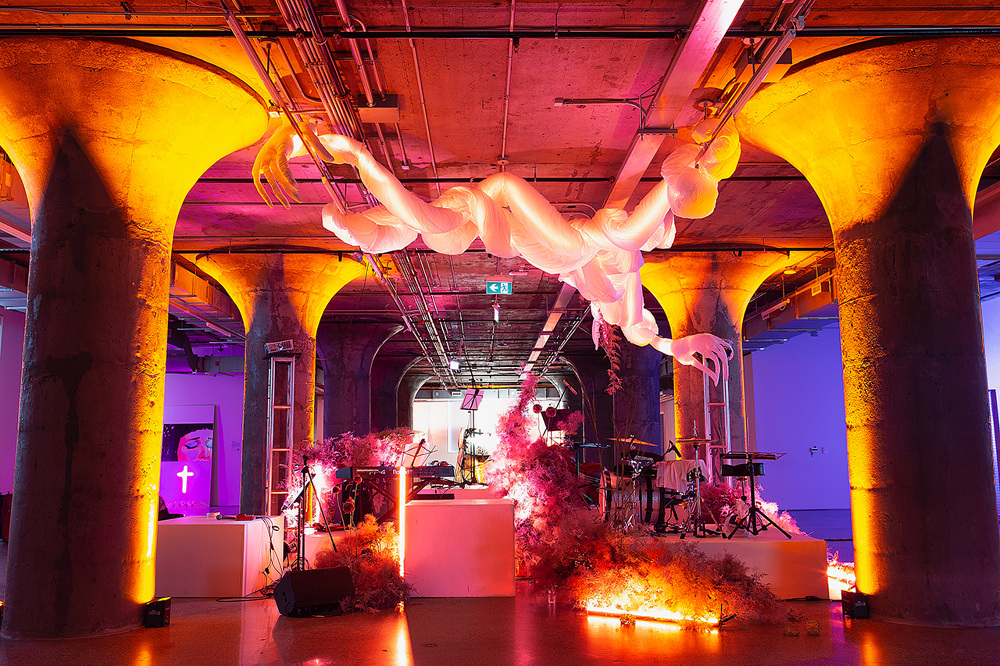
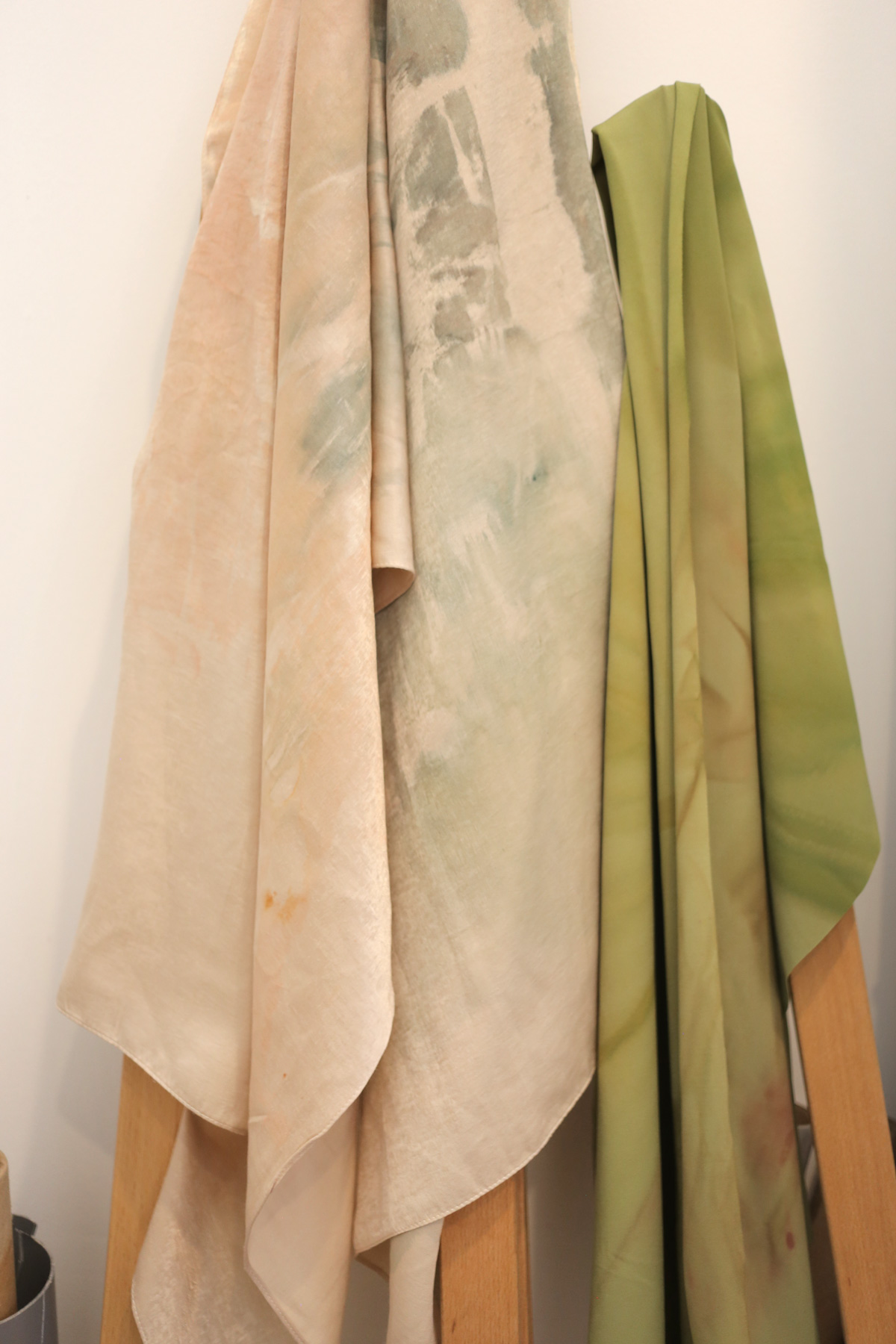
Just before the pandemic, I was working on several curatorial projects, and one of them—a one-day exhibition centered around a musical performance at MOCA Toronto—gave me the opportunity to bring that long-stewing soft sculpture idea to fruition. I wanted these forms to interact with the architecture of the space and glow from within. Textile made sense for its malleability, translucency, and lightness, which allowed them to be suspended. That piece ended up sparking an ongoing relationship with textiles that has since evolved to working with plant dyes, salvaged fabrics, and biodegradable textiles, paired with compost and living materials.

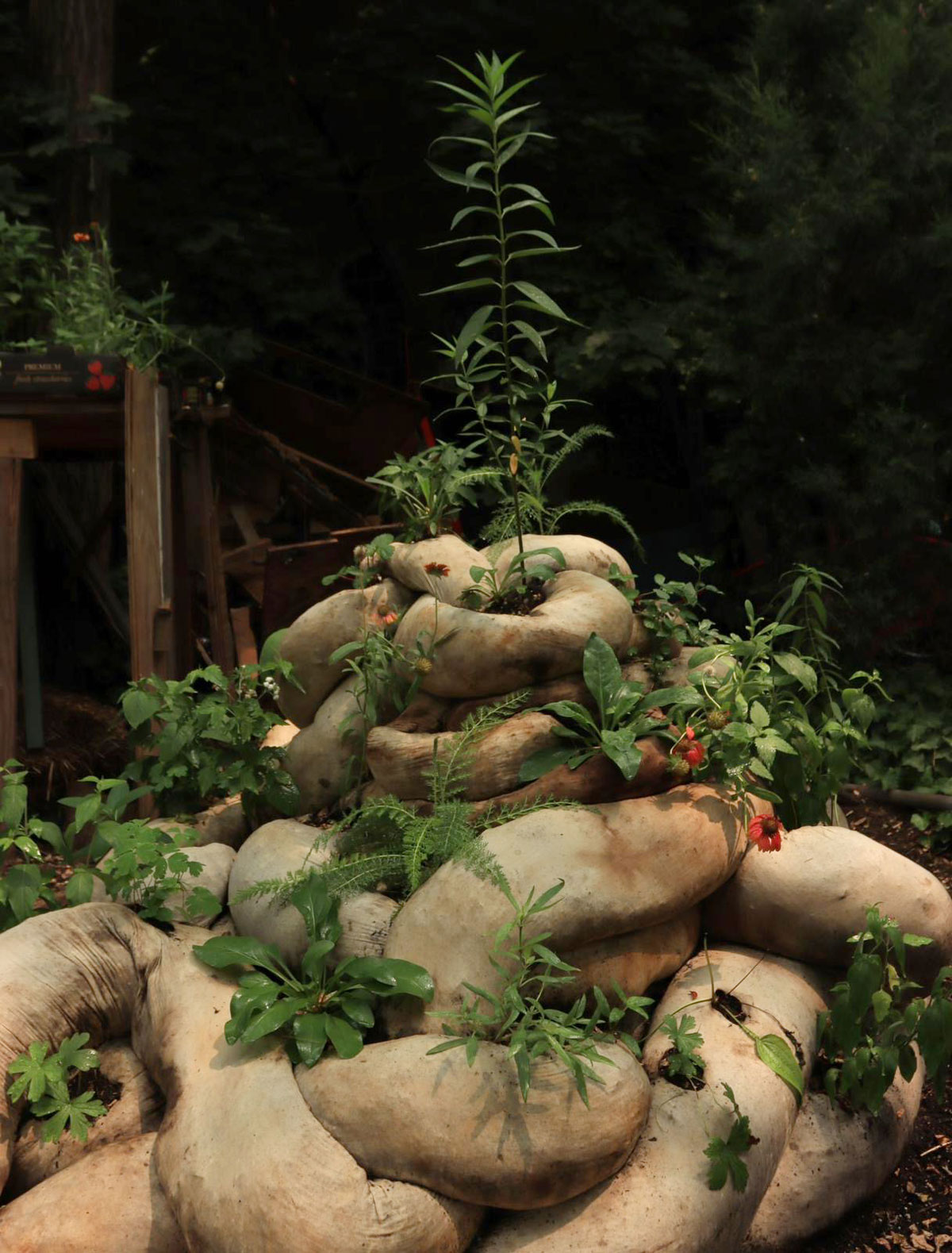
My two most recent exhibitions, A Lower Horizon and Hubris, Humus, were particularly engaged with compost. The first was the culmination of that research project, which involved consulting with experts in permaculture, Indigenous co-design, sustainable textiles, anthropology, and soil science. Over the course of the year, these collaborators helped me develop a process for a series of soil sculptures—biomorphic forms made of biodegradable textiles filled with soil and compost and growing living plants from their surfaces. As plants and mycelia grow, the fabric skins degrade, and the work continues to transform beyond my control. I like that these sculptures might offer a way to connect to a site through its history and existing ecology, and the potential for collaboration with people with connection to the land.

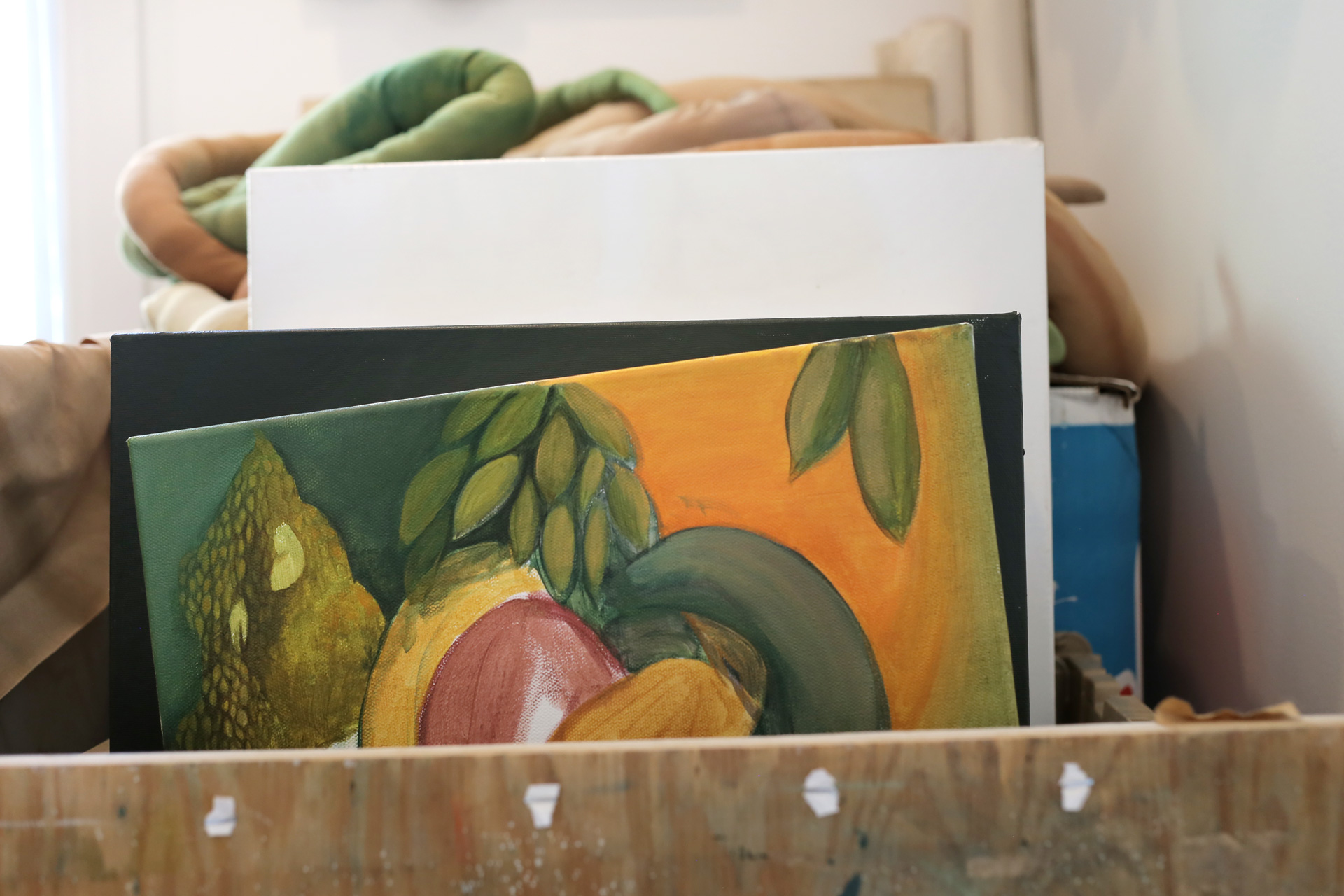
I think of these bodies of work as sort of ecosystems—each individual component depends on and builds on the others. Some of the plant species grown in the soil sculptures are used to dye fabrics and also appear as subjects in paintings. Some dyed textiles exist as works in their own right and then go on to be sewn into soft sculptural forms. Sculptures often become references for intertwined forms in paintings.

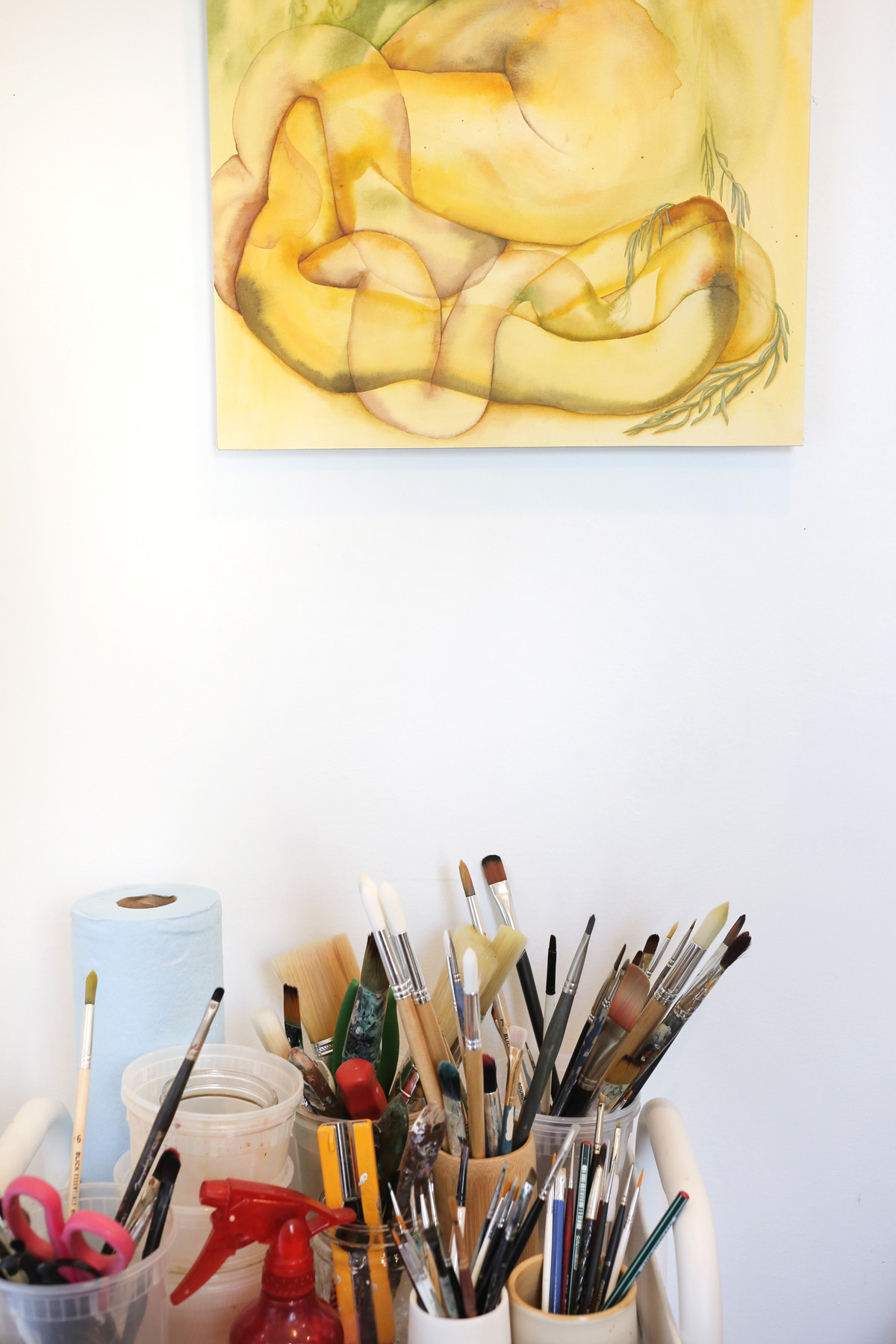
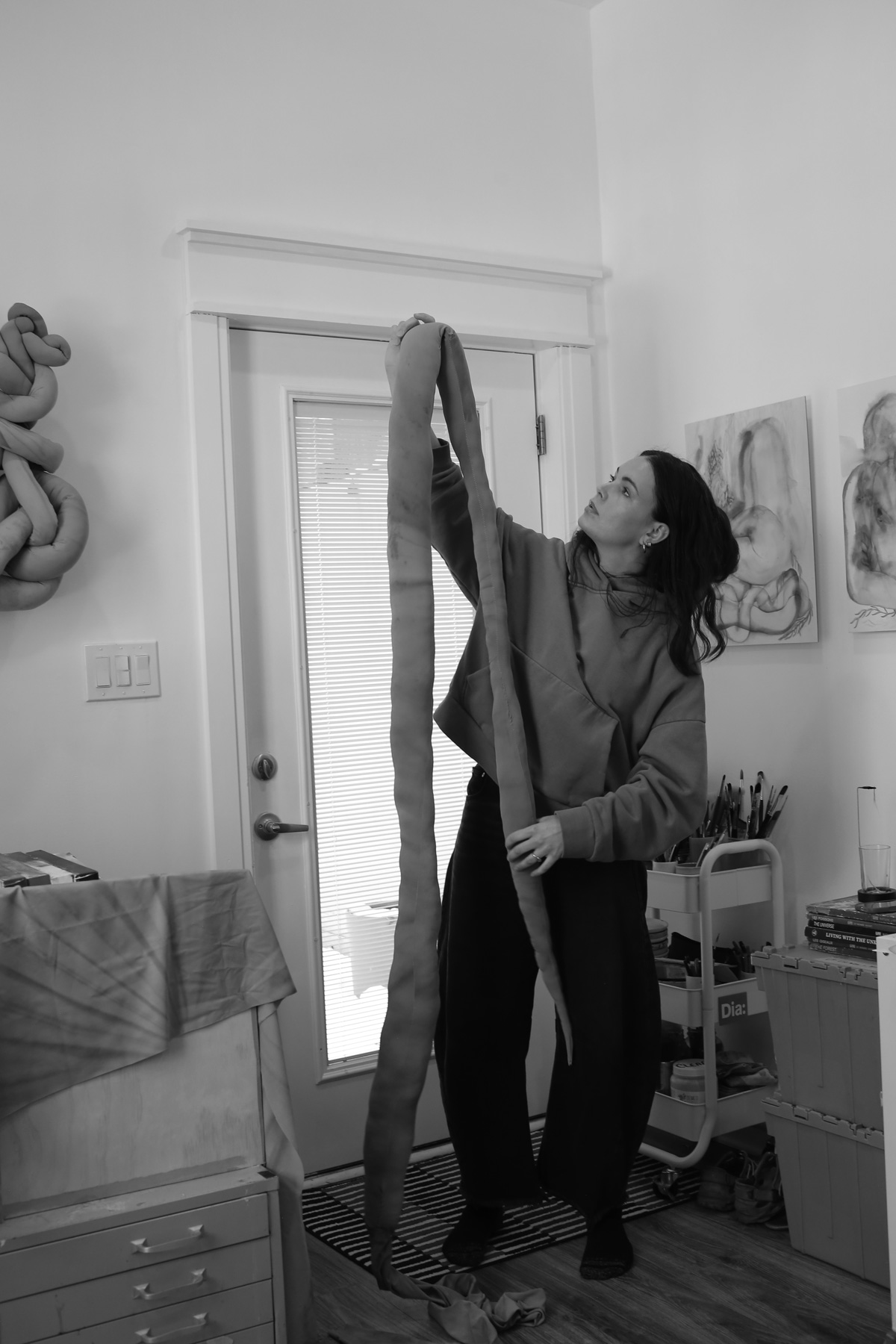
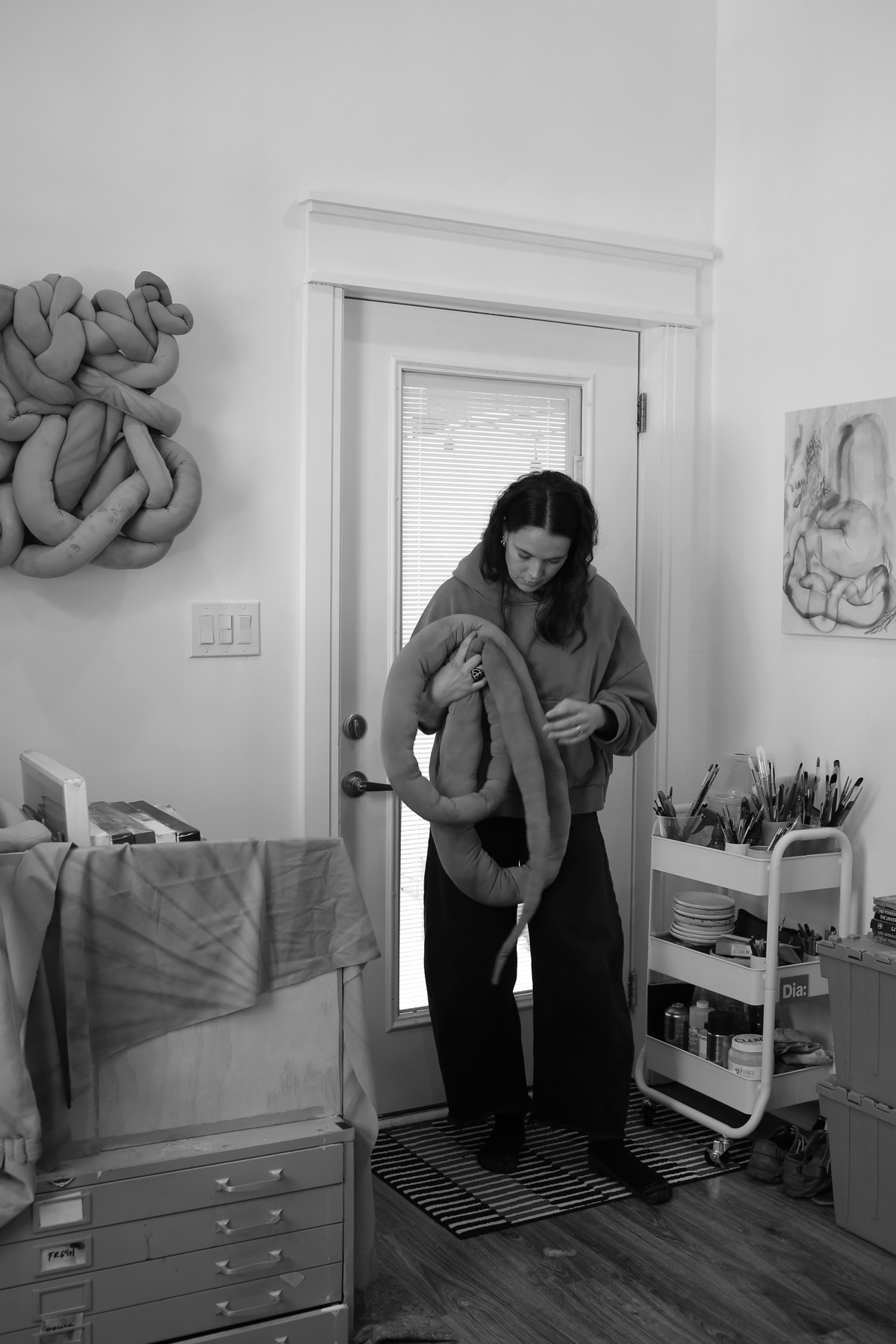
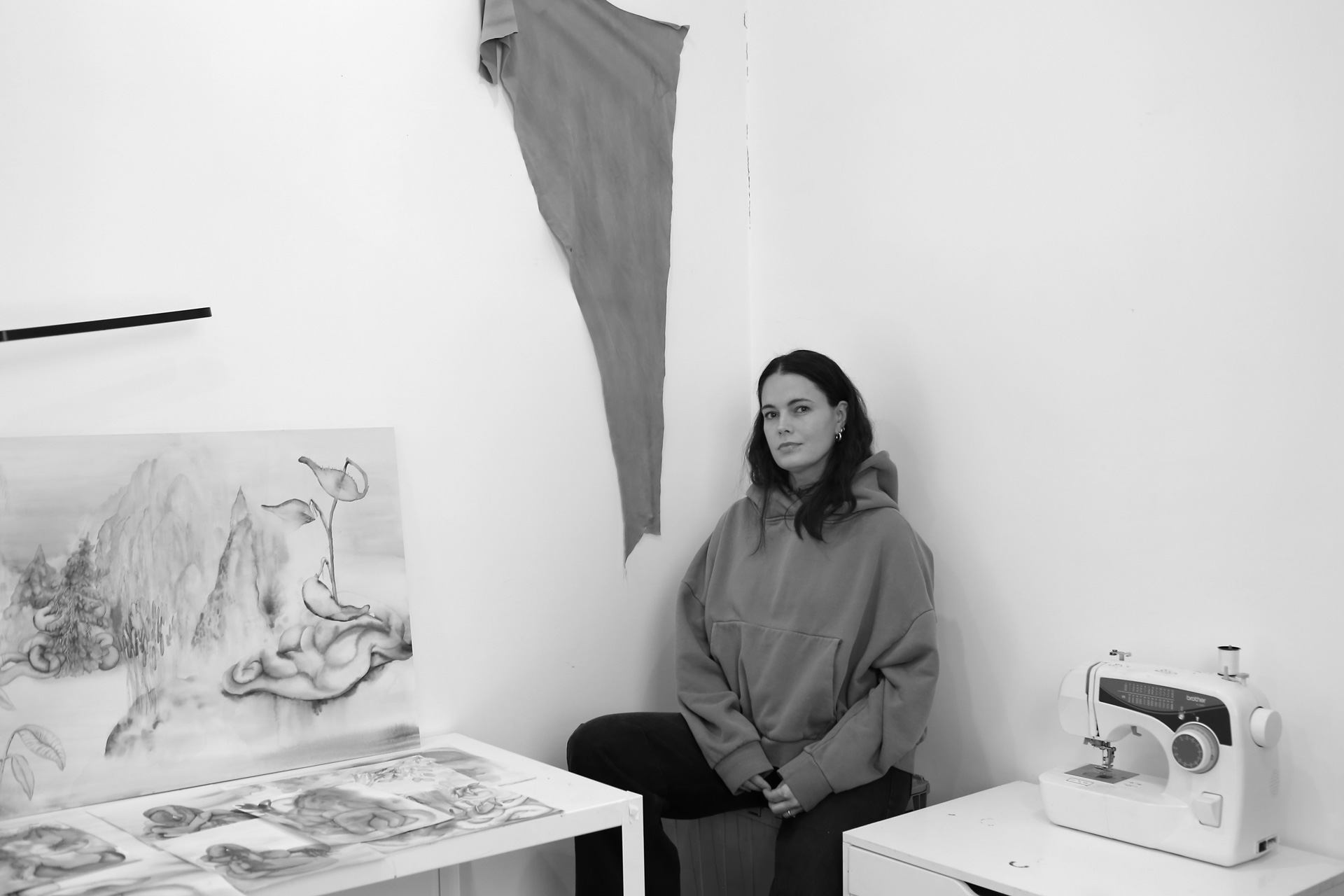
In a related way, my studio is always shape-shifting. I moved to Brooklyn from Toronto last year and now work out of a home studio in the back of my apartment. It’s not huge, but I move things around strategically to adapt it from a space for painting, to dyeing, to sewing. I had a private studio in an (affordable) shared artist space for many years in Toronto, and I knew a separate space wasn’t likely to be in the cards right away in New York. I was really grateful that we found an apartment with a separate room that could become a studio.

I was originally concerned that working from home would be a drawback, that I would miss the energy and feedback of other artists. And I do, the isolation can be real, and I have to make more of an effort to actually leave the house and connect with other (people, let alone) artists. But it turns out this home studio really suits me. I like walking in with my coffee in the morning and seeing yesterday’s work in a new light. There’s a door that opens onto a small back patio with a tree canopy, and having those trees around has a real affect on my state of being.

Because I also do a lot of temporary public installation, much of my work happens on site, so having my studio at home is also grounding in a way. The first soil sculpture project was installed during my residency at Open Source Gallery’s The Lot in South Slope last year. I spent a lot of time there mixing compost, prepping, planting, and watering. I biked to the site regularly through the summer, and my route took me through Prospect Park—a commute as ideal as walking one room over. Having my studio at home made it possible to move between both spaces in a single day, which felt like a really good balance for me.

Having my hands in the soil has proven to be nourishing on a personal level too, beyond the ideas that led to this work. As I’ve been working on these recent projects, I also began a horticulture certificate at Brooklyn Botanic Garden, and expanding my knowledge of plant biology and ecology continues to deepen my fascination with living systems. Studying them makes it harder to sustain the illusion of human separateness. The ego can function in service of systems of domination, and the cultures of supremacy they promote, but when you look closely at plants, soil, microbes, pollinators, and species that have co-evolved, it’s difficult not to be amazed, and humbled.

Working closely with these materials and studying ecology brings me back to a tension that I have to believe we all carry some awareness of: that we originate from and remain dependent on the same sources of sustenance, even as many of us participate in structures that promote their destruction for short-term gain. The same hierarchies that position humans above the rest of the living world also shape how we relate to one another, reinforcing systems of supremacy, and exploitation. The tension can be strange to hold while making art in this moment, but I think that looking at different ways to confront and dissolve these often deeply ingrained ideas is necessary and generative, and art is just one tool for processing.

@laurenpirie

Photos: Anita Goes & Courtesy of the artist

Related Posts