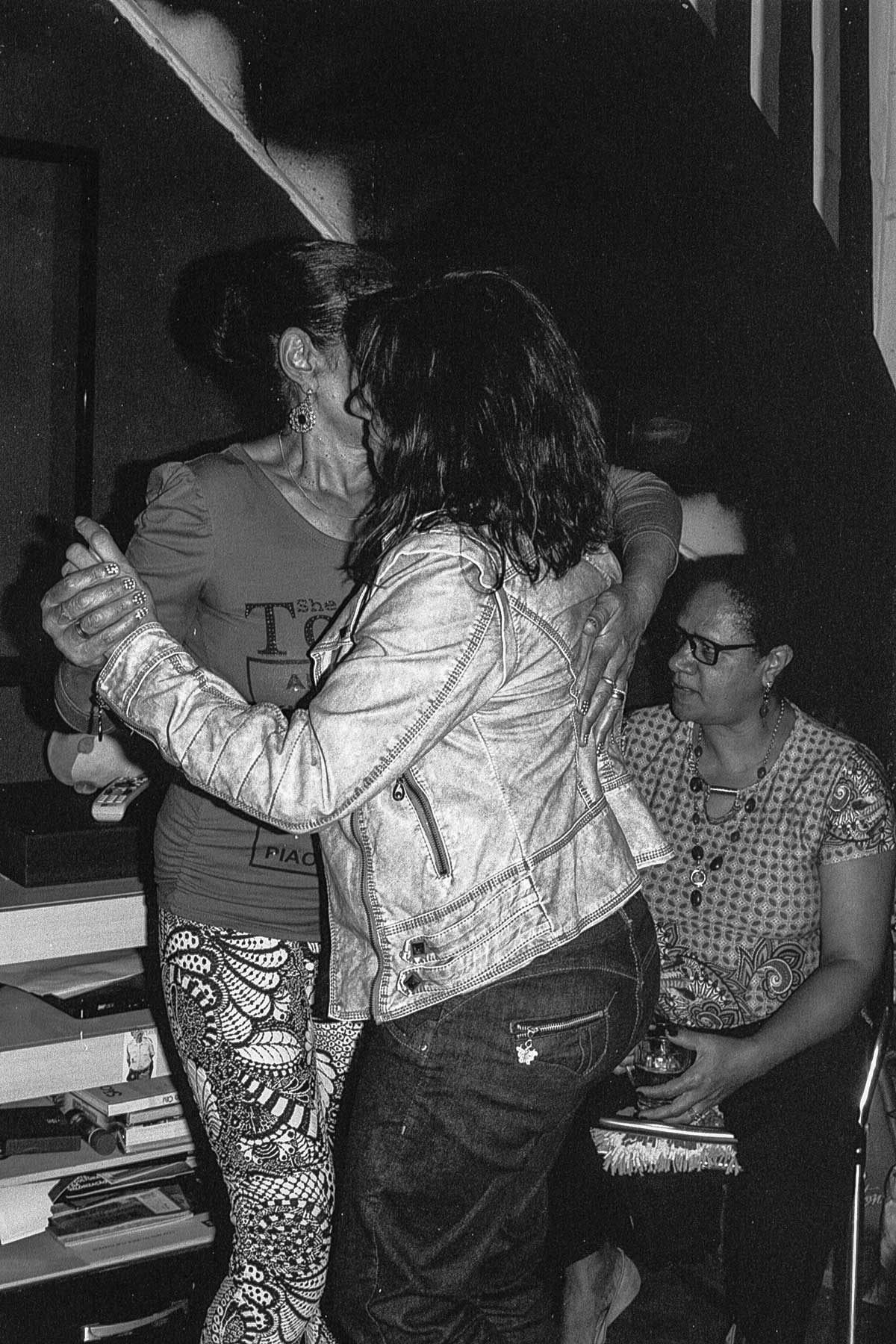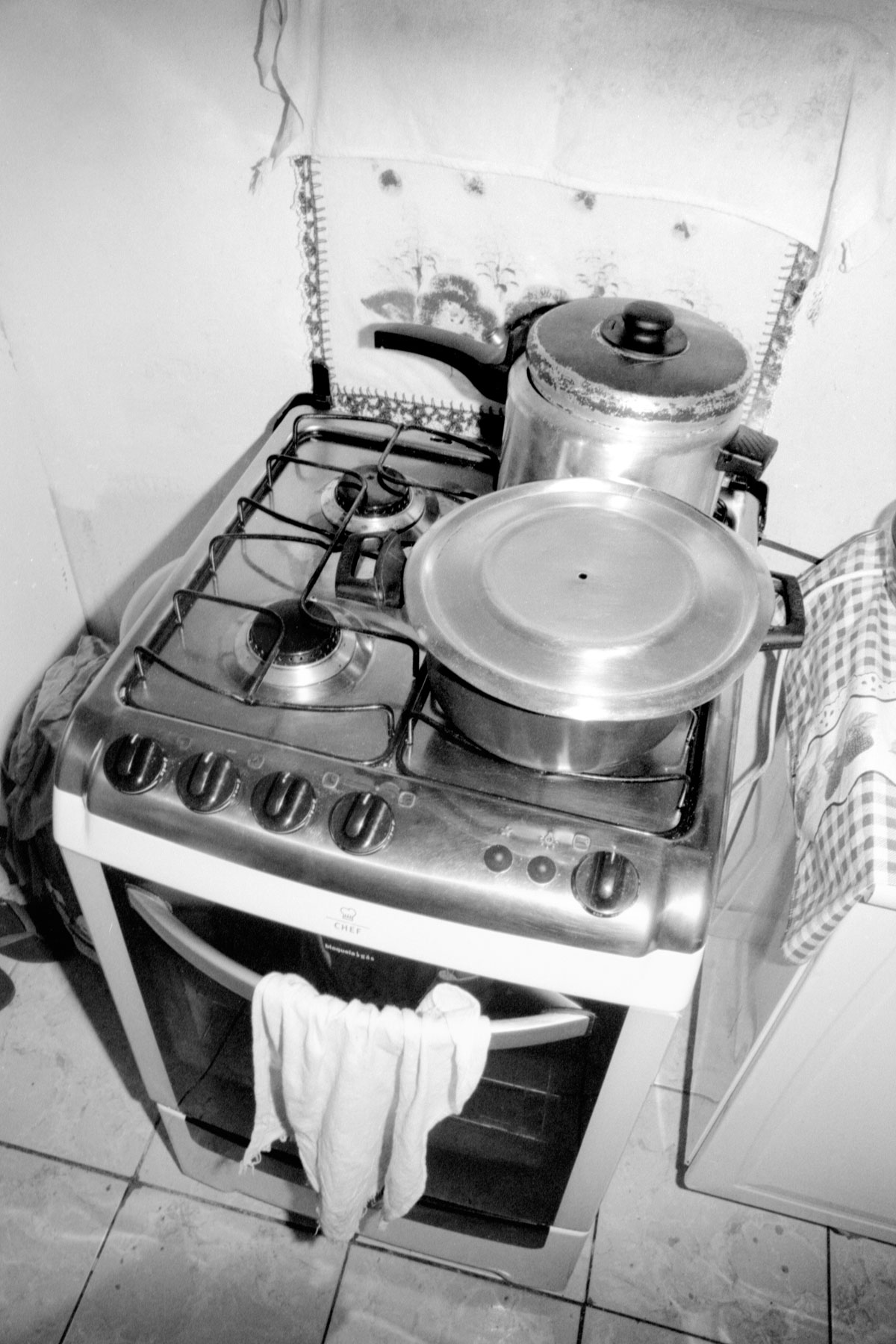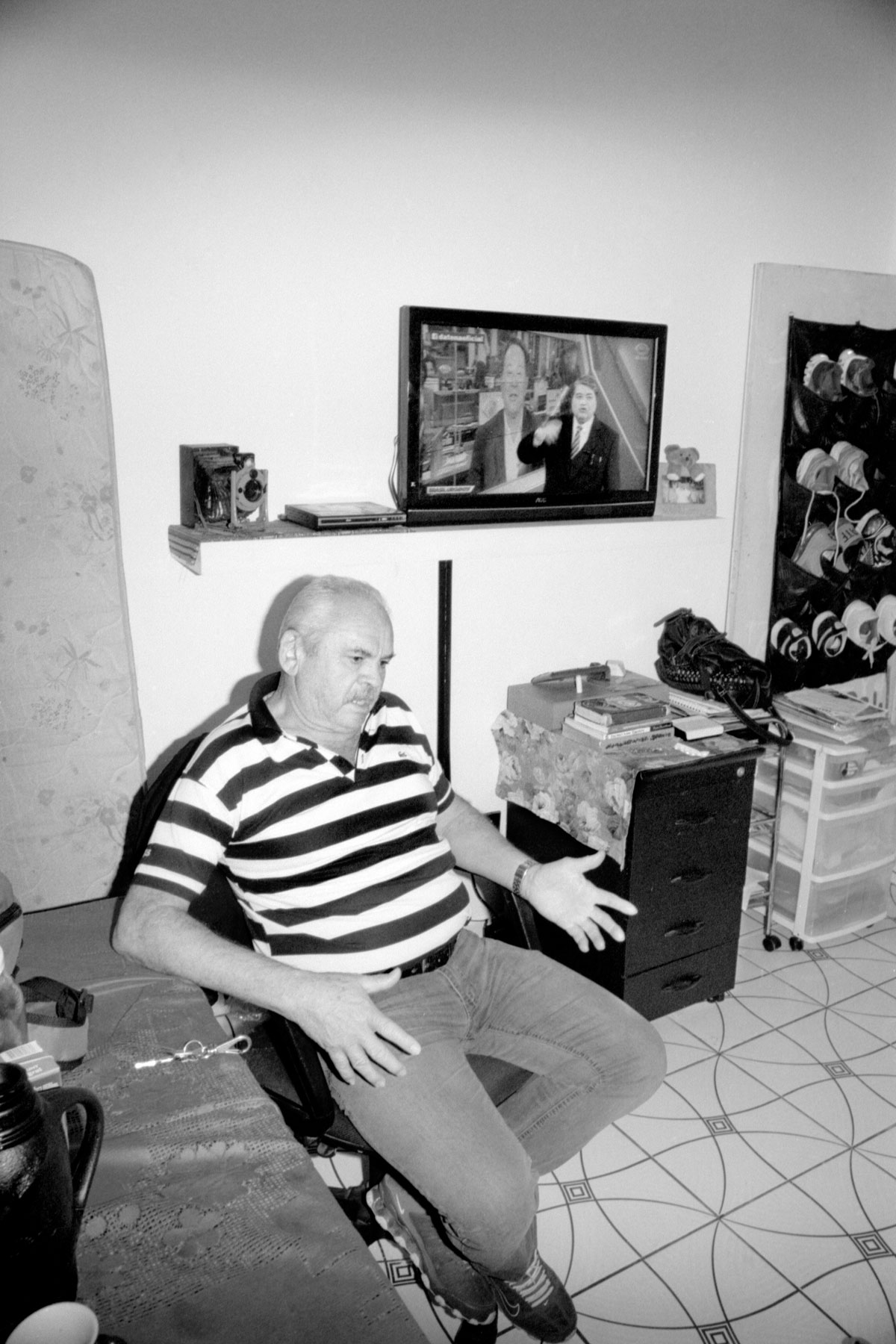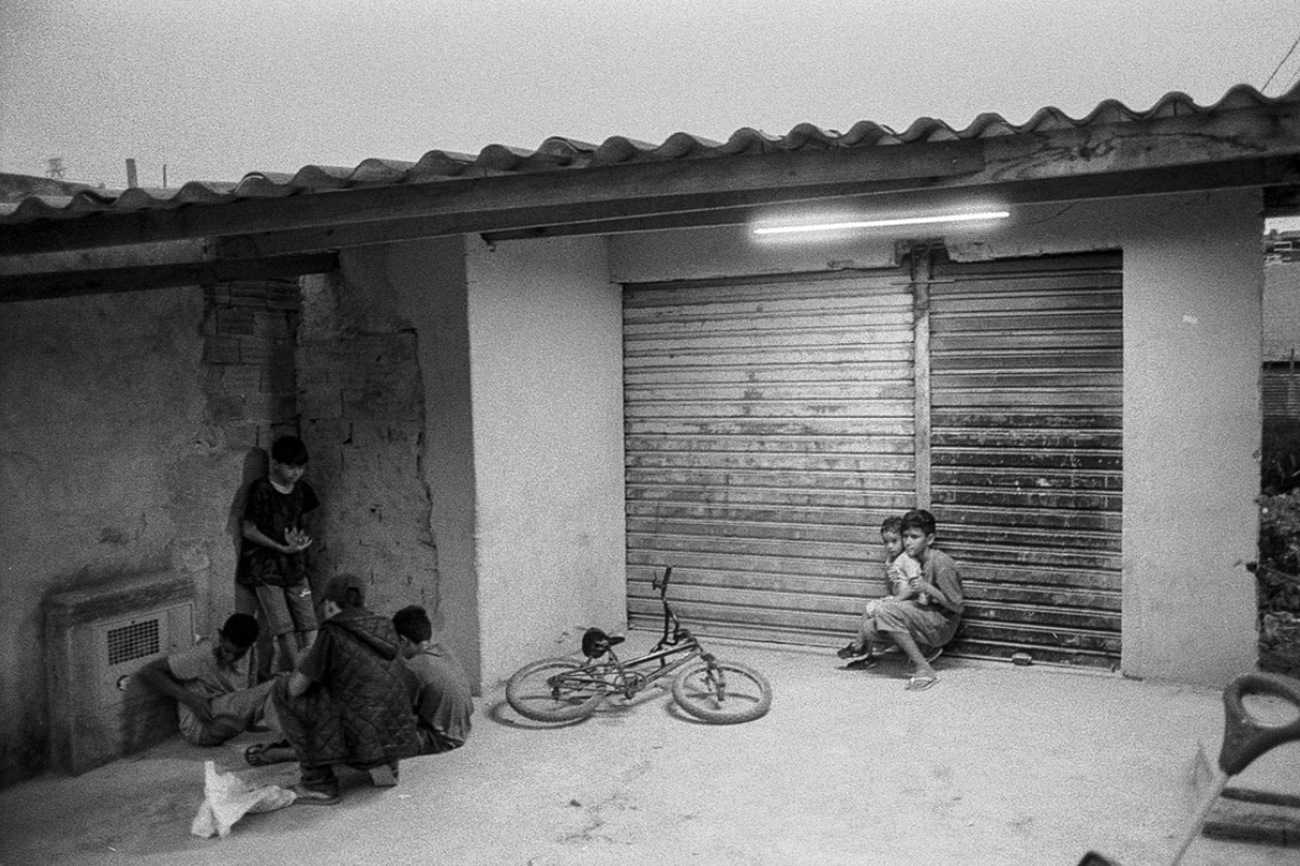
The first time I encountered the work of Cícero Costa was in 2019, during the exhibition Mesa Posta at the former Red Bull Station in São Paulo. I was immediately drawn to his practice. In retrospect, I understand that this interest stemmed from his ability to translate deeply layered and complex issues through a language that is almost minimal. Something in that proposition seemed to resonate directly with Anna Maiolino’s installation Rice and Beans (1979).
Maiolino’s work consists of porcelain plates filled with soil and sprouting rice and bean seeds. Displayed on banquet tables, the installation critiques hunger, social inequality, and the economic model imposed during Brazil’s military dictatorship. It presents a symbolic yet useless feast, underscoring the irony of staple foods that, in times of crisis, become inaccessible.
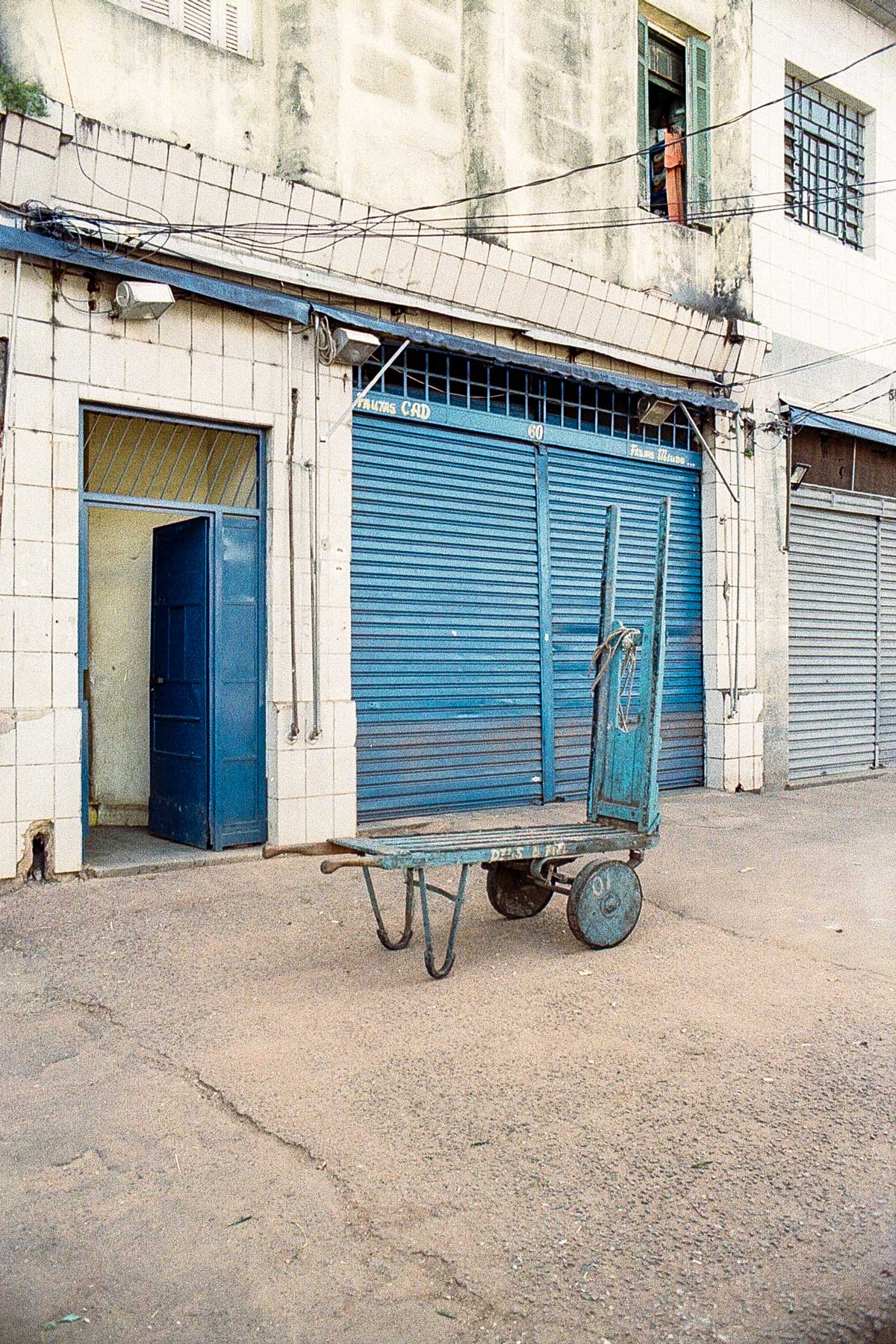
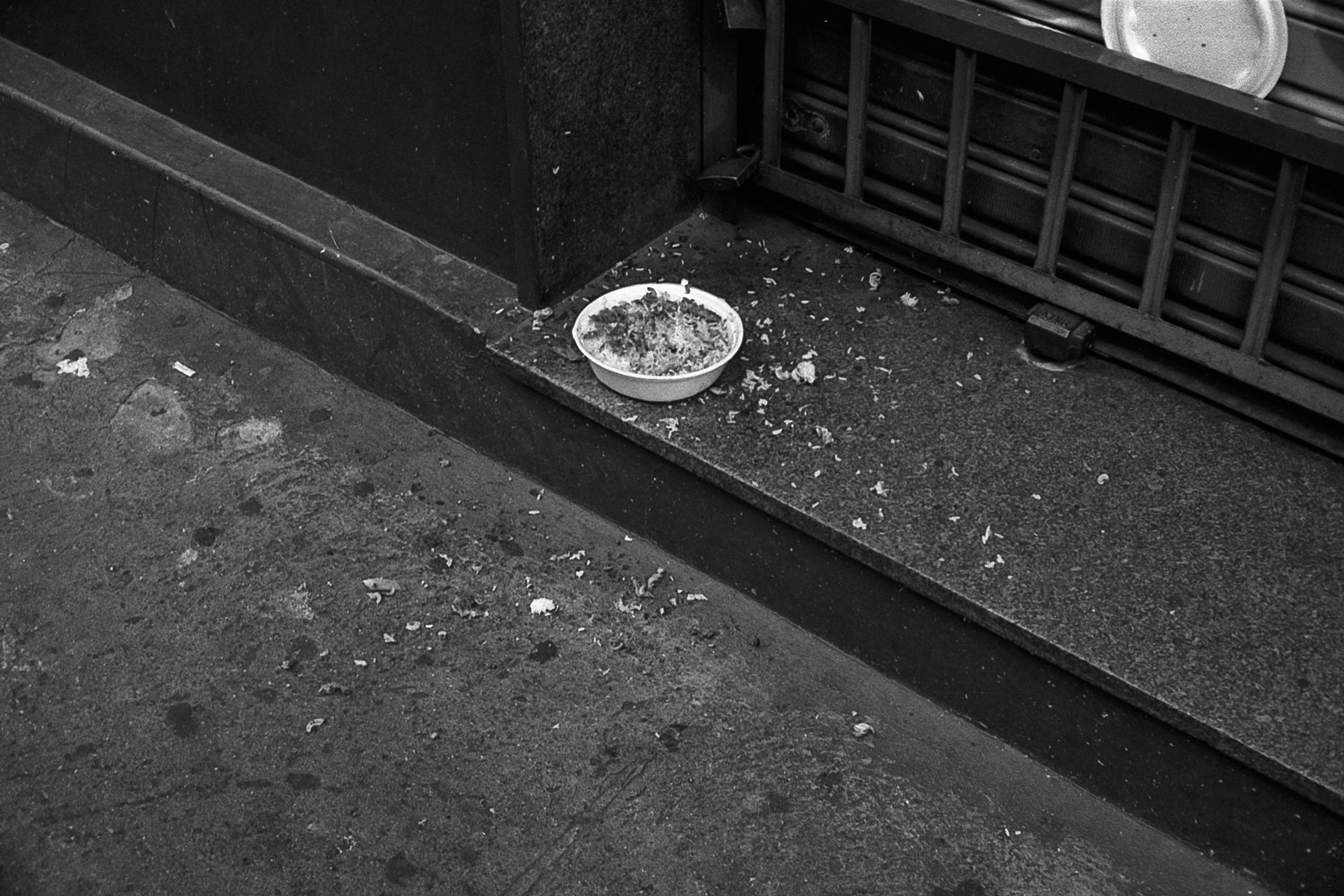
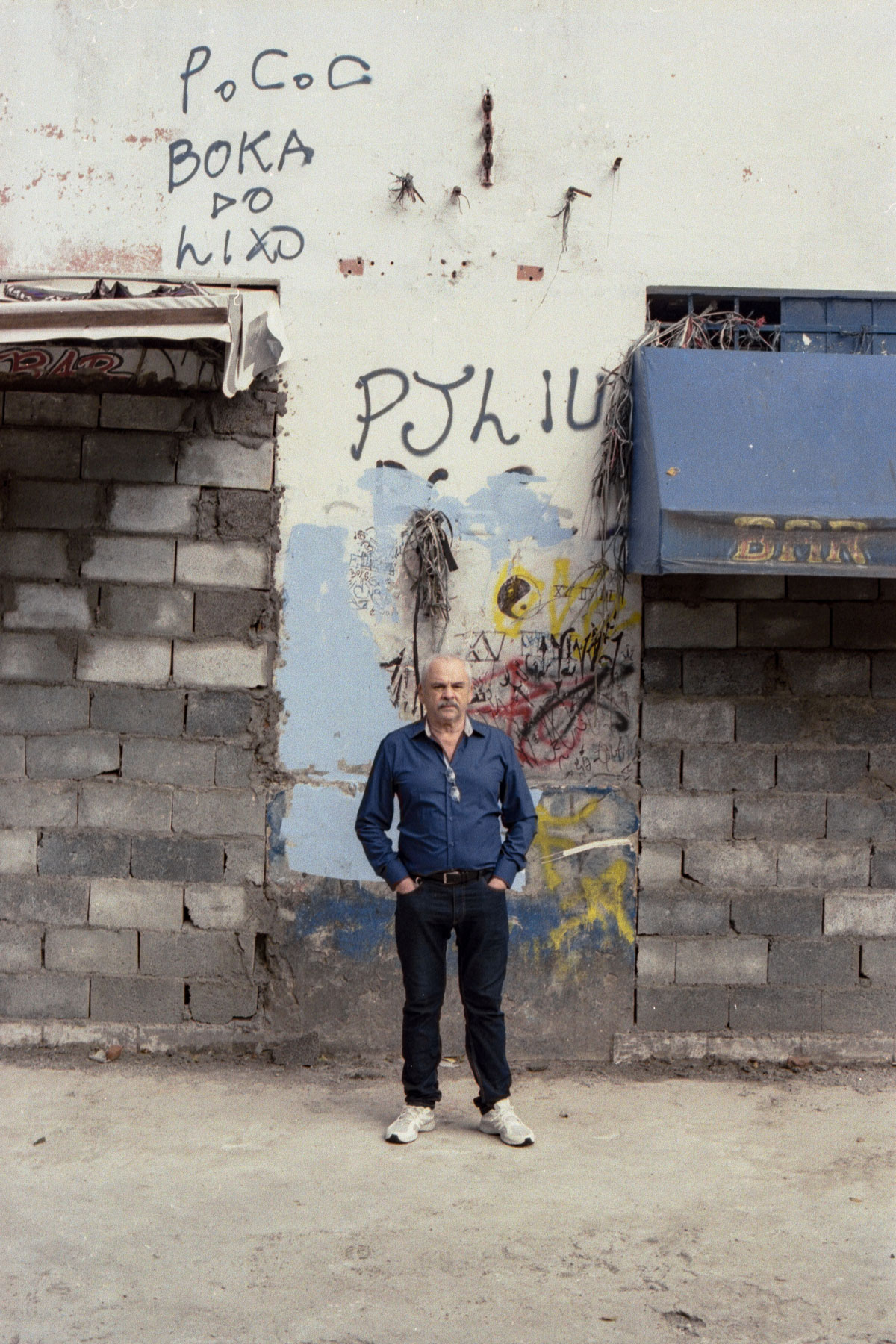
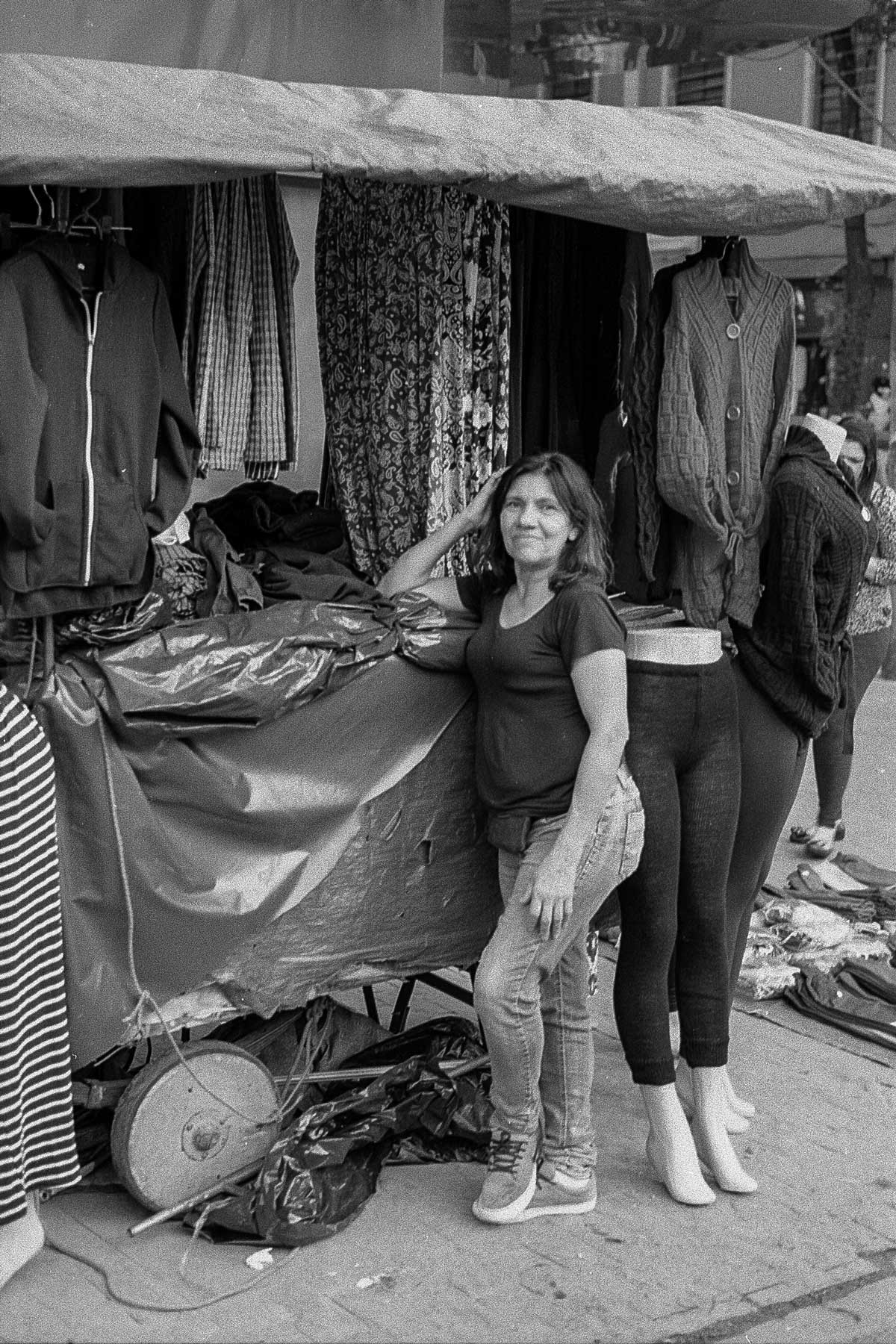
In Cícero’s installation, two common names in Brazilian society give title to the work. Upon entering the room, one encounters a blue plastic tarp—taken from the artist’s mother’s market stall—hung high on one wall and draped to the side. Nearby hang two aprons, one yellow and one white. Alongside them are two photographs of the artist’s parents: a portrait of his father in front of his workplace and another of his mother standing before hers. Toward the back of the space, a hole in the wall functions as a small oratory, where Cícero placed an image of Padre Cícero and a rosary of Our Lady. On a nearby table sit gummy candies, a bag of a popular snack called Fofura, a small bottle of Dolly soda, soccer balls made from duct tape, and a speaker playing forró and brega music.
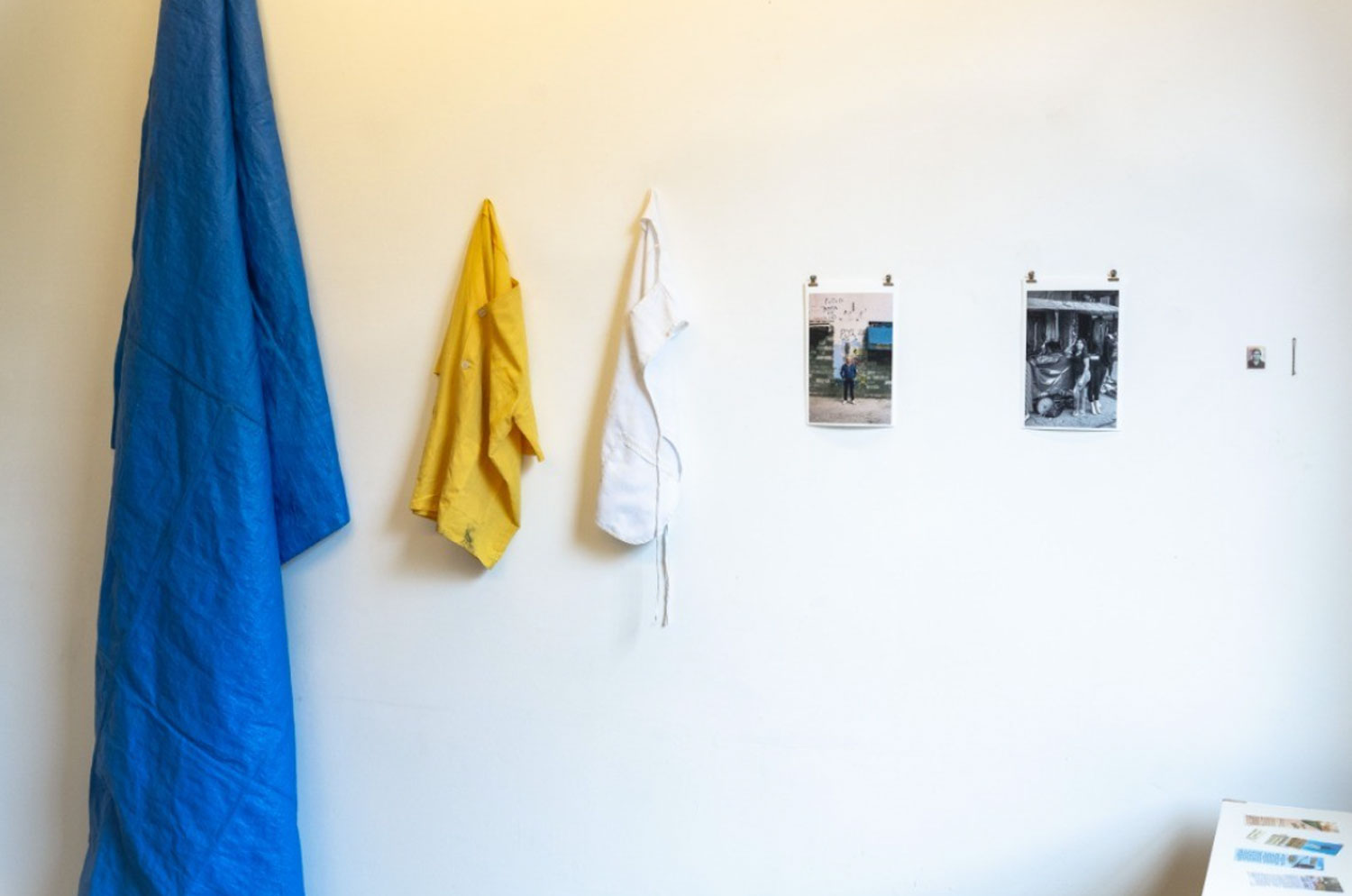
Cícero Costa, Aos meus! De sangue e suor. Mesa Posta group show at former Red Bull Station, São Paulo, 2019. Courtesy of the artist.
This arrangement transported me instantly to the 1990s, to the outskirts of São Miguel Paulista, in Vila Mara. Anyone who grew up in the periphery within a family of Northeastern migrants would immediately recognize and understand these symbols. But this is precisely Cícero’s insight: he does not simply present these elements for interpretation; he summons them as a kind of reliquary, activating the memories of those who recognize them. That was certainly the case for me.
Memory is a central theme in Cícero’s work, which employs objects and images to evoke personal history and identity. Two aprons hang on the wall—one yellow, one white—accompanied by the caption “Antônio and Maria.” Common names, yes, but also the names of his parents. The apron belongs to the visual and symbolic universe of labor, especially the daily routines of workers across many professions. It not only protects the body but also helps shape a worker’s visual identity. By hanging them as if to rest after an exhausting day’s labor, Cícero offers a direct illustration of labor relations. Displayed this way, the aprons suggest that there is more present than meets the eye—and indeed, there is.
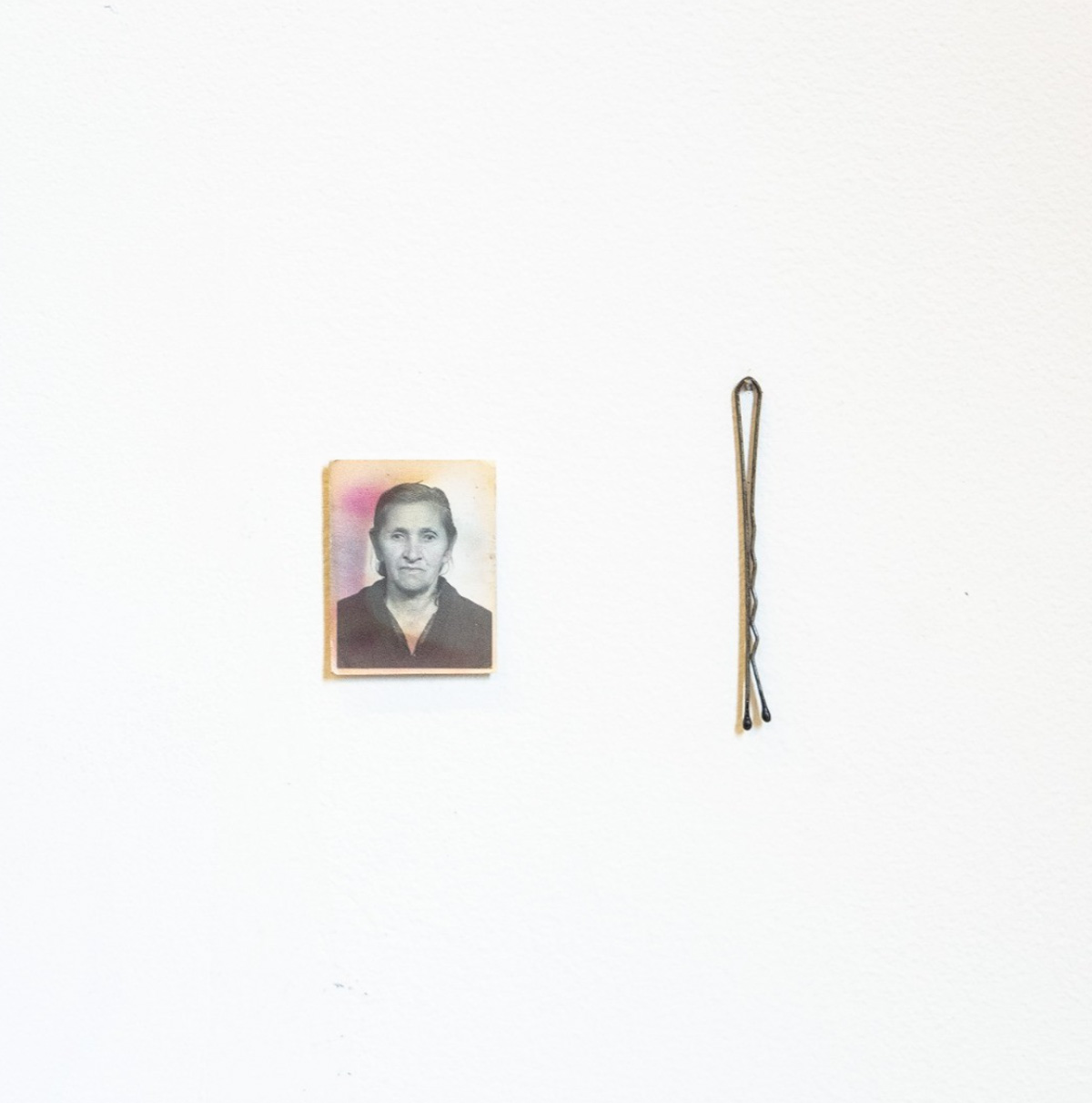
Cícero Costa, detail of Aos meus! De sangue e suor. Mesa Posta group show at former Red Bull Station, São Paulo, 2019. Courtesy of the artist.
The logic of autonomous labor in peripheral contexts affects millions of people worldwide. In Brazil, the informal economy is a reality for countless workers, often compelled to accept precarious and poorly paid conditions in order to survive. Behind the promise of freedom and flexibility lies a reality of total dedication: life becomes inseparable from the workplace, and all relationships are mediated through it.
Talita Zaragoza, Fish Factory Residency, September 2019, Iceland. Photo: Leandro Viana. Courtesy of the artist.
Talita Zaragoza, Untitled Memory IV, 2024. Acrylic and colored crayon on linen, 36 x 55 inches. Courtesy of the artist.
Inspired by designs she finds in nature, the artist has created her own vocabulary, combining geometric and organic forms that reflect the nuances and particularities of the land. Not by chance, she explores curvilinear lines and sinuous contours. In searching for repetitive graphic signs, she brings shapes that have been simplified to her paintings with a tendency to linear and flatter configurations. And the line calls attention as a continuous element connecting the various parts of the compositions, involving the colored planes and setting the overall rhythm in each piece, as we can quickly notice in those of lighter colors, such as “Silhouette” (2002) and “Sleepy Mountain XXII” (2022). The line is at the basis and a fundamental part of these works. It is with this element that the paintings begin and what creates the compositional structures, what marks the volumes of color and, at times, indicates a horizon or divides the canvas into different points of view. In some parts of the compositions, such as in “Untitled 4” (2022), the line stands alone, leaving the silhouette unpainted. These areas of the work reclaim parts that need to be completed later because of images that could not be accessed, like a glitch in the artist’s memory. Talita doesn’t make gestural marks with colors; she applies them meticulously, filling the spaces previously designed by the lines and creating flat color fields. The artist establishes a correspondence amongst the different and often varied shades, which are rarely set in stark contrast. Her color choices have also been influenced by her observation of nature. Still, they have been mostly elaborated according to personal connections to the hues, alluding to their meditative qualities. Exploring soft colors with a silky finish, she creates warm atmospheres composed mainly of blues, greens, yellows, browns, ecrus, and grays. More recently, Talita has been exploring bright colors and tones that were less commonly applied previously, such as reds and pinks. The artist also experiments with textures using colored pencils, crayons, gesso, black tea, and a paint mixture with casein, which provides a glittering effect. The works have imbued a sense of movement and depth. The delineated shapes and color combinations support these effects on viewers, creating a notion of volume and space, at times alluding to peaks or vast valleys.
Along with this vocabulary, Talita has developed a language that articulates multiple views of landscapes on the canvas, elaborating rhythm with the structure of the forms. “Sleepy Mountain” (2018-Present) is a series of paintings of imagined mountain landscapes composed mainly of curved shapes that seem to diffuse as elongated colored fields on the frame. These large-scale artworks convey a panorama of vast territories and bring together aerial and horizontal perspectives. In “Sleepy Mountain XVI” (2019), the contours stretch as flowing rivers, and the continuous change of points of view seem to merge, directing our gaze almost as if we moved our whole heads alongside the lines. While in “Sleepy Mountain XXXIII” (2023), the shift in sight is accompanied by a change in the direction of forms and their patterns, creating an intricate space. In a different scale and relation to the perspectives, “Fragments” (2019-2021) is a series of paintings with all the pieces the same size, in which the landscape is taken on a closer look, as zoom-ins. As snippets and not necessarily connected parts, this series does not focus on extensive sights but brings different pieces together, collaging narrow angles.
Talita Zaragoza, Fragment XIV, 2020. Acrylic on linen, 27 x 19 inches. Courtesy of the artist.
One of the aspects of this language Talita develops in the paintings, the various points of view, is connected to an understanding of the act of looking and how the images are collected and stored in our memories. Since Modernity, the idea that our perception is multiple and kinetic already appeared in writings such as Walter Benjamin’s, as pointed out by Jonathan Crary in his book “Techniques of the Observer: On Vision and Modernity in the Nineteenth Century” (1990), which discusses the visual culture of the nineteenth century and the elaboration of the notion of the “observer” concerning theories of subjectivity and optical devices (3). These references led me to Cubist paintings and their fragmented compositions made of different geometric planes, but the question here was about something other than emphasizing a tridimensional quality of space. Other artworks that kept coming to my mind were David Hockney’s photographic collages with polaroids, as I could see a parallel with Talita’s “Untitled 2” (2022) in terms of their structures and compositions with marked frames. In Hockney’s montages, numerous photographs construct a scene, such as in “Pearblossom Highway” (1986), giving an overall image and several images simultaneously. To create the final design, Hockney moved around to take photos close to each subject, building the scenario and recreating an exercise we all do as viewers when looking at any space. In his book,”Secret Knowledge: Rediscovering the Lost Techniques of the Old Masters” Hockney takes on the discussion around the understanding that our perception is not elaborated by a fixed point in time and space—as he researched the use of optical devices in the elaboration of paintings dating back to the fifteenth century. The images we collect in our minds are generated by an array of viewpoints, which are in flux and sometimes contradictory. Through our movement, we capture many small figures or fragments, a term Talita recurs to and has named one of her series of paintings. As Hockney reminds us, this is a characteristic of our viewing system, which is different from lens-based ones: “It is a human, binocular vision (two eyes, two viewpoints, and therefore doubt)”(4). Further research on our relationship to optical systems has taken to a contemporary comprehension that we move around and combine different views to understand what we see. Our eyes are also constantly moving to scan one specific point in space. Memory is another relevant aspect here as we carry an understanding of what we see in relation to ourselves. We select the details that will be combined into larger pictures of our surroundings. Memory is not only cataloged in our minds, but many of us tend to rely on photographic devices as external support for visual recollection. This ubiquitous mediation of lenses in our daily interaction with the world has also generated an issue of perspective or how we expect an image to be.
David Hockney, Pearblossom Highway, 1986. Chromogenic print, 46 7/8 × 64 1/8 inches. Courtesy of J. Paul Getty Museum, Los Angeles.
Talita Zaragoza, Untitled 2, 2022. Acrylic, colored crayon, colored pencil, and graphite on linen, 16 x 20 inches. Courtesy of the artist.
As photography is also a form of memory, Talita has relied on her own photos as references while working on the paintings. In the first pieces from the series “Imaginary Map” (2017-2021), the question of the unidirectional perspective comes to mind as the compositions remind me of birds-eye views of bright and colorful landscapes with a sense of depth from connected shapes and parallel lines. As she continues creating this and other series, it is hard to connect the works with instances of a photographic perspective. Talita challenges a single gaze, subverting it towards a place with particular visual entanglements. The paintings not only bring views of the different places; they are a collage of fragmented memories. In these works, the viewpoints are numerous and in flux, and her compositions constantly engage our vision. The change in point of view is mostly subtle and arranged so that the paintings seem to move with it, even when the shift is more apparent, as with a change of direction of the shapes in “Fragment” (2020). There is no particular hierarchy or a pre-established system of organization of the sights alluding to the diversity of places and points of view they initially relate to, such as under a tree canopy, looking straight in an open field, or on top of a rock, for example. In large works, such as “Sleepy Mountain”, “Silhouette”, and “Landscape” we can notice a fluid change of gazes with aerial and horizontal perspectives arranged without marks, such as grids or rectangles indicating a new frame within the composition. In contrast, medium-sized or small pieces such as the series “Fragments” have a more controlled and divided configuration by combining a collection of details. Works done on grid-based layers in the series “Imaginary Map” and “Mini Z’s” (2021) are more systematic as they add the notion of a search to locate oneself in space–even if not done so literally.
Top center: Talita Zaragoza in her grandfather’s studio during the pandemic, which now hosts exhibitions and cultural events (Taller Zaragoza). São Paulo, 2021. Lower left and right: Talita Zaragoza, Mini Z’s, 2021. Acrylic, colored pencil, and crayon on paper, 9.8 x 7.5 inches. Courtesy of the artist.
Looking at nature in Talita’s practice is not only contemplative but inspiring. It is also reverential and investigative. In her work, impressions and memories are explored to create new, imaginative, and idealized landscapes, which stretch, compress, and are missed at times. Connecting with her paintings has challenged my sense of perception and visuality. In an attempt to unveil these intricate compositions, I realized that they not only express the artist’s view but also bring into question one’s way of seeing.
Talita Zaragoza, Florida, MIA, 2020. Photo: Leandro Viana. Courtesy of the artist.
1. John Berger, Ways of Seeing (London, British Broadcast Corporation and Penguin Books, 1972), 10.
2. In our conversations, Talita talked about the idea of understanding and paying homage to nature and the issues of practices of
dominance and intervention. In an email exchange, she shared a reference that left an impression on me by the artist Felix
Gonzales Torres: “Above all else, it was about leaving a mark that I existed: I was here. I was hungry. I was defeated. I was happy. I was sad. I was in love. I was afraid, I was hopeful. I had an idea and I had a good purpose and that’s why I made works of art.”
3. Jonathan Crary, Techniques of the Observer: On Vision and Modernity in the Nineteenth Century (Cambridge, MIT Press, 1992), 20. The entire quote is: “Perception for Benjamin was acutely temporal and kinetic; he makes clear how modernity subverts even the possibility of a contemplative beholder. There is never a pure access to a single object; vision is always multiple, adjacent to and overlapping with other objects, desires, and vectors. Even the congealed space of the museum cannot transcend a world where everything is in circulation.” Even though when Benjamin writes about this, he is looking at an intense urban transformation taking place with a new amount and types of stimulus to one’s attention, what interests me is the notion that “vision is always multiple” and kinetic, which I believe this is part of a contemporary understanding of visuality.
4. David Hockney, Secret Knowledge: Rediscovering the Lost Techniques of the Old Masters (New York, Viking Studio, 2006), 191.
The entire paragraph is: “Cézanne’s innovation was that he put into his picture his own doubts about how objects relate to himself, recognizing that viewpoints are in flux, that we always see things from multiple, sometimes contradictory, positions. It is a human, binocular vision (two eyes, two viewpoints, and therefore doubt) that functions here, in contrast to the tyrannical, monocular vision of the lens (Vélazquez), which ultimately reduces the viewer to a mathematical point, fixing him to a particular spot in space and time.”
Talita Zaragoza, Sleepy Mountain XXXIII. Acrylic, colored crayon, pencil and graphite on linen, 41 x 79 inches. Courtesy of the artist.
Iara Pimenta is an independent curator and writer interested in the intersections of art and architecture. Her projects look at the relationships between history and transformations in the built environment and how artworks propose new perspectives on collective memories and imaginaries. She has researched and written about exhibitions, institutions, and the work of artists and architects, especially from the Americas. She holds a master’s degree in Critical and Curatorial Practices from Columbia University and a professional degree in Architecture from the University of São Paulo. She has years of experience elaborating and planning exhibitions and public programs while collaborating with organizations and art galleries in São Paulo (Brazil) and New York. Her projects have been presented at the 3rd Istanbul Design Biennial (Turkey), Residency Unlimited (New York), Kunstraum (New York), Columbia University (New York), and Book Culture LIC (New York), among others.
To know more about Iara: @iarapimenta
Left: Talita Zaragoza, Untitled Memory III, 2024. Acrylic, colored crayon, and graphite on linen, 38 x 31 inches.
Right: Talita Zaragoza in her grandfather’s studio, São Paulo, 2021. Courtesy of the artist.
Talita Zaragoza, born in São Paulo, Brazil, in 1985, is an artist working with painting, drawing, and photography. Her inspiration is rooted in the dynamic between humanity and nature, exploring our urge to shape and control the landscape.
In her paintings and drawings, Zaragoza weaves together landscapes from memory, creating a realm reminiscent of ever-changing maps. These maps adapt to shifts in politics, the environment, and the viewer’s perspective. As observers, we are in constant flux, projecting ourselves into the landscape and, consequently, into her art.
Since 2012, Zaragoza has been based in New York, where she studied at the International Center for Photography (ICP), focusing on Fine Arts photography. She holds a B.A. in Fine Arts (2008) and a Master’s degree in Art History (2010) from Fundação Alvares Penteado (FAAP) in São Paulo, Brazil.
Her work has been exhibited internationally, notably in São Paulo and New York, at venues like Nars Foundation, Galeria Lume, Carmo Johnson Projects, Foley Gallery, Lazy Susan Gallery, Emma Thomas Gallery, and The International Center for Photography. Zaragoza has also completed artist residencies in the United States, including Residency Unlimited, The Hollows in New York, The Marble House in Vermont, and one in Iceland at The Fish Factory.
Zaragoza’s artistry transcends borders, with projects spanning Brazil and the United States. She is represented by Gisela Projects.
SELECTED EXHIBITIONS
“Regra de Três”, June 2024, Galeria Estação with Gisela Projects, São Paulo, BR “Engradados”, April 2023, Taller Zaragoza with Gisela Projects, São Paulo, BR “Futuro Oásis”, April 2023, Galeria Lume with Gisela Projects, São Paulo, BR
“Sounds of Water”, December 2022, Sardine Gallery with Gisela Projects, New York, US “Echoes Are Visible”, August 2022, The Boiler, New York, US
“Poéticas do Habitar”, October 2021, Casa Cunha Lima, São Paulo, BR
“Emotional Landscapes”, July 2021, Taller Zaragoza, São Paulo, BR “Conditions of Exchange”, April 2019, New York, US “Land+Body=Escape”, Nars Foundation, 2018, New York, US “Land+Body=Escape”, 2018, Carrer D’art, Miami, US
“Bird”, 2018, Bird, New York, US
“Árvore, Galhos e Folhas”, Galpões Santo Antonio, 2017, Amparo – BR
“Living Things”, Lazy Susan Gallery 2017, New York – US “Procession”, Folley Gallery, October 2016, New York – US “Rubik’s Cube”, Hollows, October 2016, New York – US
“Vertigo”, at Interventions 3, September 2016, New York – US “Gogó da Ema”, Emma Thomas Gallery, July 2016, New York – US “Transportados”, Casa Samambaia, 2016, São Paulo, BR
“Da Feitura dos Sonhos” – Galeria Ventana, 2014 – São Paulo – BR “P/ARTE” – Galeria de Babel, 2014 – São Paulo – BR
“Elective Affinities”, 2014 – International Center for Photography, New York – US
“Estruturas Imaginárias”, 2014 – MARCO, Museu de Arte Contemporânea de Campo Grande, BR
“P/ARTE” – Galeria de Babel, 2012 – São Paulo – BR “Sem Marchand II”, 2012 – São Paulo – BR
“Ressonâncias”, 2011 – Galeria Concreta, São Paulo – BR “Sem Marchand”, 2011 – São Paulo – BR
“Arquivo Criativo”, 2010 – São Paulo – BR
“Do lado de lá”, 2008 – MAB-FAAP, São Paulo – BR
ART RESIDENCIES
The Hollows, New York, 2014
The Marble House, Vermont, 2015 Fish Factory, Iceland, 2019
Residency Unlimited, New York, 2023
To know more about Talita: @talita.zaragoza
Talita Zaragoza,Silhouette 2, 2002. Acrylic, colored crayon, colored pencil, and graphite on linen, 30 x 48 inches. Courtesy of the artist.