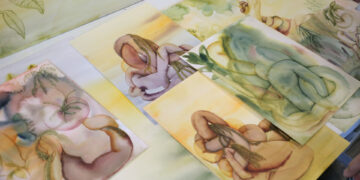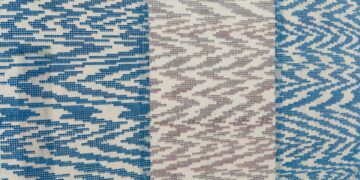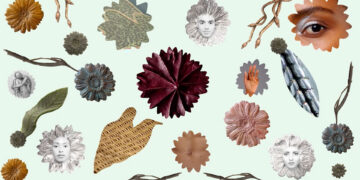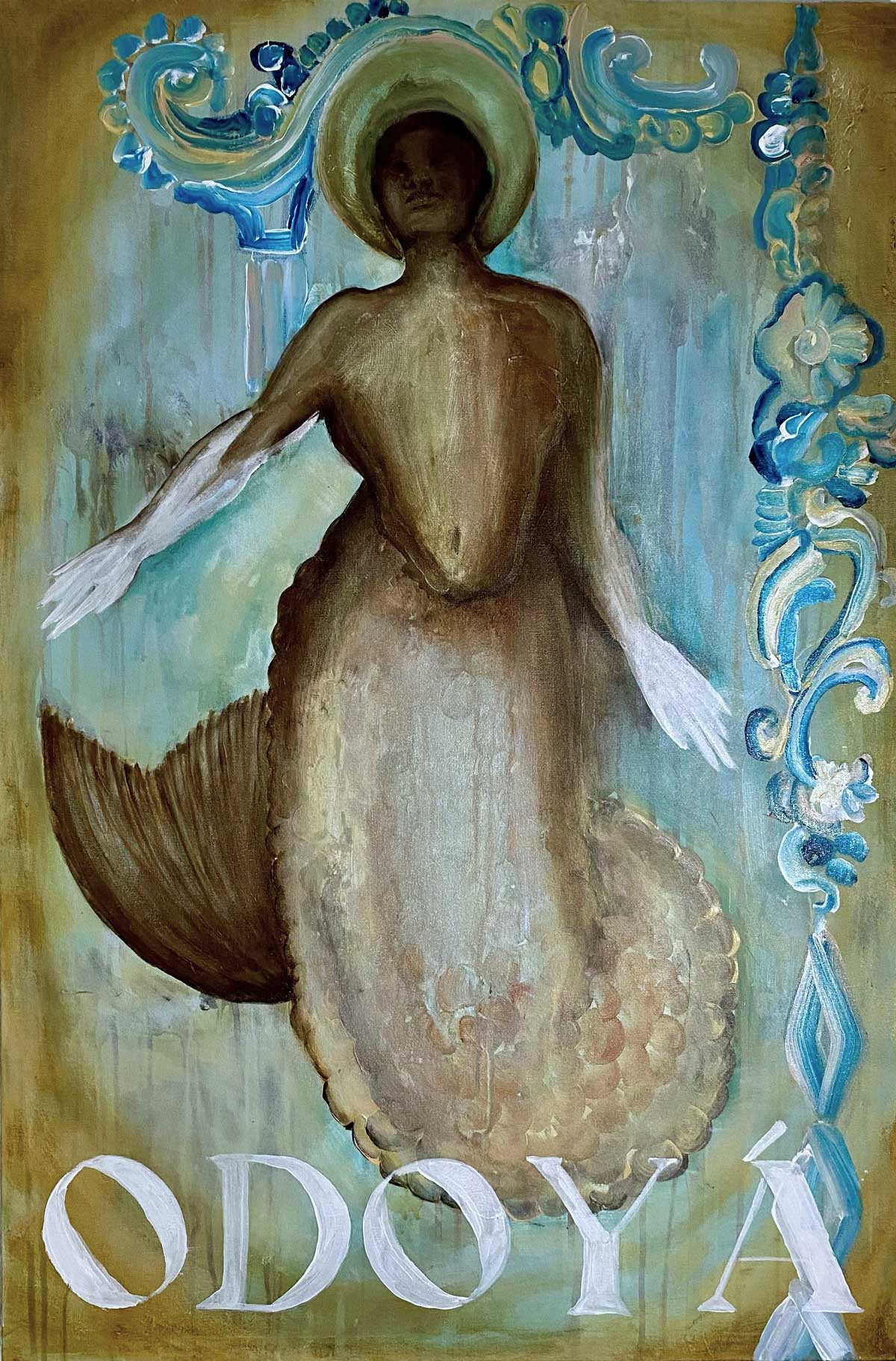
Alexandre do Anjos, Effigy Yemojá, 2025. Acrylic on canvas, 35.4 × 23.6 in. Courtesy of the artist.
Alexandre dos Anjos: Thank you for agreeing to have this conversation with me. We’ve known each other for, what, about twenty years? Our stories have long been intertwined.
Karlla Girotto: More than intertwined. We’ve shared so many stories—trust, and a real openness to each other’s processes—first through Oficina de Criação, and then throughout life. Actually, I think we’ve known each other even longer. Twenty-four years, Alê!
AA: Wild, Karlla. I was recently browsing the G>E Instagram and website—[Grupo de Estudos e Pesquisas em Processos Criativos, coordinated by Karlla Girotto]—and I realized it has become such a strong network. Oficina de Criação came before that. Were you coordinating that project too?
KG: Yes. Oficina de Criação was closely tied to my work in fashion. Back then, in the early 2000s, I was deeply involved as a designer—doing runway shows and all of that—and I could see there was a lot of talent, but very few opportunities for people who weren’t part of the dominant class. There were hardly any public policies or affirmative action programs yet, and going to college was simply unimaginable for many.
So Oficina de Criação was created to offer at least a minimum level of access to study and opportunity, so people could develop their potential. I had the chance to grow because of a scholarship—I was one of the few who “made it out of the neighborhood”—but a scholarship benefits very few. My intention was to reach more people, by creating a council of professionals who could teach and support those talents. At one point, we negotiated a support partnership with Faculdade Santa Marcelina. A lot happened. And that’s where I met you, Alê.
AA: That’s right!
KG: Ten years after Oficina de Criação, in 2013, I started thinking about creating a collective. G>E began as an art research group—a space to discuss process—and it gradually became something much larger than me, larger even than the idea of a collective. Today, I still do one-on-one meetings and artistic mentorship. I have so much affection for these projects. I see them as collective force: a force that produces life and thought. A place to reflect on who we are, what we’re doing here—and also why we don’t gather more often to talk about what matters most in artistic practice, which is relationships and how we elaborate our presence in the world. That shapes artistic production.
You, for instance, are an artist who came through Oficina de Criação, and whom I reconnected with through G>E. Our relationship continued—it became friendship, partnership, shared life. And we keep crossing paths in other places too.
AA: Yes. And it’s interesting to hear you talk about Oficina. I had such a strong desire to study fashion and art—maybe even to hold both at once. I wasn’t actively thinking about that intersection at the time, but it ended up becoming part of my current practice. That experience generated a lot of questions and curiosity, and a desire to investigate life through creative process.
The hegemonic system tends to separate art from fashion, but both occupy a space of performance, exposure, and visuality. Fashion was my first livelihood—my first way to make a living. So it wasn’t only a process of understanding my own production; it was also a place of survival. Initiatives like Oficina create movement and exchange that expand our world.
KG: Absolutely.
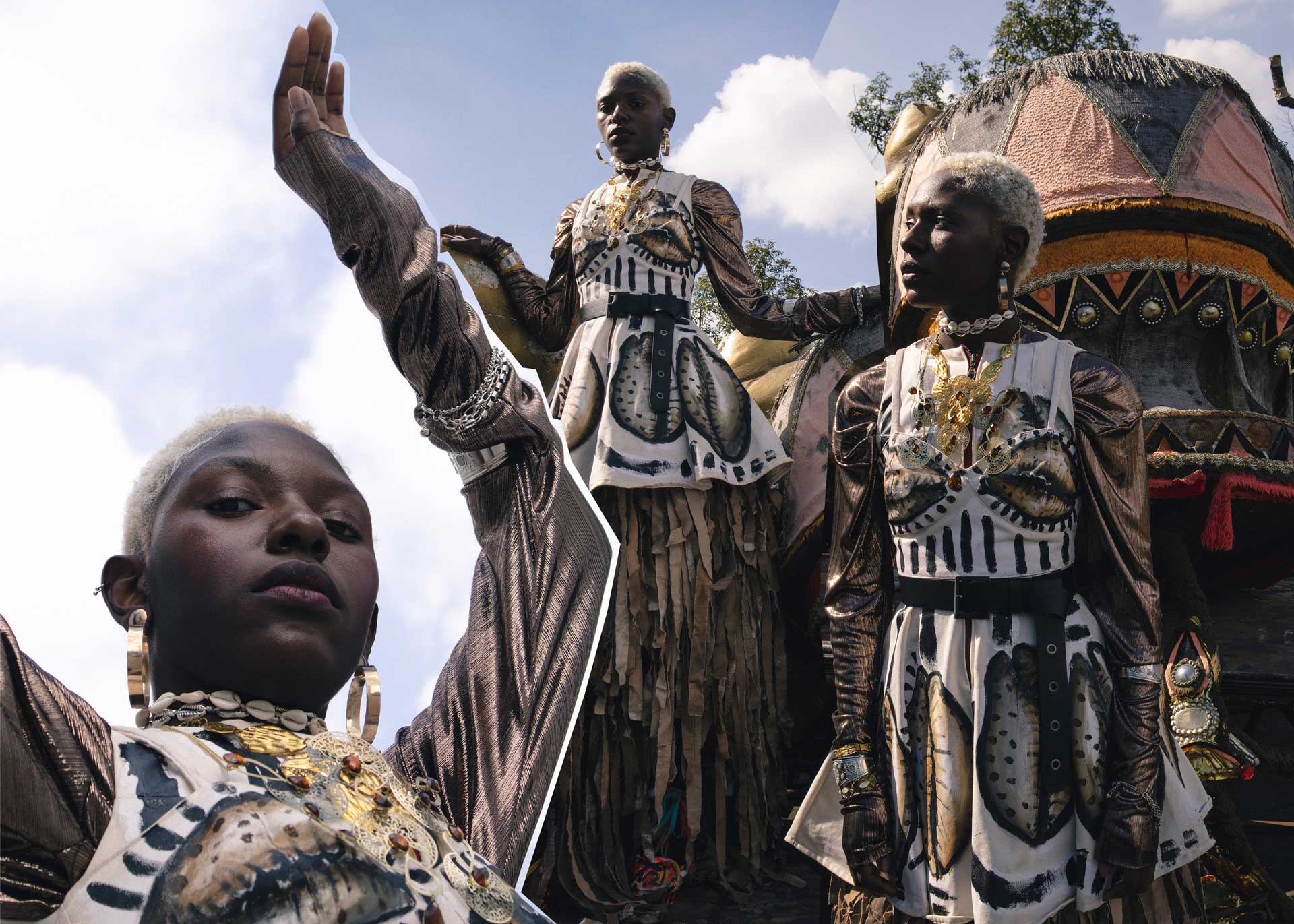
Alexandre do Anjos, Paramentar, 2021. Photo: Ádima Macena. Courtesy of the artist.
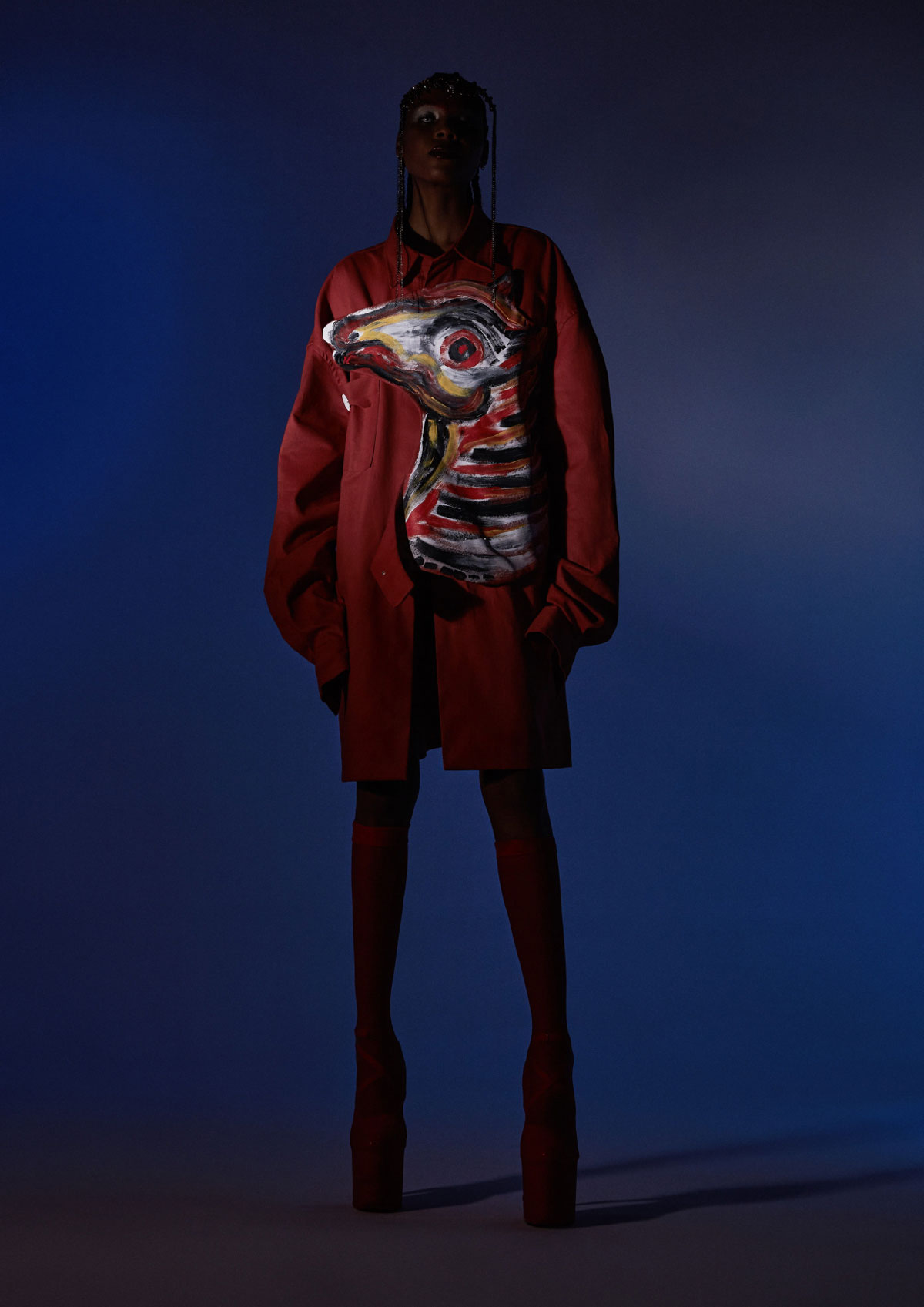
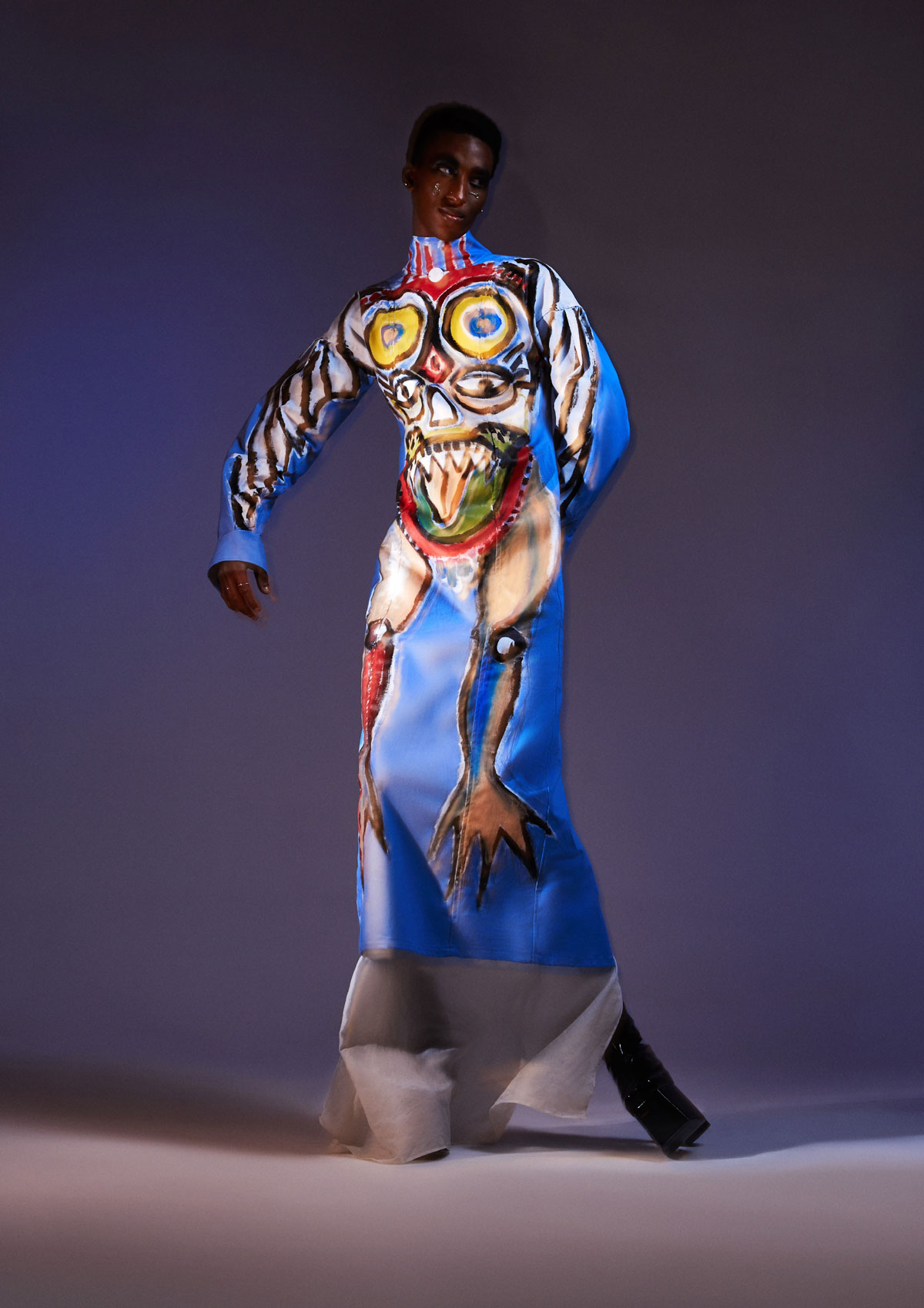
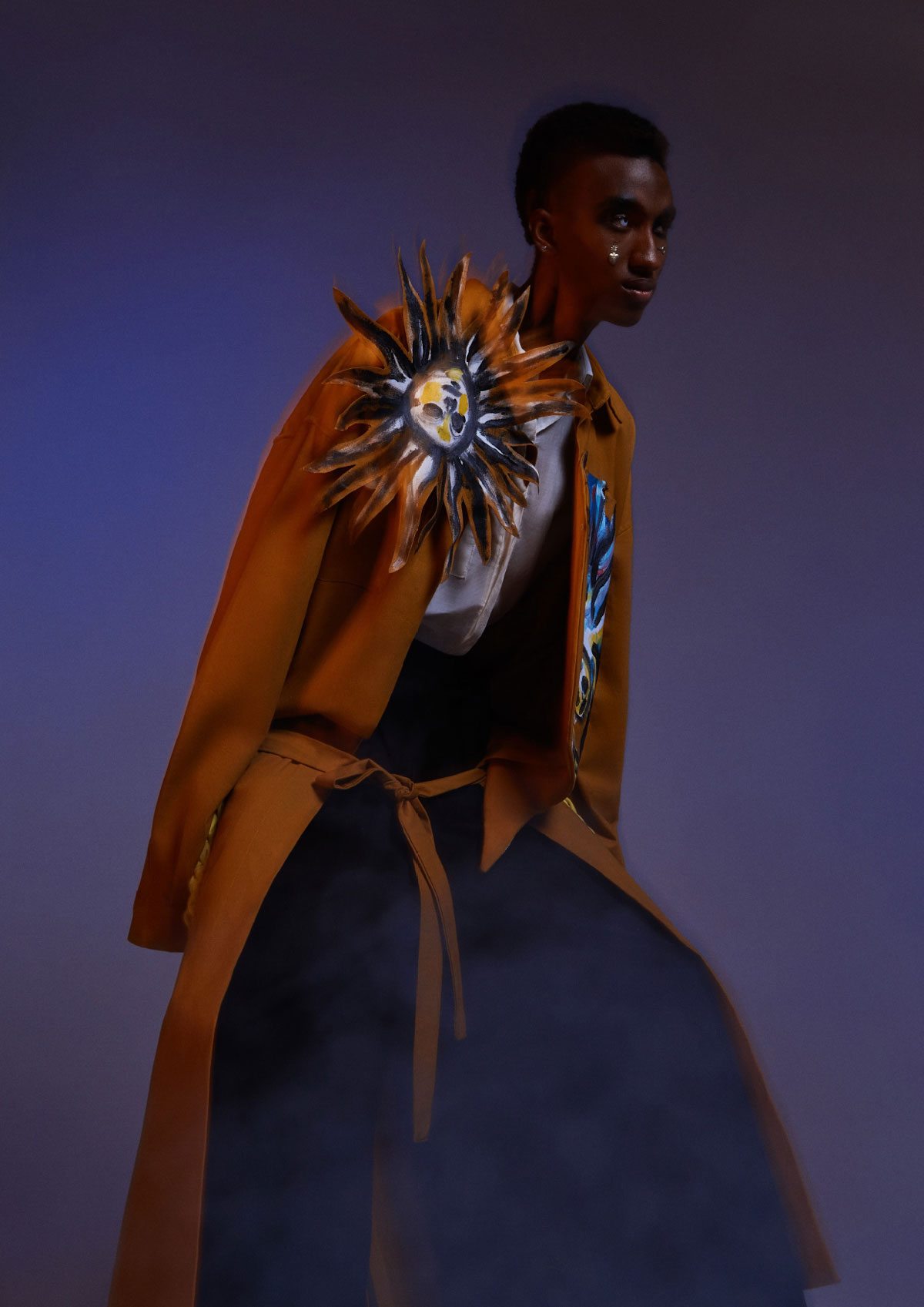
Alexandre do Anjos, Tarô dos Anjos, 2023. Photo: Henrique Lambiazi. Courtesy of the artist.
AA: I’ve been reading Frantz Fanon’s Black Skin, White Masks, where he talks about this context of alienation imposed by the white Eurocentric system—a system that deliberately alienates Black subjects and confines them to a space they’re not meant to leave, as if it were the only space they could occupy. That ends up shaping people psychologically, until they begin to believe that certain places and forms of access simply aren’t for them. I still bring that psychological imposition into therapy.
And I’ve been thinking about it a lot in relation to my work now that I’m finishing an MFA, because race cuts across my entire trajectory.
KG: It’s a very carefully constructed project of domination and white supremacy. It runs through patriarchy and capitalism—not just runs through them, but is structured by them. It’s hard to imagine a project like that not shaping people subjectively, especially those for whom it was designed. So how does someone separate themselves from that project in order to return to what they are? What does a racialized person have to do to remain not only alive, but vital?
AA: Yes!
KG: I come from a working-class background. So in terms of class, I saw that project of the world attempting to assign people to certain activities and certain kinds of life. Rejecting that destiny and building your own life is enormous work. And if we don’t have our peers for that—if we don’t build alliances over a lifetime—it becomes harder, more exhausting, and it drains our vitality. Because it’s not just a scholarship that solves a life. You need food every day. You need transportation to get to where you study. You need the means to buy materials—paper, paint—that the dominant class can purchase without difficulty. It’s not only the thing itself.
AA: Exactly.
KG: Over time, though, we start recognizing other ways of producing our lives. When I look at your work, I see you in the MFA, fully embodied—your skin, your practices, your knowledge. There’s the material aspect, but there’s also this whole dimension of subjectivity: self-perception, self-knowledge, and even self-unknowing—our most mysterious parts, which we aren’t simply given access to, and yet we still communicate with them on a molecular level.
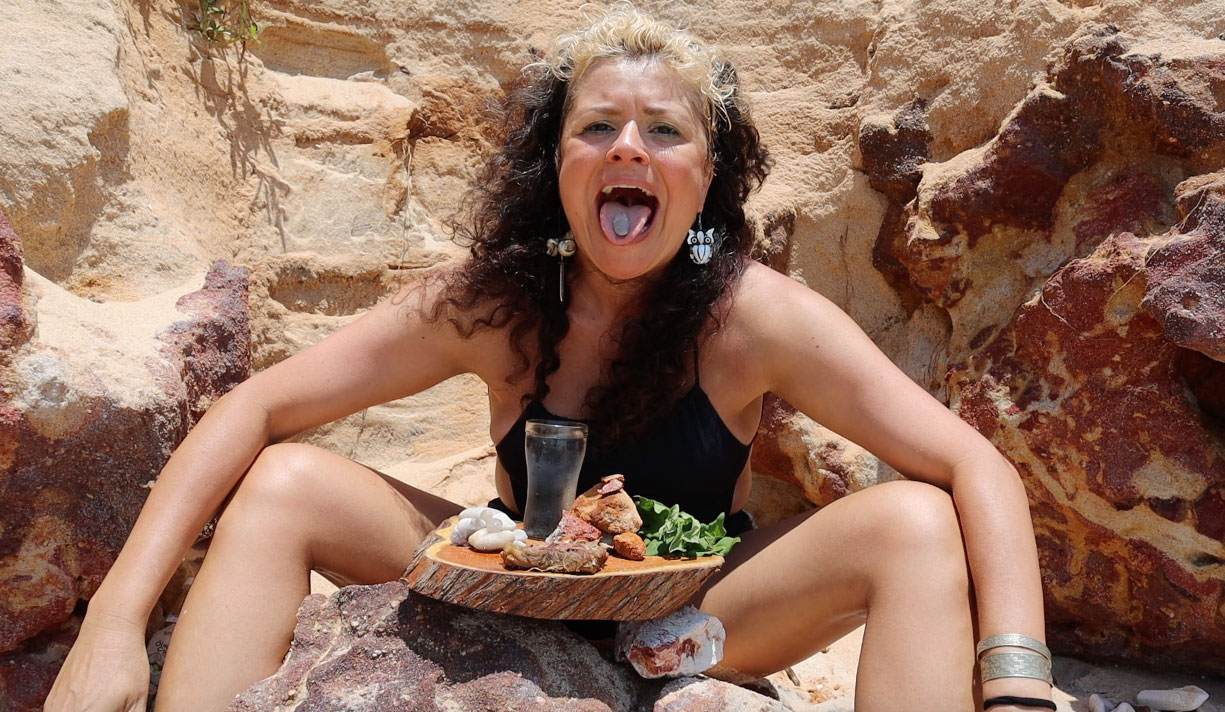
Karlla Girotto, Comer a montanha, comer o bicho, comer a agua, comer a planta, 2022.
Video performance. Barcelona, Rio Grande do Norte, Brazil. Courtesy of the artist.
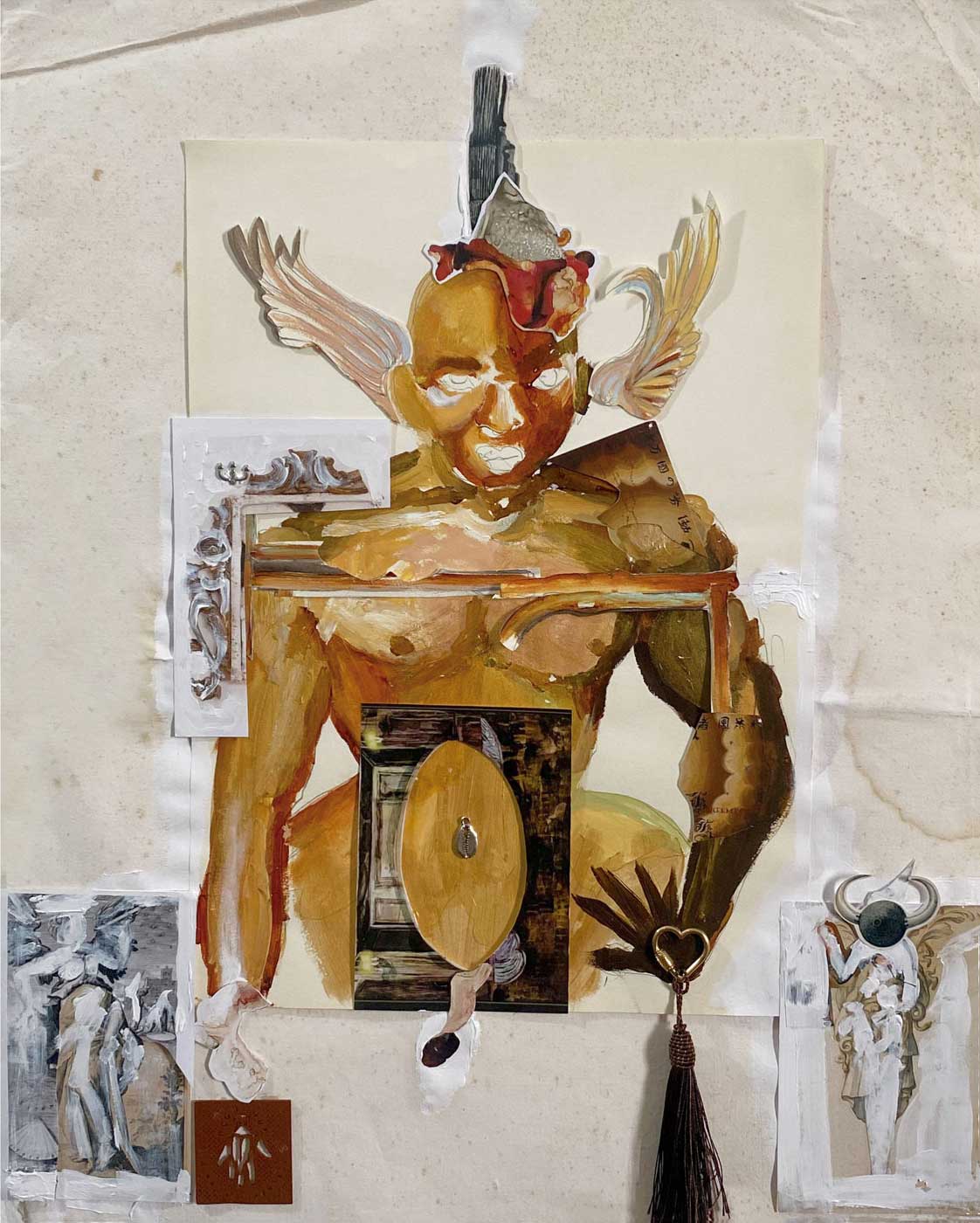
Alexandre dos Anjos, Untitled, 2026. Assemblage — three-dimensional collage made with acrylic paint, metal, plastic, and thread on cotton paper, 25.2 × 18.9 in. Courtesy of the artist.
AA: Completely. All bodies carry these mysteries. I believe the artist inscribes that mystery into the work—an inner mystery. I see it in your work, and I feel it moving through mine too. It’s a mystery built from memories, and it generates affect—affect in the sense of feeling through something, and then beginning to produce.
You work visually and textually too, right, Karlla? And you talk about spellwork and magic. I think there’s a connection there. Can you speak a bit about that?
KG: For me, it’s like a fold back into myself. I think it comes from recognizing that I’m not only what I was given, or what I was permitted to be. Around 2016, I started understanding how much I had participated in oppressive choreographies within my own family: a Northeastern family, from the backlands of Rio Grande do Norte. I was the first generation born in São Paulo. You know my mother—she’s a woman from the sertão who marries a white man. The moment I was born white, my mother made an immense effort for us to appear “Southeastern,” as a strategy of survival.
I became, in a way, an agent of subjective colonization and of erasure within my own family, but I only realized that much later. When I went to Rio Grande do Norte for the first time, I felt this sense of return, as if I were reclaiming a subjective territory that had been taken from me—a repossession of potentialities and ancestral possibilities.
And this sense of mystery appeared there—something very old, very magical. I can’t explain it, and I don’t want to romanticize or fetishize it. But it was what I felt. It was as if the landscape communicated something. When I reclaim family memory—who I am, where I come from—I reclaim myself: the magic, the mystery. It’s very strong for me.
AA: We have to remain constantly attentive to memory—our own and our ancestors’—and carry it forward. Because we’re here building something, trying to make the path better for future generations.
It was beautiful to hear you speak about your memory, and I’m grateful you shared that story with me. It reminded me of things I’ve been holding in my own practice, because mine also moves through spellwork and magic. In a way, magic is political—it shifts subjectivity.
I remember the first time I marched with a samba school. Everyone was already in costume, and to reach the staging area you had to pass through the floats. The path felt like a route toward Orum—the spiritual world in Yoruba cosmology, parallel to Ayê, the physical world. The visual experience overtook my whole body. The walk felt like a dream: as if I were stepping on something very light and meeting my own reality like a mirror, because wherever I looked, most of the people were Black. I get chills thinking about it.
Crossing the Anhembi Sambadrome felt like a rite of passage—something truly important to me. I thought of my uncle Donizete, who was a Candomblé practitioner and a babalorixá. That relationship between carnival and spirituality affected me deeply, and I ended up carrying that experience—and the idea of carnival’s handmade making—into my entire artistic practice.
I see myself a bit in what happened to you, Karlla. As if there were two Alexandres, and when I crossed that corridor, one incorporated the other. It’s about understanding, continuing to fight, and continuing to meet ourselves—through our bodies.
KG: That’s so beautiful, Alê!
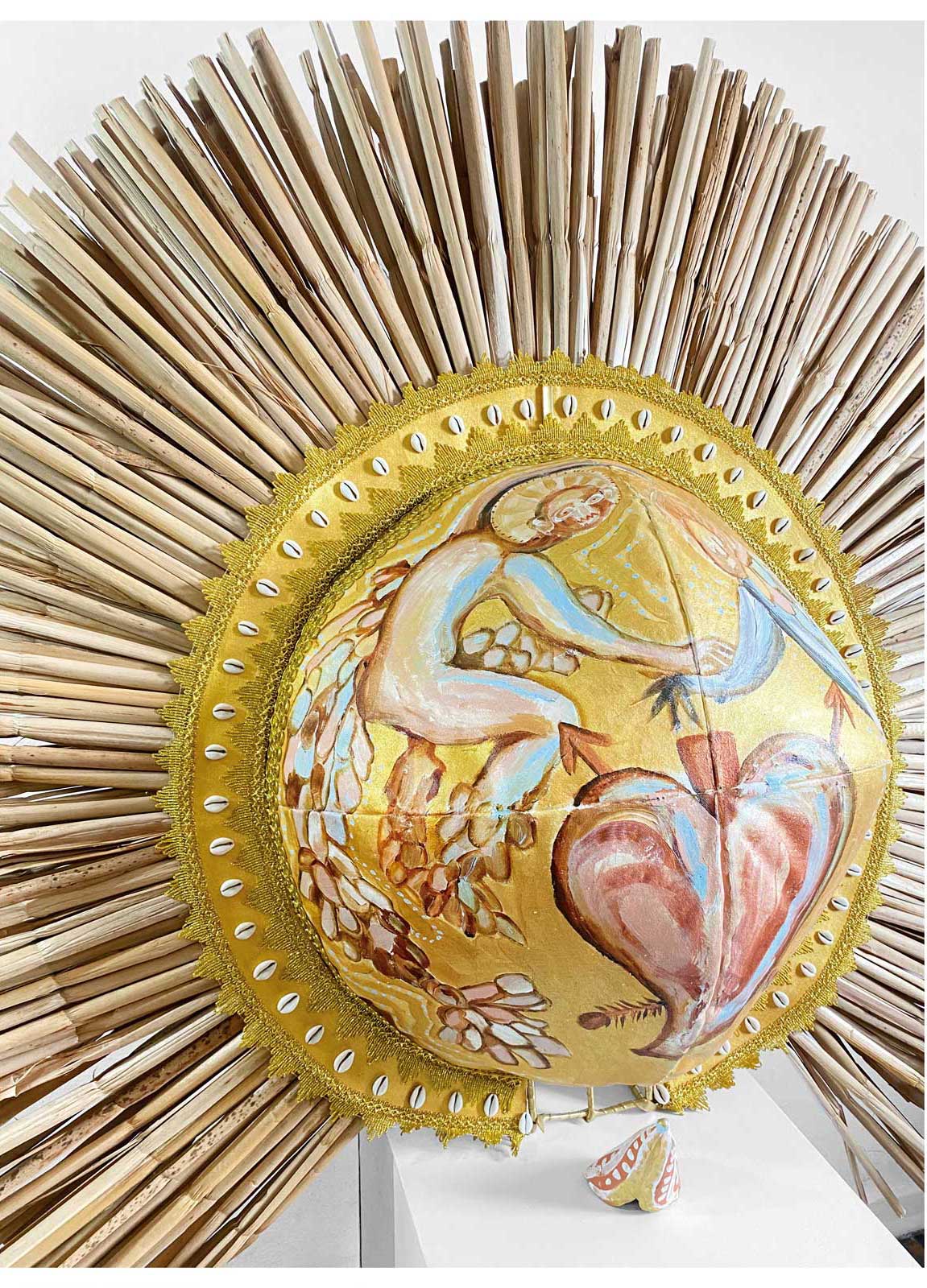
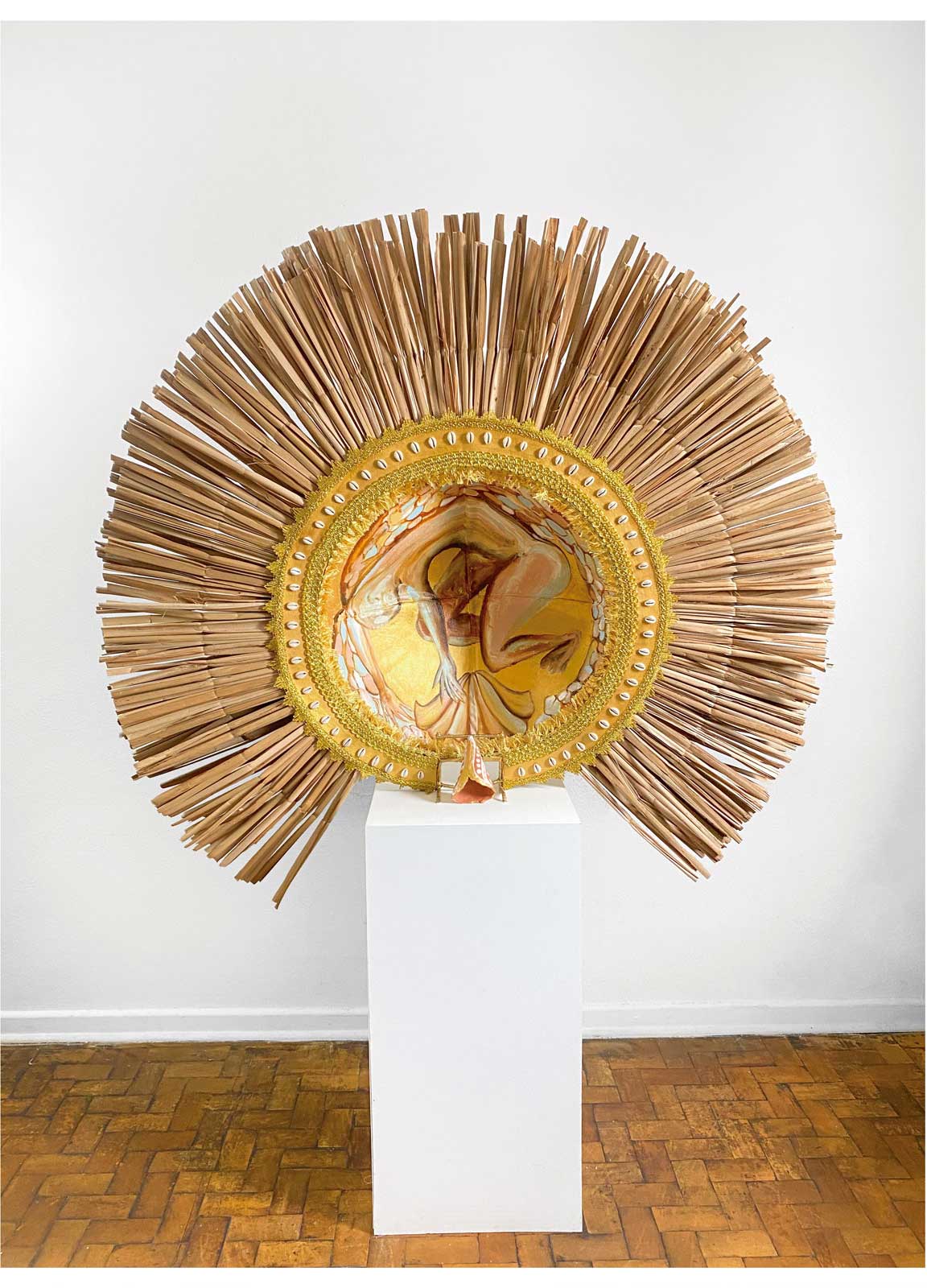
Alexandre dos Anjos, Fragment from the work “Altar das bolsas de mandinga” – Costeiro Adjã – Oxum, Exu and Ogum, 2024.
Acrylic on canvas mounted on a carnival costeiro, adorned with clay, gold braid, cowrie shells, and taboa straw, 51.2 × 49.2 in.
Courtesy of the artist.
AA: Meeting you was very special—not only because you’re this incredible witch who showed me so many things, but also because it feels like our paths were already crossed in another field. We met inside that magic.
KG: This meeting between you and me was inevitable—just like our meetings with ourselves. It’s through those encounters that we create meaning for everything we are.
AA: Totally. And we also converge in how our artistic practices begin in textile work. For a long time, clothing was crucial for self-expression, but now it carries other meanings. A garment doesn’t need to be on a body to be an object with life. And it carries memory too. Textile art—fabric, embroidery, bringing things together—holds that place.
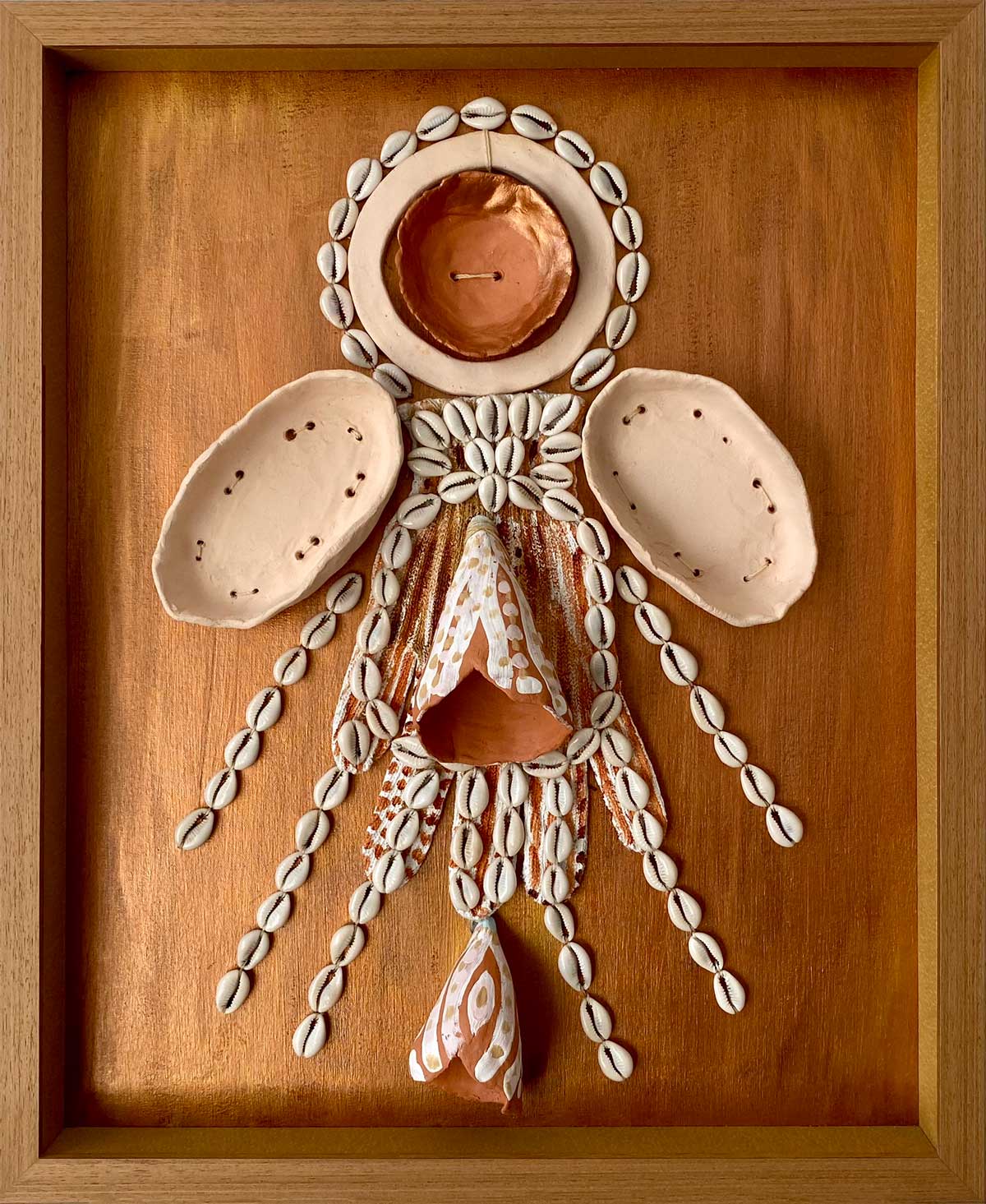
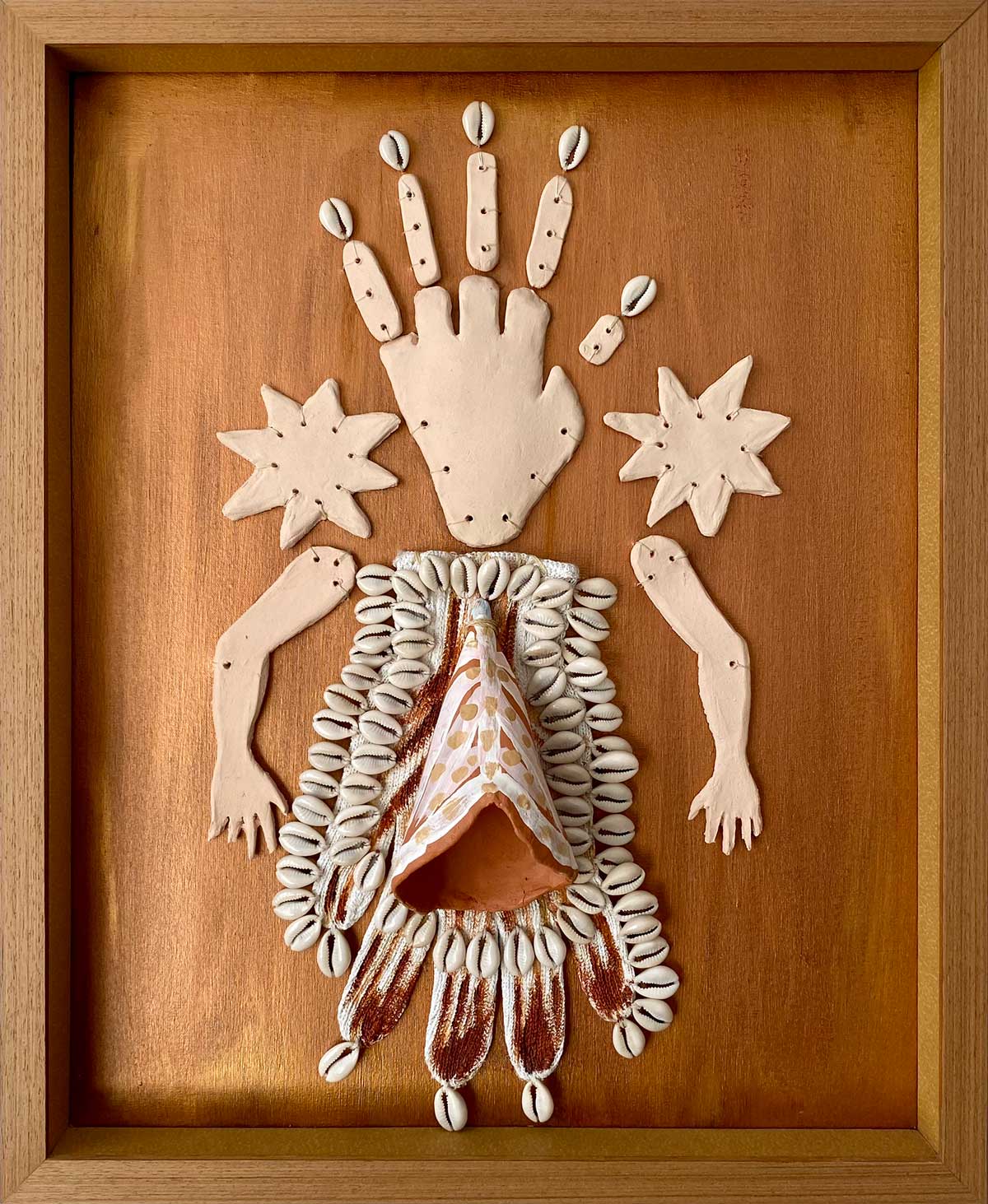
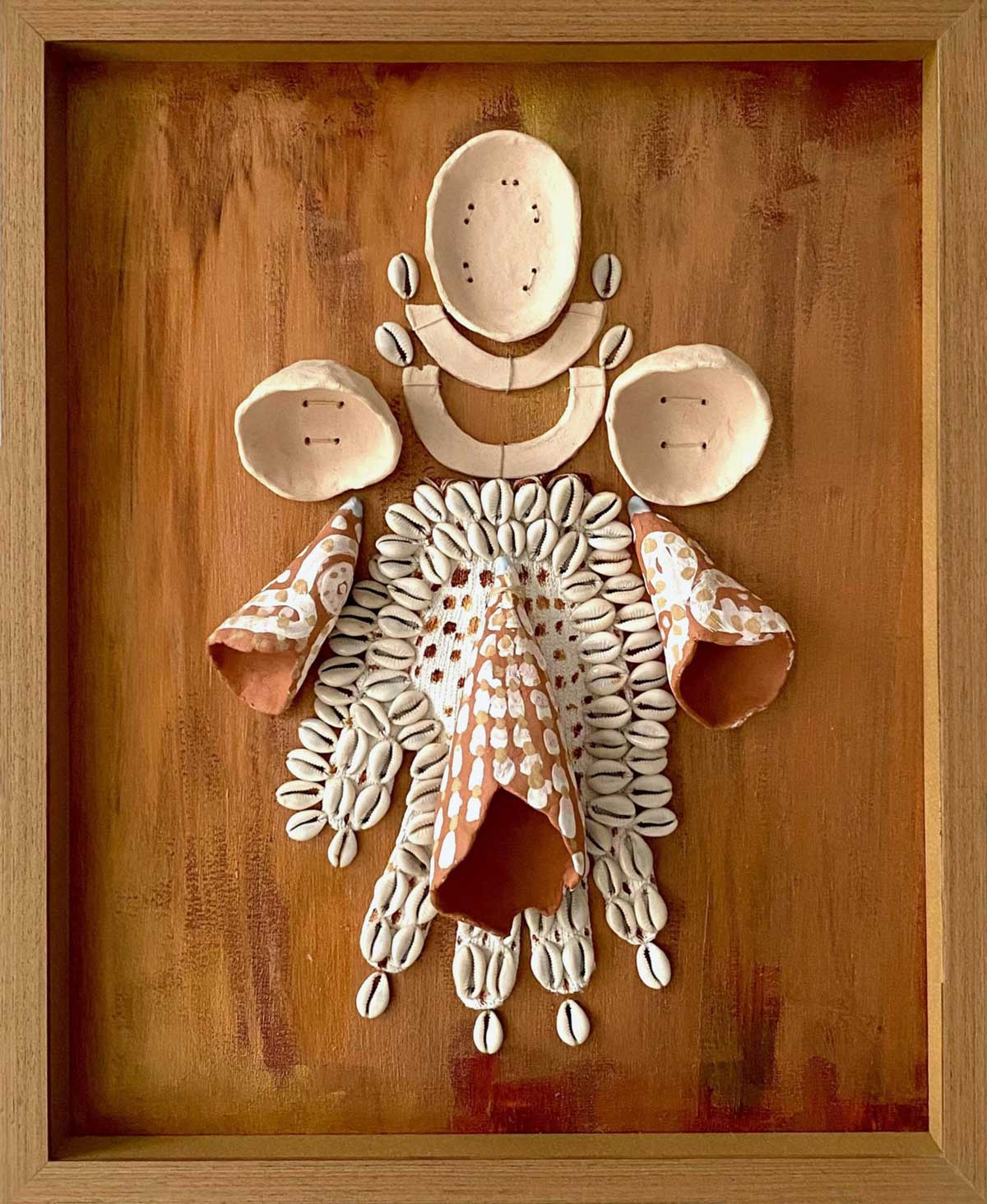
Alexandre dos Anjos, Triptych Altar das bolsas de mandinga, 2024. Acrylic paint on cotton glove embroidered with cowrie shells, and clay cones painted with engobe, embroidered on panel with herbs inside, 23.6 × 19.7 × 5.1 in [each]. Courtesy of the artist.
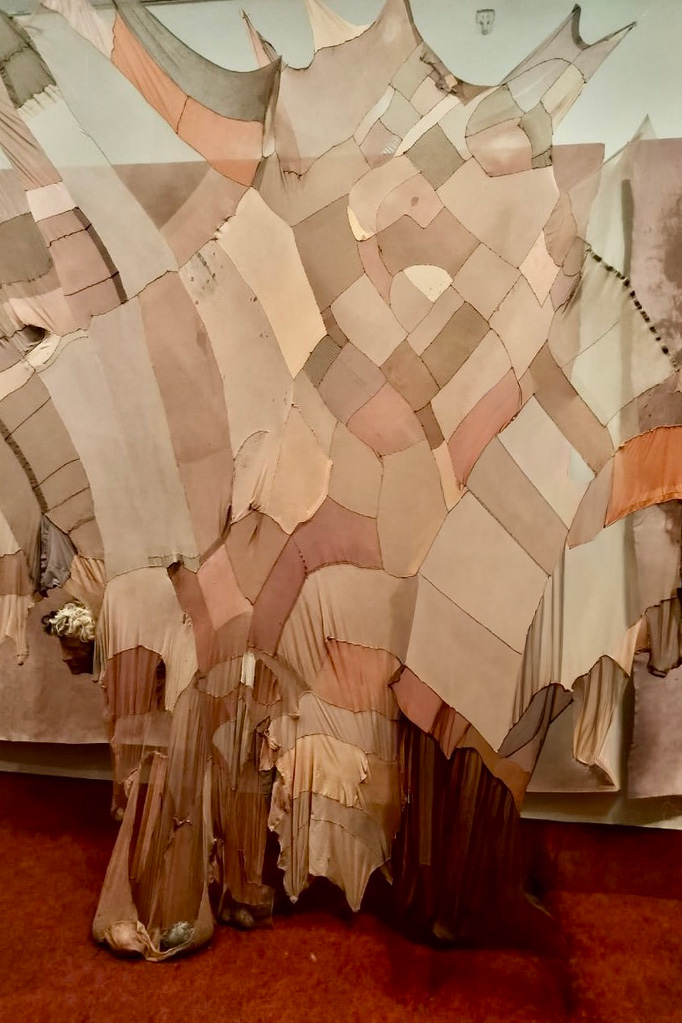
Karlla Girotto, A terra é a pele da terra, 2024. Painting made with clay, tapioca, blood, charcoal, graphite, sanguine, and iron oxide on canvas, nylon stockings, wood, beeswax, hair, yam, sweet potato, taro, and dried coconut, 129.9 × 429.1 × 27.6 in. Photos: Letícia Vieira. Courtesy of the artist and Itaú Cultural.
KG: Fundamental. I stepped away from fashion for a while, feeding my artistic field with other interests. But my first artistic gesture in life came through needle, thread, and fabric. I was five when my grandmother, who was a seamstress, had me hemming garments [a technique used to finish raw edges]. I remember my older sister—who taught me so much—drawing while I sewed. Sewing also always helped me organize myself psychologically, to settle.
And then I began to notice how text—etymologically linked to textile—is also a foundational place of organization for me. Sometimes text spills into an exhibition or into a book, but above all it’s something that helps me organize myself artistically. Recognizing that has been very important.
AA: That’s amazing, Karlla. Textile is also deeply woven into carnival. I’ve been thinking a lot about assemblage—about juxtaposing materials. I use the structural frames of carnival and all kinds of metalwork, and then I double it with fabric and transform it into a surface from there. It’s an iron object, a structure that I cover with EVA and fabric, and then I add embroidery and painting.
And I like thinking that even for painters, the canvas is a fabric. What happens there is textile too.
KG: Yes—fabric and paper. Paper comes from cloth. The first paper, papyrus, is textile. There’s a very strong relationship between these materialities, even when it’s subtle.
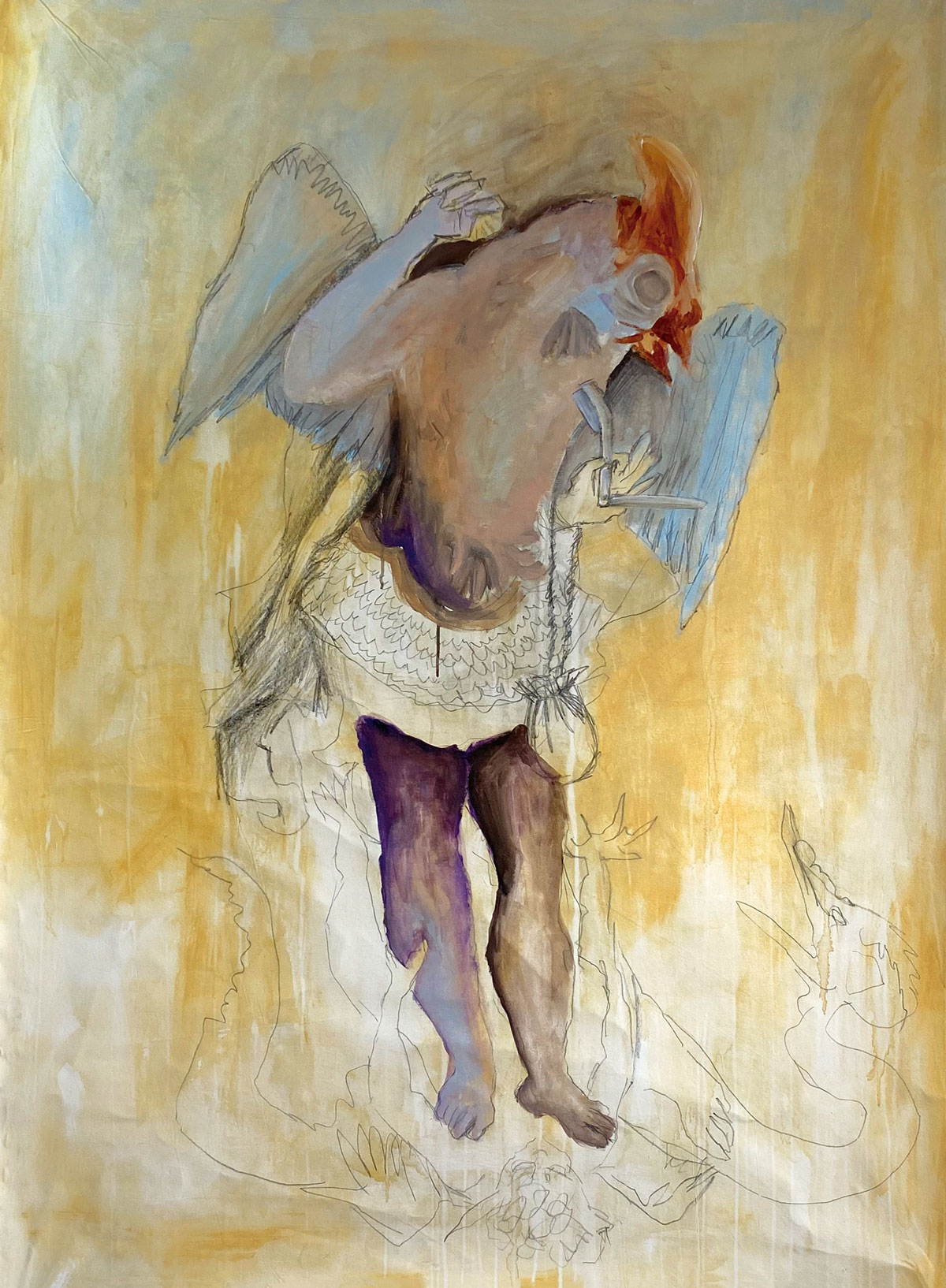
Alexandre dos Anjos, Mestre- sala anjo d’angola- A dança com navalha, 2025. Graphite pencil and acrylic paint on canvas, 70.9 × 48.4 in. Courtesy of the artist. Courtesy of the artist.
AA: Life is one big fabric, one big woven text… it’s magic, it’s spellcraft!
KG: And time is fabric too. This has been revealing itself to me more and more. I have long-lasting relationships. Encounters that keep happening—and then suddenly you realize you’ve been in conversation for twenty-four years. Our conversation doesn’t begin and end today. It’s been woven for twenty-four years, hasn’t it, Alê? That’s deeply moving and deeply strengthening for me.
And I’ve realized, as my grandmother used to say, life gives to those who give. Memory is made of time, but also of presence. It’s a place of the past that inhabits the present. It’s a fabric of time. And I’m so grateful for this conversation.
AA: I’m the one who’s grateful. This exchange is always special. I’ve always been so happy talking with you. Onward—another twenty-four years.
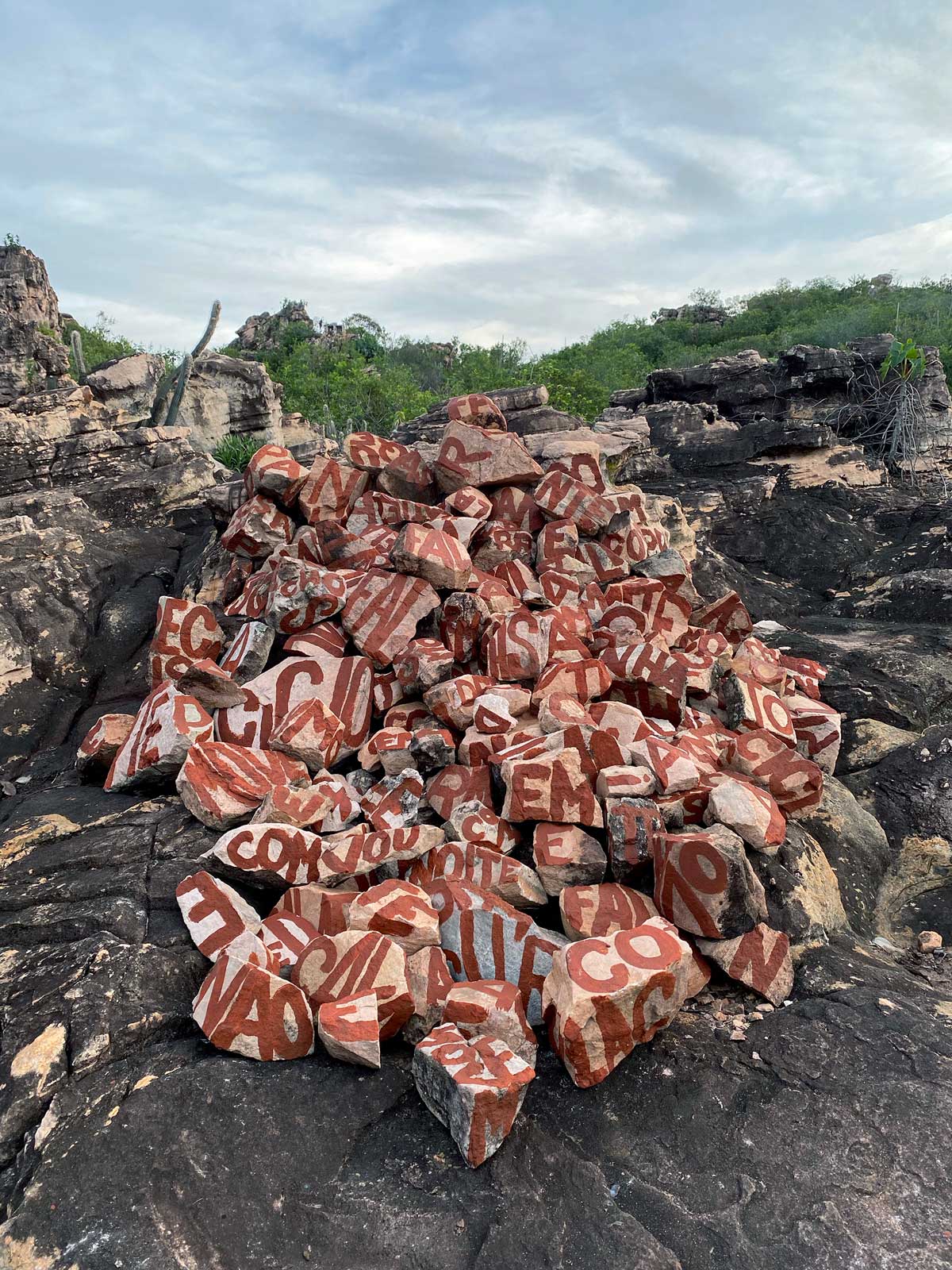
Karlla Girotto, Fala, 2021. Public art installation. Mining stones and clay-based mineral pigment, variable dimensions.
Former mining trail, Igatu, Bahia, Brazil. Courtesy of the artist.
Hero Image: Alexandre dos Anjos, Paramentar, 2021. Photo: Ádima Macena. Courtesy of the artist.
To learn more about Alexandre dos Anjos @alexandre_dos_anjos
To know more about Karlla Girotto @karllagirotto